


Alan Goldhamer, fasting is the shorthand for a simple but radical proposition: the human body is built to repair itself when given the right conditions. Dr. Alan Goldhamer has spent four decades turning that proposition into clinical practice, using medically supervised, water-only fasting to reverse chronic disease, reduce medications, and reboot health.

Why fasting matters more than another diet trend
Goldhamer argues that obesity, especially visceral fat that hugs the organs, drives many modern illnesses. Instead of treating each disease separately, he treats the shared cause: excess fat and chronic inflammation. The result is fast, measurable change in conditions that otherwise require lifelong medication.
“This is the most effective treatment that’s ever been shown in treating the leading cause of death and disability, which is high blood pressure.”
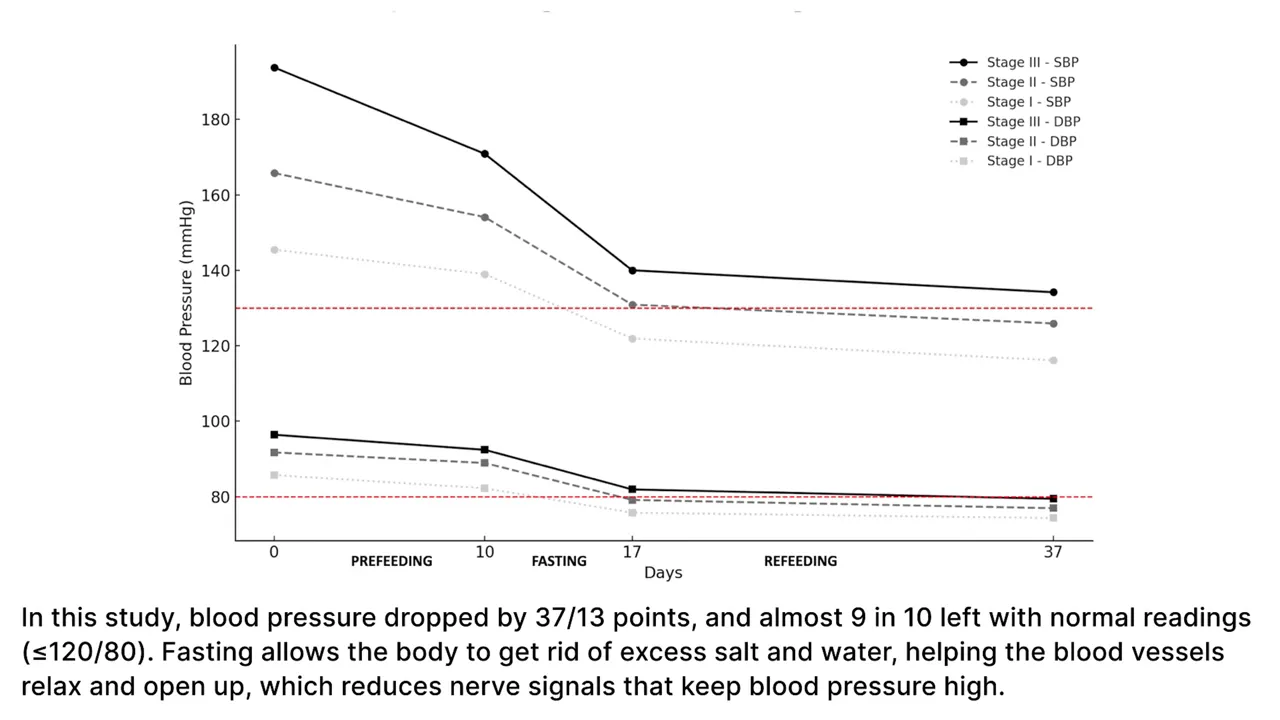
The center’s published work includes a study of 174 consecutive patients with hypertension who normalized their blood pressure without medication after medically supervised water-only fasting. Follow-ups show many patients maintain the improvements when they adopt a whole-food, SOS-free diet (SOS = salt, oil, sugar).
What happens in the body during a fast
Fasting is a staged physiological shift, not an emergency. Within 16–48 hours glycogen stores deplete and the body pivots from running on glucose to burning fat and producing ketones—chiefly beta-hydroxybutyrate. Ketones fuel the brain and correlate with increases in BDNF (brain-derived neurotrophic factor), a neurochemical linked to improved cognition and protection against neurodegeneration.

Beyond ketones, fasting triggers autophagy, the body’s cellular housekeeping mechanism, which selectively removes damaged or senescent cells. Animal studies link intermittent fasting to increased lifespan, but Goldhamer reframes those results: overfeeding shortens life; fasting merely undoes the damage of dietary excess.
The specific case for water-only fasting
Goldhamer’s clinical model is strict: distilled or highly purified water only, rest, daily medical monitoring, and a carefully staged refeeding protocol. Typical fasts in his clinic range from five to 40 days, with most patients between 10 and 28 days.

Why water-only? It produces a deeper mobilization of visceral fat, a stronger detoxification response, and pronounced shifts in microbiome composition. Goldhamer stresses that a long water fast is a medical intervention, not a DIY challenge: candidates undergo screening for medication use, kidney and liver function, and electrolyte reserves.

What fasting does to the microbiome
During an extended fast total microbial populations fall dramatically, creating an opportunity to repopulate the gut with healthier organisms during refeeding. Early clinical reports and a 2024 study show an 80% reduction in certain harmful bacteria after a seven-day water-only fast. That microbiome reset helps explain improvements in inflammatory bowel conditions and even mood disorders, since much serotonin and dopamine production occurs in the gut.

Outcomes: what the data actually show
Goldhamer’s team reports striking outcomes across cardiometabolic measures:
- Blood pressure: Large average reductions, with many patients off medications and sustained improvements at one-year follow-up.
- Visceral fat: Preferential mobilization—studies using DEXA show much larger proportional losses of visceral fat than of lean tissue.
- Body composition: Although lean mass dips during the fast, it rebounds in refeeding and often exceeds baseline at six-week follow-up while fat loss continues.
- Insulin resistance: Fasting reduces insulin resistance in ways no current pharmacologic therapy fully replicates.

One practical benchmark Goldhamer offers: people often lose around one pound a day during active fasting phases. A patient 20 pounds over their ideal might need about three weeks of supervised fasting to get near that target, followed by guided refeeding and dietary education to make the change stick.
Refeeding: the most important phase
Refeeding determines whether a fast is a reboot or a relapse. In Goldhamer’s protocol, patients receive roughly one day of fresh fruit and vegetable juices per week of fasting, then slowly progress to whole fruits and vegetables, steamed and starchy plants, and finally a whole plant-food SOS-free diet. He emphasizes that refeeding should take about half the length of the fast to avoid edema, electrolyte disturbances, or refeeding syndrome.

Who benefits and who should be cautious
Goldhamer classifies potential beneficiaries into three rough personas:
- Preventive and healthy individuals: Short fasts—daily 12-hour fasts and a one-week fast once a year—can sharpen taste, improve biomarkers, and recalibrate appetite.
- Overweight or metabolically unwell: Multi-day fasts (often 7–21 days) can rapidly reduce visceral fat, normalize blood pressure and blood sugar, and catalyze long-term change when paired with dietary education.
- Severe or refractory illness: Selected patients with autoimmune disease, fatty liver, PCOS, or even certain cancers have shown dramatic responses under supervision; these are high-stakes, individualized interventions.
Women require careful assessment because hormones and menstrual cycles are sensitive to energy balance. Fasted patients with adequate reserves often see normalization, but rapid, excessive weight loss can suppress menstrual function.

Risks and misconceptions
Common concerns include muscle loss, nutrient depletion, and rapid regain after the fast. Goldhamer addresses each: resting during the fast minimizes muscle breakdown, efficient nutrient recycling maintains labs within acceptable limits for many candidates, and careful refeeding plus dietary change prevents rebound fat gain.
Major safety risks are orthostatic hypotension, electrolyte imbalance, and refeeding syndrome. That is why Goldhamer insists on medical screening, twice-daily monitoring, and supervised refeeding. If potassium or sodium drops below pre-established thresholds, the fast is modified or terminated.

Practical takeaways
- Daily habit: Everyone should aim for a 12-hour overnight fast—simple and low-risk.
- Periodic reset: Consider a one-week medically supervised fast annually if clinically appropriate.
- Medical supervision: Extended water-only fasts (beyond a few days) require physician oversight, lab testing, and refeeding protocols.
- Diet after fasting: Transition to a whole plant-food, SOS-free diet to sustain benefits.

Where to learn more
For readers curious about the methods and published outcomes, the TrueNorth Health Center offers clinician-reviewed resources and consultation options. Adopted from The Diary Of A CEO Channel. Original Video

“Health is the direct result of healthful living, and that means diet, sleep, exercise.”
Fasting is not a quick-fix marketing pitch. It is a clinical framework that pairs an ancient biological adaptation with modern medical oversight and behavioral change. For those willing to do the hard work, the payoff can be profound: lower blood pressure, reduced medication burden, clearer thinking, and a reset of appetite and taste that supports long-term health.

Adapted for readers by #teamHJB of ReelToRead.com — turning great videos into even better reads.

Be the first to comment