


Original review and tests by FlytPath
Overview
The DJI Osmo Action 6 arrives as the most substantial action camera update in years, introducing features that change typical expectations for pocketable shooters. At its core are two headline items: a first for the category, a variable aperture from F2.0 to F4.0, and a larger 1/1.1-inch square sensor. Those changes push the Osmo Action 6 into new territory for low light performance, dynamic range, and framing flexibility while putting it squarely against the GoPro Hero 13, a camera that remains a benchmark for resolution and mount versatility.
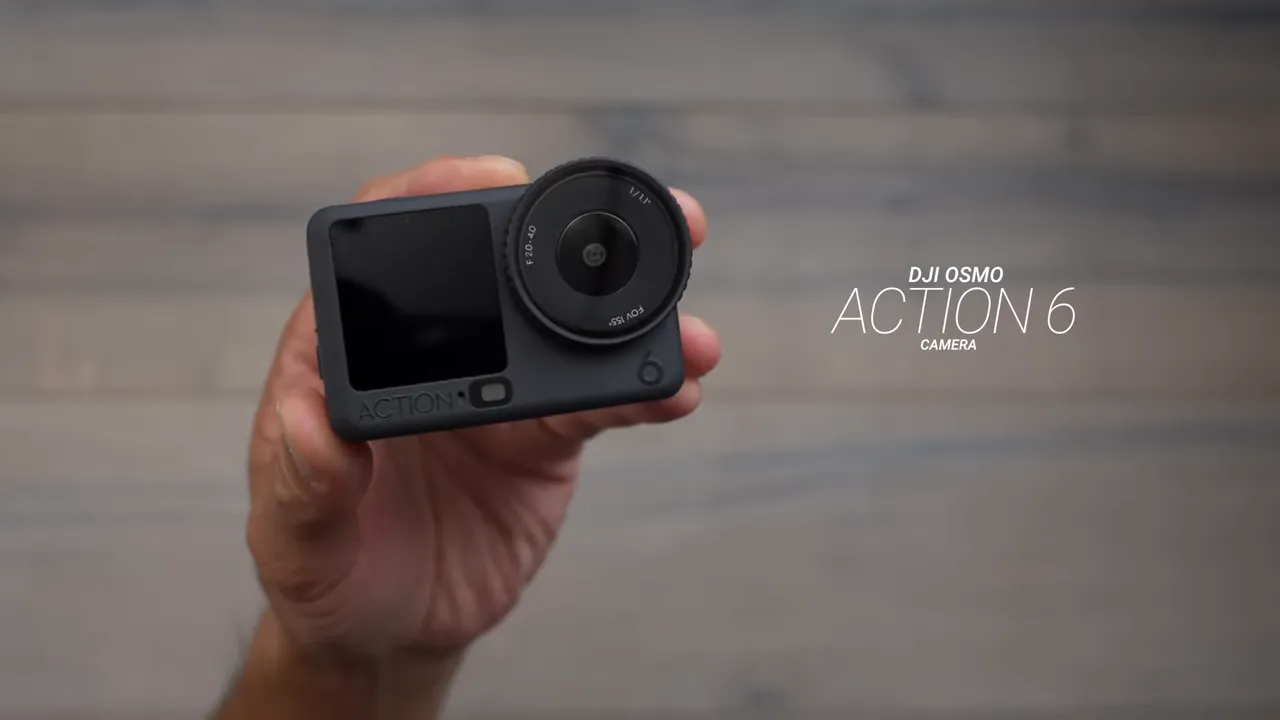
Design, Size and Handling
The Action 6 and the Hero 13 are similar in footprint but differ in subtle ways. The GoPro is a touch taller while the DJI sits slightly wider. Weight is nearly identical with the Action 6 at 150 g and the Hero 13 at 157 g, keeping both comfortably portable for helmets, handlebars, and handheld rigs.
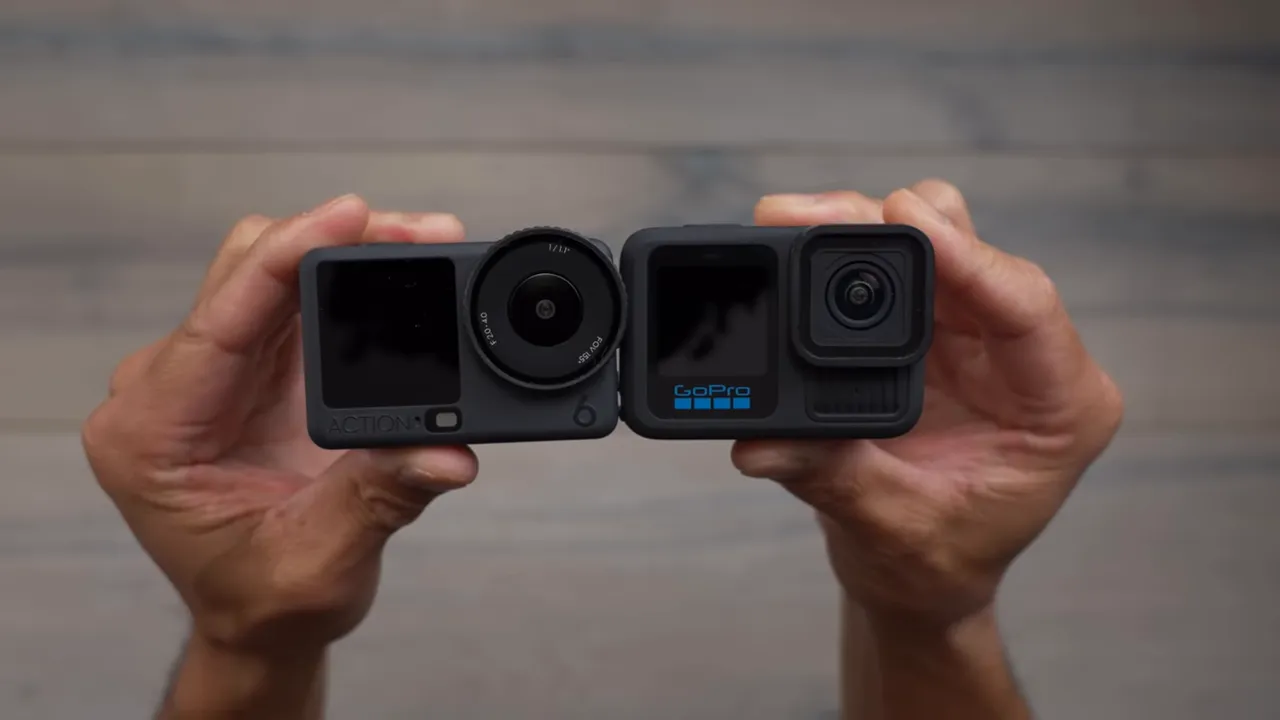
Practical design differences
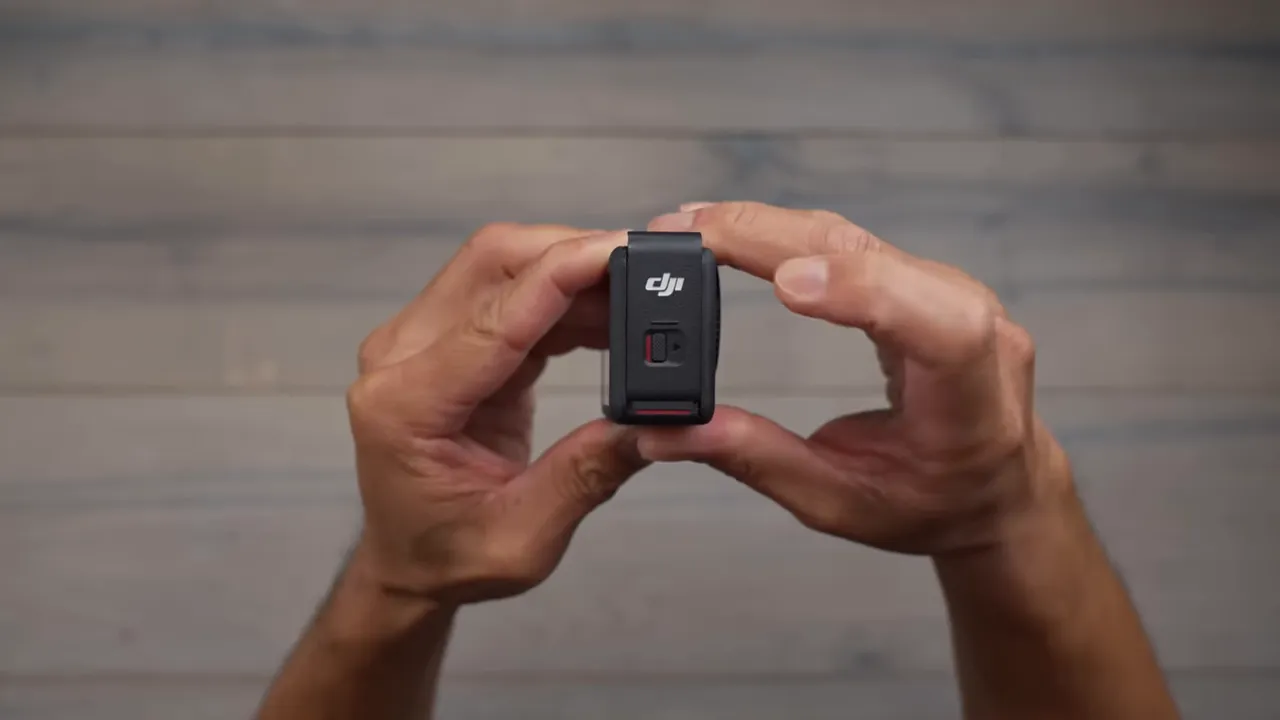
- Lockable ports on DJI — the Osmo Action 6 adds a sliding, lockable door for the battery and USB-C port that requires a deliberate push-slide motion to open. It is a smart safety feature when paddling, surfing or when mounts snag on gear.
- GoPro mounting options — Hero 13 maintains three bottom mounting options including the two-prong feet, a new magnetic quick-mount ecosystem, and a quarter-20 thread for lightweight tripod use.
- DJI quick-release — the Osmo 6 uses an updated quick-release mount with small hooks that make clipping and unclipping easier. It remains incompatible with a quarter-20 and lacks the GoPro feet.
Screens and Controls
DJI ups the usability with a larger 2.5-inch rear touchscreen and a full front touchscreen at 1.4 inches, allowing full control from the front of the camera. GoPro retains a 2.27-inch rear touchscreen and a non-touchfront display that is useful only for previewing framing and showing basic settings.

Sensor, Aperture and Image Quality
Two features set the Action 6 apart. First, the square 1/1.1-inch sensor increases dynamic range and midtone detail compared with smaller sensors commonly used in action cams. Second, the mechanically adjustable aperture from F2.0 to F4.0 provides photographers and filmmakers a way to control exposure and depth of field without relying solely on ISO and shutter speed.
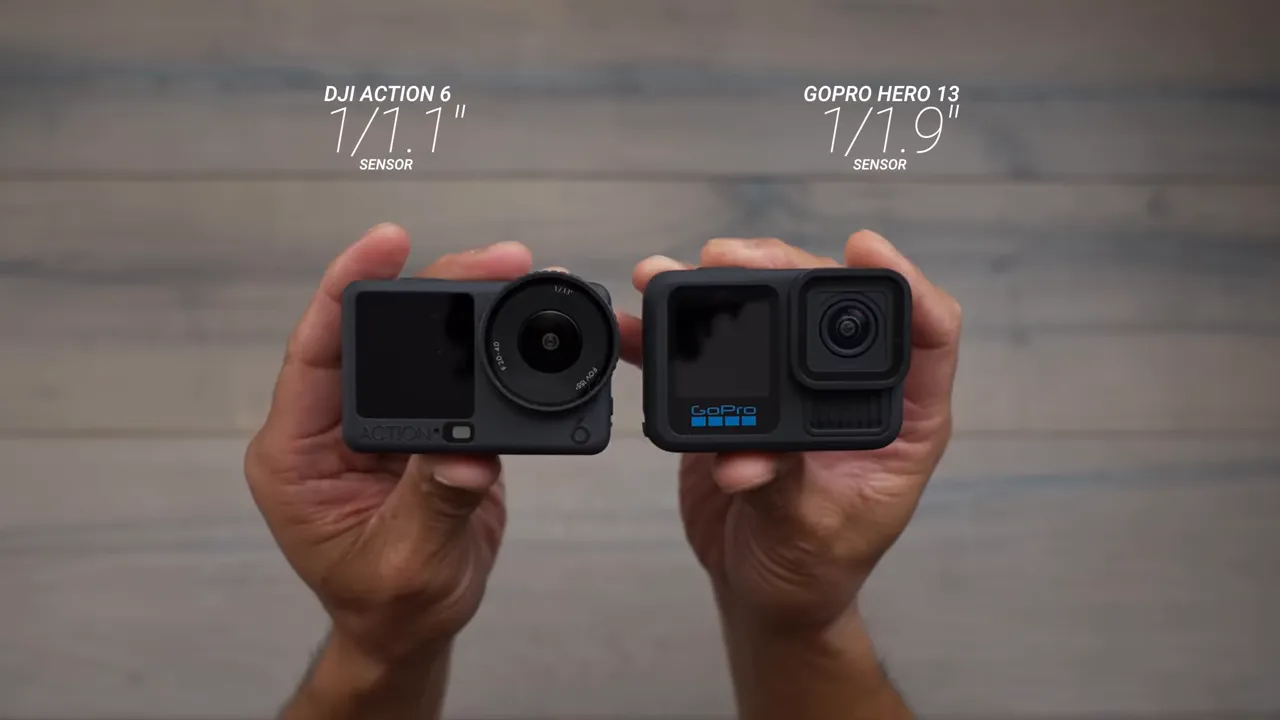
“We have a variable aperture from an F2.0 all the way up to an F4.0.”
On paper, these changes translate into better low-light capture and a more pleasing tonal range between highlights and shadows. The GoPro Hero 13, meanwhile, offers a very high resolution option at 13.5K-equivalent 5.3K at 60 fps for those who prioritize maximum detail and reframing flexibility from high-res footage.
Video codecs and color
Both cameras provide 10-bit capture and a log profile for color grading: DJI’s D-Log M and GoPro’s G-Log. That parity makes matching footage across ecosystems possible with some work, and it benefits creators who grade their clips.
Low Light and Night Shooting
The combination of the larger sensor and F2.0 aperture gives the Action 6 a noticeable advantage in low light. DJI also includes a dedicated Super Night mode to optimize video for night scenes. GoPro lacks a specialized night mode but still performs well with its sensor and processing.
Battery Life and Charging
DJI sticks with a proven long-run battery design. The Osmo Action 6 uses the same 1950 mAh battery found in the Action 5 and several other DJI models, making batteries interchangeable across the ecosystem. DJI rates these at extended runtimes and the practical tests showed DJI cameras running for well over an hour and forty minutes at higher resolutions in controlled studio tests.
GoPro altered battery design for the Hero 13, meaning older battery packs are not compatible. Real-world runtime for the Hero 13 was significantly shorter in the same studio test, often under 25 minutes while recording 4K 30 fps in the reviewer’s experiments. Charging times also favored DJI with faster charging on compatible chargers.
Framing Flexibility: Square Sensor and 1 by 1 Modes
The square 1/1.1-inch sensor unlocks a valuable workflow: shoot once, deliver many ways. DJI’s custom modes let creators shoot a square 1 by 1 frame and decide orientation later. That means vertical social reels and horizontal edits can both be cropped from the same master clip without rotating the camera on a mount.
GoPro offers a similar flexible framing option with an 8 by 7 aspect ratio that also supports reorientation in post. Both cameras cater to the multi-platform demands of modern creators.
Audio and Waterproofing
On-board microphones are inevitably small on action cameras. Both units benefit greatly from using a dedicated wireless mic when possible. The Osmo Action 6 supports DJI’s own wireless mics including the Mic Mini and Mic 2 for a seamless pairing and integration via Osmo Audio. Hero 13 accepts third-party wireless mics and can pair with external solutions but lacks a proprietary wireless mic ecosystem.
Water resistance without external housing differs too. GoPro is waterproof to 10 meters out of the box. DJI rates the Action 6 to 20 meters without an external case, giving it an edge for underwater use.
Durability and the Moving Aperture
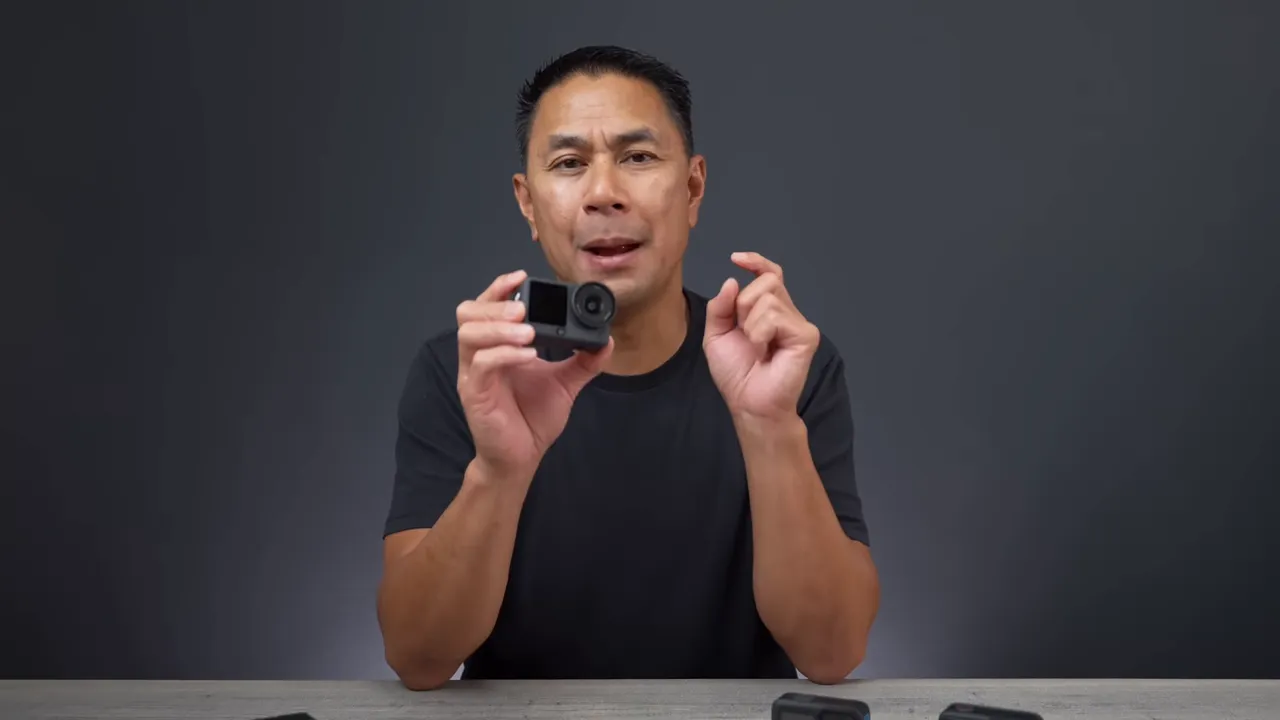
The variable aperture brings creative value but also introduces a moving mechanical element. That raises a reasonable concern for an action-oriented device that will be dropped, bumped and submerged. A moving part increases points of potential failure, which is worth tracking during long-term use.
“While having that option to have a variable aperture is really nice when you are talking about exposure, you also introduce a little bit of risk having a mechanical part in the camera.”
Accessories: Lenses, Macro, and ND Filters
Accessories expand what either camera can do. DJI released several new add-ons for the Action 6:
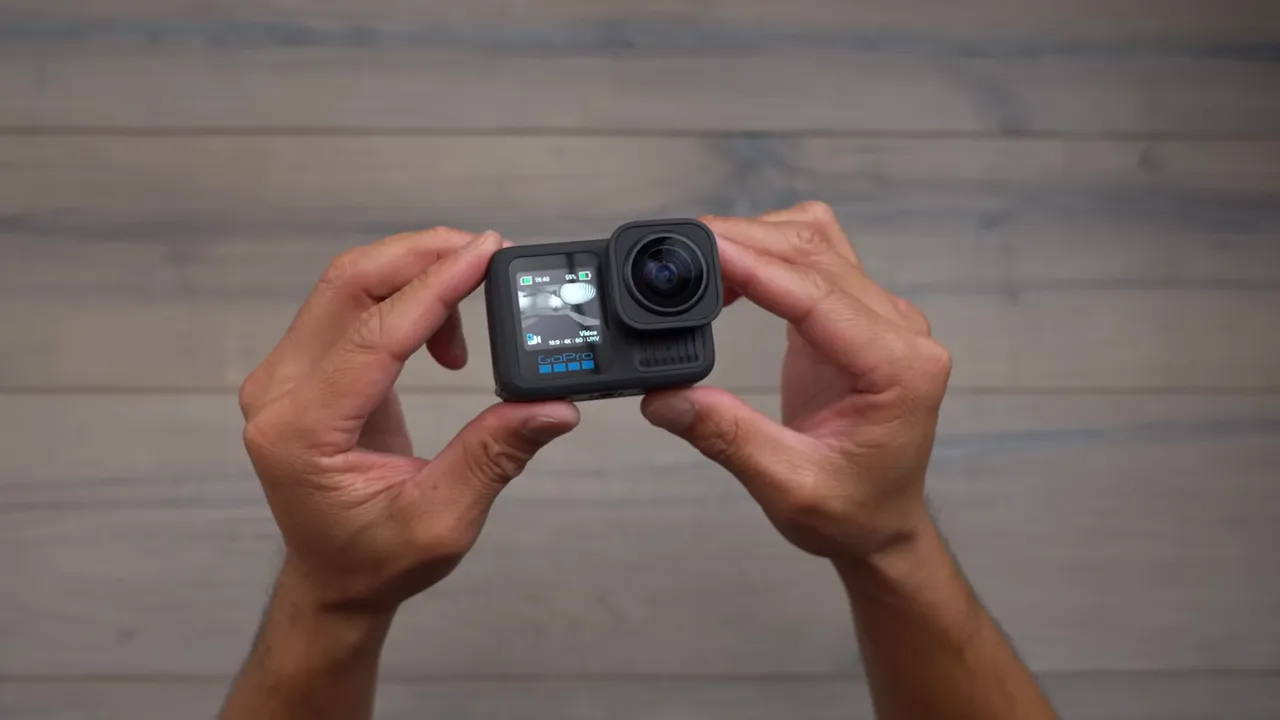
- Wide lens — removable optical front that increases the field of view to about 182 degrees. The camera auto-detects the accessory and adjusts settings.
- Macro lens — a twist-on accessory with three focus modes: macro (as close as 11 cm), portrait for talking heads (roughly 35 to 40 cm), and landscape for distant focus. The macro attachment forces an f2.0 aperture for shallow depth of field when needed.
- ND filter set — ND8, ND16 and ND32 that thread over the stock lens for motion blur control at lower shutter speeds and wider apertures.
Real-World Comparison Takeaways
For content creators deciding between these two options, the choice will hinge on priorities:
- Choose DJI Osmo Action 6 if low light performance, battery life, a variable aperture and the square sensor workflow are top priorities. The Action 6 is tuned for creators who want flexibility for social formats and longer run times in extreme conditions.
- Choose GoPro Hero 13 if ultra-high resolution, established mount ecosystems and the absolute smallest form factor for certain rigs matter most. Hero 13 remains a versatile, proven tool for those who need maximum pixel count and third-party mount ecosystems.
Final thoughts
The Osmo Action 6 is the most ambitious DJI action camera to date. By combining a larger sensor, a variable aperture and robust battery performance it raises the bar for what a compact action camera can do. The Hero 13 retains strengths in resolution and mounting options, so the decision becomes a trade-off between image control and ecosystem priorities.
Questions about long-term durability of the moving aperture remain valid. For many users the creative advantages will outweigh that risk, but it is a detail worth considering if the camera will see heavy abuse in challenging environments.
Adapted for readers by #teamHJB of ReelToRead.com — turning great videos into even better reads.

Be the first to comment