

Why the conversation mattered
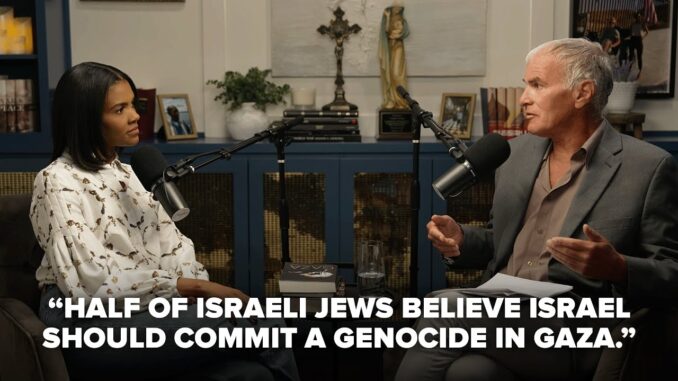
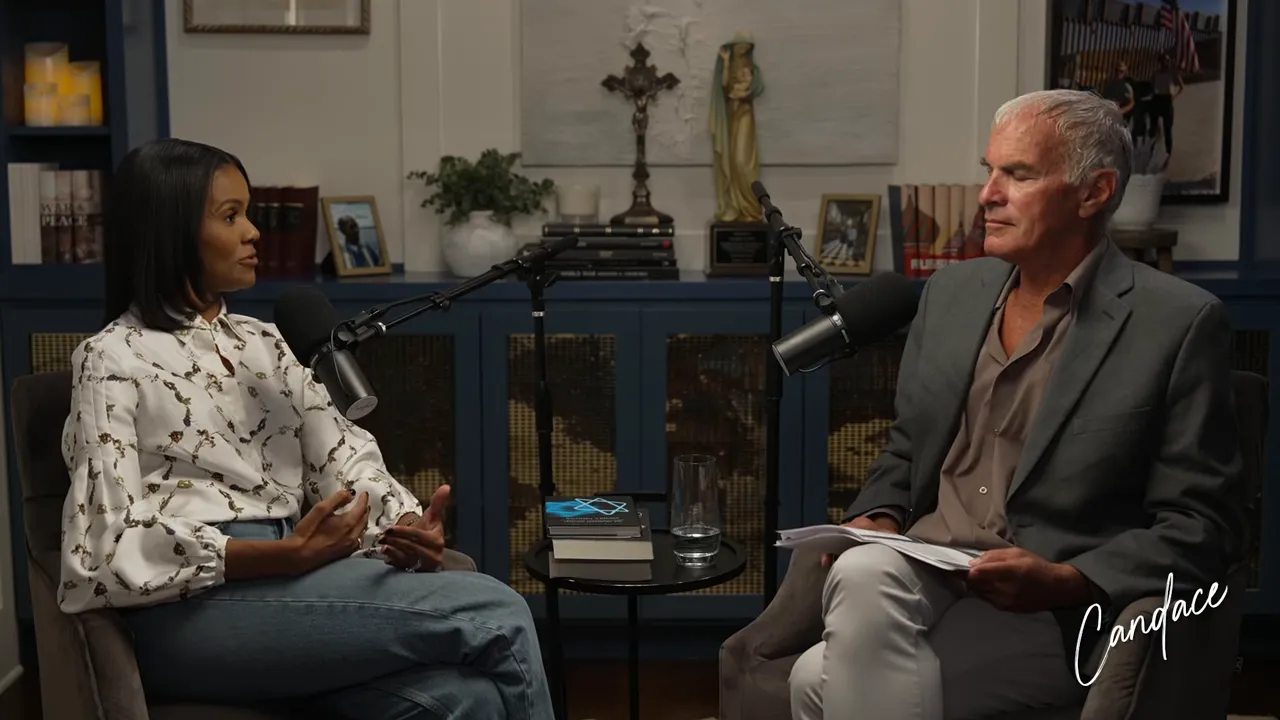
A wide-ranging conversation between Candace Owens and Norman Finkelstein reframes a debate that has become raw and immediate: the humanitarian catastrophe in Gaza, the politics behind public narratives, and the institutional forces that shape what can be said in universities, media and public life.
Finkelstein, the son of Holocaust survivors and an academic who has written extensively about Gaza and the exploitation of Holocaust memory, brings a long view of history to an argument often reduced to hashtags and slogans. Owens, who has built a large platform as a cultural commentator, pressed on questions of censorship, monetary influence and moral responsibility. Together they sketch a portrait of a crisis that is both geopolitical and moral.

Personal history and the frame of analysis
Finkelstein begins from the personal. His parents survived the Warsaw Ghetto and deportation to Majdanek and Auschwitz. That family history determined the angle from which he approaches modern political questions—especially the misuse of memory and the way traumatic histories can be mobilized.
He recounts how, as a graduate student at Princeton, he exposed a celebrated book as fraudulent, a moment that set the tone for a career in which truth-seeking produced both notoriety and professional ostracism. Finkelstein never obtained a traditional tenure-track career after being blacklisted; he tells this as part of the cost of standing apart from institutional orthodoxies.
Gaza from 1948 to the present: a compact history
Finkelstein walks through Gaza’s modern history as a continuous story of displacement, containment and deprivation. Important facts he highlights:
- In 1948 roughly 750,000 Palestinians were expelled; about 300,000 landed in Gaza.
- Today, roughly 80 percent of Gaza’s population are refugees or descendants of those refugees; about half the population are children.
- Observers across decades—UN officials, scholars and even visiting US senators—have described Gaza in stark terms: a concentration camp, a toxic dump, or “a human rubbish heap.”
He argues that Gaza’s conditions predate recent events: decades of administrative control, checkpoints, blockades and restrictions culminated in an environment the Israeli state explicitly engineered to be “unlivable” for many.
Blockade, humanitarian policy and lived deprivation
Finkelstein details the post-2006 blockade as a policy that rationed not only calories but dignity. He points to restrictions on seemingly innocuous items—baby chicks, chocolate, condiments—and to a siege logic that limited imports so that the population would live a “humanitarian minimum” designed to avoid visible starvation while maximizing coercive pressure.

October 7: the event and the context
Finkelstein does not deny the horror of October 7. He cites casualty figures and accepts that Hamas carried out an overwhelmingly violent assault in which many civilians died. But he insists context matters: long-term conditions of dispossession and near-total containment explain why a desperate, largely unemployed generation in a 26-by-5-mile territory could erupt in violence.
He compares the dynamics to historical insurgencies like Nat Turner’s rebellion, urging readers to consider political judgment and moral framing beyond the immediate facts of an atrocity.

Propaganda, evidence and contested claims
One recurring theme is the relationship between evidence and narrative. Finkelstein examines high-profile claims—particularly allegations of mass sexual violence during October 7—and points out the difference between witness testimony and material forensic evidence. He cites reports that examined thousands of photographs and hours of footage and found, by their own admission, no photographic or digital evidence of the alleged mass sexual violence.
His point is broader: when institutions, philanthropists or media figures rush to promote a narrative without corroborating material evidence, the result is propaganda that can inflame global sentiment and foreclose sober inquiry.

Money, influence and the blackmail of institutions
Perhaps the most charged element of the conversation is the critique of concentrated wealth and how it shapes public institutions. Finkelstein and Owens outline the mechanics:
- Large donors can threaten or withhold funding to pressure university presidents and media executives.
- Campaigns of financial leverage—publicized pledges to withdraw hundreds of millions—have precipitated resignations and policy shifts at elite schools.
- Influencer ecosystems and religious networks can be flooded with money to push specific narratives, turning social media engagement into a marketable commodity.
Finkelstein calls this model “financial blackmail”: a predictable, direct way of shaping what is permitted speech on campus, in newsrooms and on the public stage. Owens amplifies this claim with examples from recent campus controversies and the rapid mobilization of corporate and philanthropic power in shaping institutional responses.

Academic freedom, campus politics and the fallout
The dialogue moves to campus encampments, arrests of noncitizen students, and the legal consequences of restricting protest. They discuss a court decision that underscored free-speech protections, even for controversial or offensive slogans, and labeled the mass roundups and deportations as a form of terrorizing free speech.
Both are alarmed at the chilling effect: students and faculty who fear professional and financial consequences for dissent. Owens stresses the practical price parents and students pay—tuition, reputational risk, career prospects—and urges creative institutional responses such as new hiring pipelines and businesses that can bypass established gatekeepers.
The Holocaust industry: memory, exploitation and critique
Finkelstein revisits his controversial book on the exploitation of Holocaust memory. He argues two truths can coexist: the historical fact of the Nazi extermination campaign and the later phenomenon of memory-based commodification.
He tells stories—like the case of Nicholas Grüner, who accused a public figure of appropriating another survivor’s identity—to show how traumatic narratives can be contaminated when they are monetized or careerized. The argument is delicate: it warns against weaponizing suffering while insisting that skepticism about how memory is used is proper historical inquiry, not denial.

Public opinion, conscience and the moral test
Both interlocutors insist the current crisis is a moral test. Polls cited in the conversation show rising skepticism about Israel’s conduct among American Jews and the broader public. Finkelstein frames the debate as one between conscience and convenience: whether institutions and public figures will tolerate uncomfortable truths or will yield to financial and political pressures.
He argues that truth, once exposed to sustained documentation and images, is winning ground, but institutional retrenchment is accelerating in response.
What should readers take away?
Several practical and ethical takeaways emerge:
- Context matters: Acts of violence do not occur in a vacuum. Structural deprivation and long-term policies shape political outcomes.
- Follow the evidence: Distinguish witness claims from material, forensic, and photographic corroboration before accepting narratives that could justify large-scale violence.
- Watch institutional incentives: Be alert to how large donors and media networks can distort public debate through concentrated power.
- Protect free inquiry: Academic freedom and the right to protest are essential to democratic deliberation, even when arguments are offensive or controversial.
- Be wary of weaponized memory: Historical suffering should inform moral judgment, not be exploited to shut down debate.

Further reading and where to go next
Finkelstein’s recent and forthcoming books were discussed as resources for readers who want deeper documentation and analysis:
- Gaza: An Inquest into Its Martyrdom
- Gaza’s Gravediggers: An Inquiry into Corruption in High Places (forthcoming)
- The Holocaust Industry: Reflections on the Exploitation of Jewish Suffering
To follow Candace Owens’s channel
Embed
Adapted for readers by #teamHJB of ReelToRead.com — turning great videos into even better reads.


Be the first to comment