


Recently, a viral Ring doorbell camera video surfaced online showing a tense encounter between Clayton County police officers in Georgia and homeowners right at their front door. The footage, initially shared by We The People University, sparked widespread discussion about the limits of police authority and the constitutional rights of homeowners. The Clayton Police Department later responded with their own video, presenting their side of the story. Here, we will break down the incident, analyze the legal issues involved, and explore the constitutional protections that come into play during such confrontations.
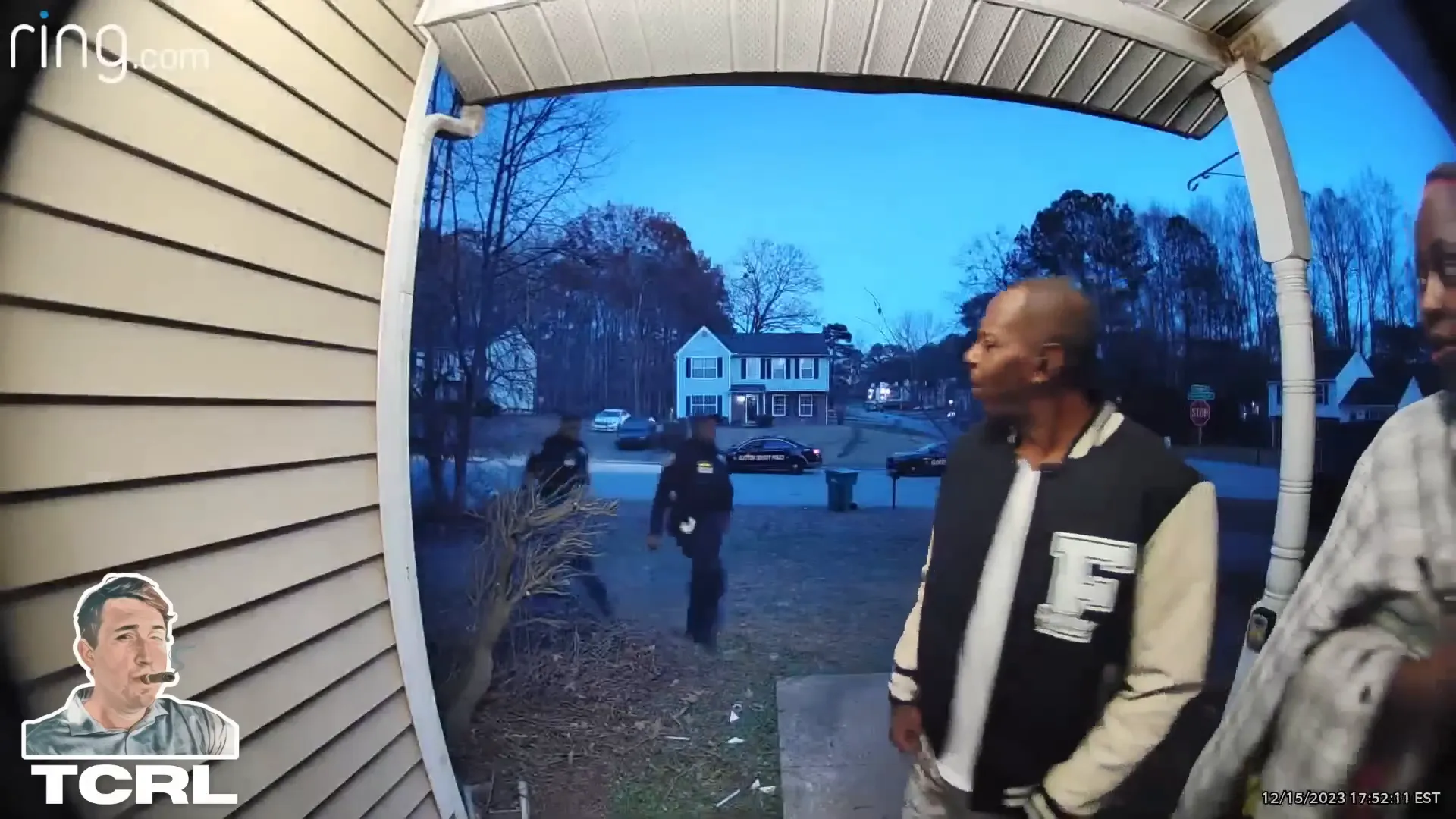
The Incident: A Closer Look at the Encounter
From the footage and context, it appears that the couple was returning to their home when police officers, who were investigating a nearby property, approached them. The officers attempted to compel the homeowners to participate in their investigation by providing identification and not allowing them to enter their own home freely.
The video shows officers questioning a male individual near the front door, repeatedly demanding his name and threatening to arrest him if he stepped inside. The man refuses to comply, stating he has nothing to do with the investigation and refuses to provide his information. The officers insist on identification, citing their ongoing investigation and implying a legal obligation to comply.
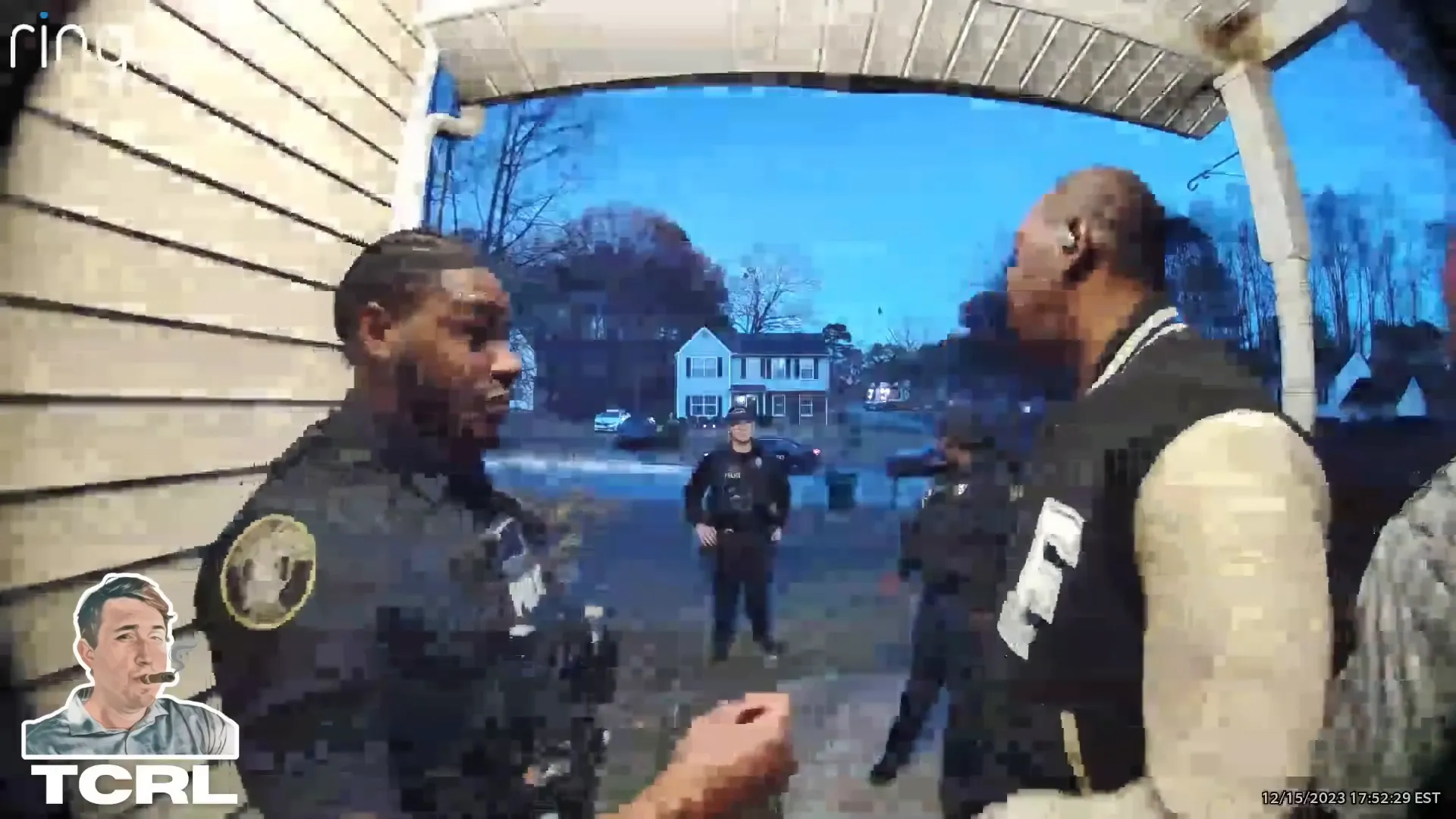
At one point, the officers mention a vehicle involved in the investigation, parked behind the house, and question the male about it. The exchange becomes increasingly tense, with officers warning that stepping inside the home will result in arrest, while the homeowner stands firm on his rights.
Meanwhile, a female involved in the encounter is also questioned, and the officers mention she might have a warrant, though it’s unclear if it is for Clayton County or another jurisdiction.
The Police Department’s Response and Investigation Details
In response to the viral video, the Clayton County Police Department released their own footage and a detailed statement explaining the background of their investigation. On December 15, 2023, officers responded to a property damage report in College Park, Georgia. The victim alleged an ongoing dispute with another female who had repeatedly trespassed on her property.
According to the police report, following an earlier dispute, the female suspect, accompanied by four others, returned to the victim’s residence and caused significant damage:
- Smashed windshield and front headlight of the victim’s vehicle
- Rammed another vehicle into the victim’s parked car
- Kicked the victim’s front door, causing further damage
The victim reported over $5,000 in damages, and the incident was captured on video. A male, who remains anonymous, reportedly provided transportation for the suspects and later agreed to guide officers to where the suspects had been dropped off. At this secondary location, officers found a vehicle matching the description of the one used to ram the victim’s car, parked behind a house.
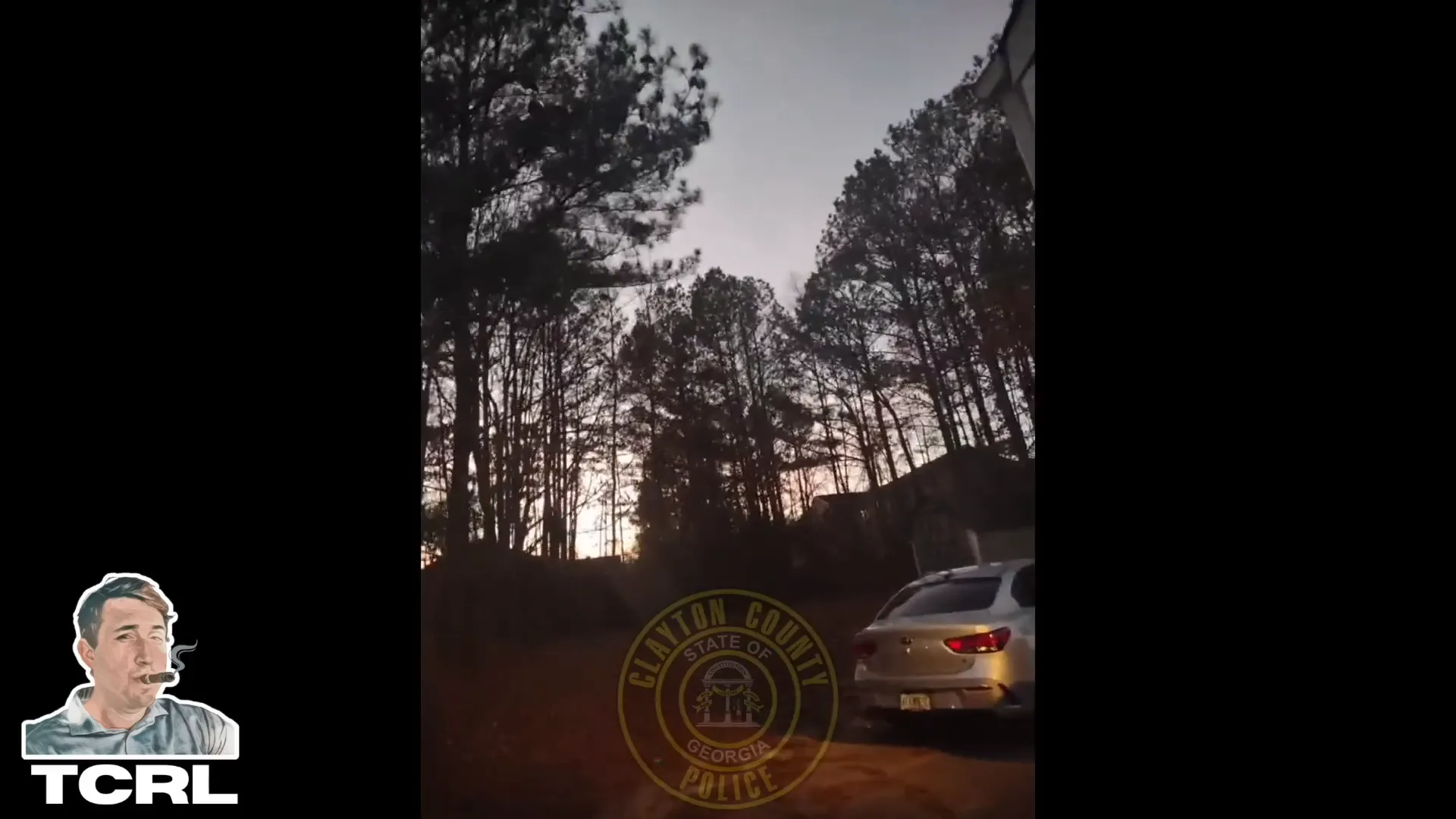
During their investigation at this location, officers encountered the male individual seen in the viral video and began questioning him about the vehicle. This interaction is the focus of the constitutional discussion that follows.
Legal Analysis: The Fourth Amendment and Curtilage Protection
The core constitutional issue here revolves around whether police officers can approach a homeowner’s front door, within the curtilage of the home, and compel identification or detain them without a warrant.
The Fourth Amendment protects individuals against unreasonable searches and seizures, with the home being the most protected place under the law. This protection extends to the curtilage of the home — defined as the area immediately surrounding and associated with the home, including front yards, porches, and driveways directly connected to the house.
In the 2018 U.S. Supreme Court case Collins v. Virginia, the Court clarified that law enforcement generally cannot enter a home or its curtilage without a warrant, except under very limited circumstances. This was reinforced by the Eleventh Circuit Court of Appeals in United States v. Walker (2015), which is binding precedent in Georgia.
In this case, the viral video clearly shows the encounter happening at the front door — part of the home’s porch area, which courts have recognized as within the curtilage. The officers’ attempt to force the individual to identify himself and prevent him from entering his house raises serious constitutional questions.
Curtilage Defined and Its Legal Implications
According to case law, the curtilage may include portions of a driveway adjacent to the home where home life activities extend. For example, the Supreme Court found that a porch area behind the front perimeter of a house, enclosed on multiple sides and providing direct access to the home, falls within the curtilage.
The 2013 Eleventh Circuit case Florida v. Jardines also held that bringing drug-sniffing dogs onto a front porch constitutes a search under the Fourth Amendment because the porch is an extension of the home.
Given this legal framework, the police officers’ actions in this video likely occurred within the protected curtilage of the home, meaning they would have needed more than just reasonable suspicion to detain or compel identification.
Warrant and Probable Cause Requirements
While the officers make a strong case for reasonable suspicion based on their investigation, reasonable suspicion alone does not justify a stop or detention within the curtilage. Instead, officers must have:
- Probable cause to believe a crime has occurred
- A warrant authorizing entry or search of the home or its curtilage
Without both, their demand for identification and threat of arrest for entering the home are constitutionally questionable.
Potential Exceptions
There are limited exceptions to the warrant requirement:
- Arrest Warrants: If officers have an arrest warrant for a person, they may enter the home to arrest that individual. In this case, the female involved may have had an outstanding warrant, which could justify her arrest.
- Exigent Circumstances: Officers can enter without a warrant if there is an immediate threat of evidence destruction, danger to life, or hot pursuit. Here, there was no indication of exigent circumstances justifying warrantless entry.
Since the officers were only trying to identify the male individual and no evidence suggested immediate risk of destruction or harm, exigent circumstances likely do not apply.
Conclusion: Upholding Constitutional Protections at the Doorstep
This incident highlights the critical balance between law enforcement investigations and the constitutional rights of homeowners. While police may have reasonable suspicion in a public context, the Fourth Amendment places a higher bar for actions within the home’s curtilage.
The video clearly shows an encounter at the front porch, a legally protected area, where officers demanded identification without a warrant. Unless the officers can prove they had a warrant or a valid exception applies, their actions raise serious constitutional concerns.
Homeowners should be aware that their rights to privacy and freedom from unreasonable searches extend up to their front door. Police cannot simply compel identification or prevent entry without meeting legal standards designed to protect those rights.
As this case continues to develop, it will be important to watch for further clarifications from the police department, possible legal challenges, and broader discussions on the limits of police authority in residential settings.
Remember, our freedom does not end where fear begins. Standing up for your rights can be intimidating, but it is essential to maintaining the protections guaranteed by the Constitution.

Be the first to comment