


Green Beret Vet Tony Aguilar Exposes Gaza’s Horrifying War Crimes

In a gripping and deeply personal interview conducted by Tucker Carlson, retired Lieutenant Colonel Tony Aguilar, a decorated Green Beret and West Point graduate, shares his firsthand experiences of the humanitarian crisis and war crimes unfolding in Gaza. Aguilar’s unique perspective, shaped by 25 years of combat deployments and twelve tours in some of the most volatile regions worldwide, offers an unfiltered look behind the scenes of the Gaza Humanitarian Foundation (GHF) aid distribution effort and the disturbing realities faced by Palestinian civilians.
Who Is Tony Aguilar and What Is the Gaza Humanitarian Foundation?
Tony Aguilar is a retired Lieutenant Colonel of the United States Army with a distinguished career, including service as a combat infantry officer and Green Beret. Over his extensive military tenure, he was deployed multiple times to Iraq, Afghanistan, Syria, and other global hotspots, earning high honors such as the Purple Heart and Bronze Star for valor.
Earlier this year, Aguilar was deployed to Gaza under the auspices of the Gaza Humanitarian Foundation (GHF), an organization established to manage aid distribution in Gaza after the United Nations aid mechanism was blocked. Starting operations on May 26, 2025, GHF replaced the UN’s role but operates under opaque circumstances, with limited public information on its funding, structure, or accountability.
Aguilar was recruited by UG Solutions, a subcontractor responsible for security in the aid distribution process. His military experience made him an ideal candidate for the mission, though he had no prior knowledge of GHF or UG Solutions before being contacted. Importantly, Aguilar emphasizes he has no political agenda; his motivation stems from a patriotic desire to inform the American public and uphold humanitarian values.
Gaza’s Devastation: A Post-Apocalyptic Landscape
Upon arrival, Aguilar’s impression of Gaza was stark and haunting. He described the environment as “post-apocalyptic,” likening it to scenes from the movie Terminator 2 where destruction is absolute. Entire neighborhoods in places like Rafa have been leveled, with no buildings left standing and rubble piled high. Personal belongings such as couches, refrigerators, and shattered family photos litter the ruins, symbolizing lives torn apart.
Despite having witnessed combat zones in Iraq, Afghanistan, and other conflict areas, Aguilar says nothing compares to the brutality and scale of destruction in Gaza. He asserts that the violence there crosses clear boundaries established by international laws of armed conflict and humanitarian protocols.
The US Role and Presence in Gaza
Aguilar reveals that the United States is deeply enmeshed in Gaza’s current situation. Over 300 contractors working under UG Solutions are predominantly American combat veterans, many from elite special operations units. These contractors enter Israel on tourist visas, armed with automatic weapons, and operate in Gaza alongside Israeli Defense Forces (IDF).
He explains that the mission was hastily assembled, with little regard for legal or operational protocols. The choice to enter on tourist visas was a cost and time-saving measure, reflecting the chaotic nature of the operation’s setup.
Humanitarian Aid Distribution: A War Crime in the Making
One of the most alarming revelations from Aguilar’s testimony is the location and operation of the humanitarian aid distribution sites. There are only four such secure sites under GHF in Gaza, down from 400 prior to the blockade. Three of these sites are clustered in the far southwest corner of Gaza, near the Egyptian border, and critically, all are co-located with active Israeli combat units.
This proximity places aid distribution directly within an active combat zone, which by international law constitutes a war crime. Aguilar stresses that this violates the Geneva Convention protocols that the United States is still signatory to. The fourth site is also adjacent to a Merkaba tank company, further underscoring the danger to civilians.
Aguilar’s military background gives weight to his assertion that such planning is either grossly negligent or intentionally reckless. The arrangement endangers civilians and aid workers alike, turning aid sites into death traps rather than sanctuaries.
Starvation and Isolation: The Human Cost
The population of Gaza, estimated at around 2.2 million before the blockade, has been severely reduced by death and displacement. Most Palestinians are isolated from aid, especially those in northern Gaza City and Jabalja, where starvation and suffering are most acute.
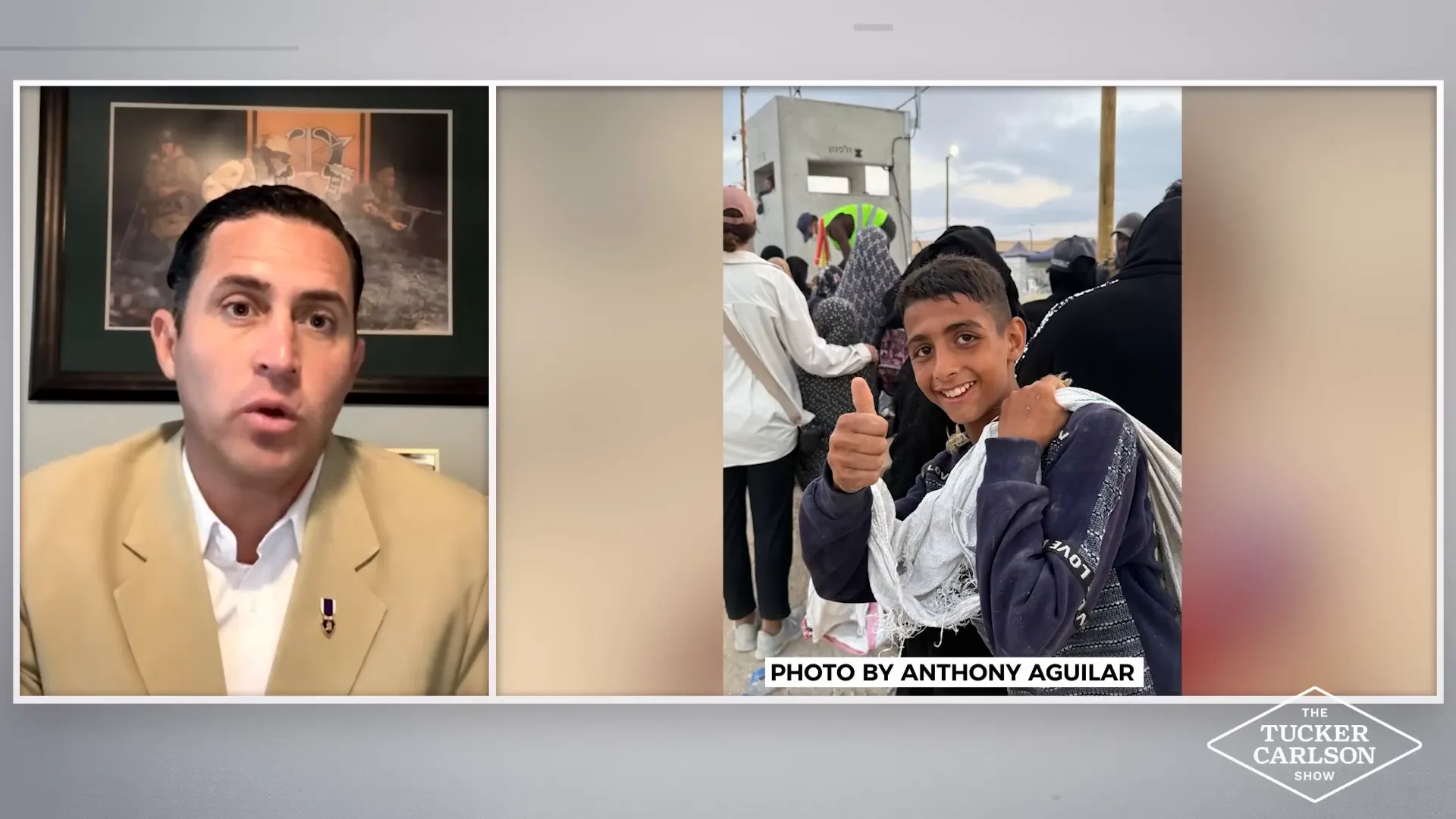
Aguilar describes the situation as mass starvation, with civilians forced to walk up to 12 kilometers without water—none is provided by GHF due to cost concerns—to reach aid sites. The food distributed requires water to prepare, adding to the hardship. The United States government’s failure to recognize and address this starvation is both negligent and shameful, Aguilar says.
Opaque Funding and Questionable Leadership of GHF
The Gaza Humanitarian Foundation’s leadership and funding are shrouded in mystery. Aguilar points out that the organization is led by a Christian Zionist figure with no background in humanitarian aid. Financial transparency is virtually nonexistent, with Switzerland refusing to open bank accounts for GHF, a red flag given Switzerland’s reputation for strict banking standards.
Notably, Jake Wood, the original head of GHF, resigned on the very first day of distribution citing unethical practices and lack of preparedness. Boston Consulting Group also stepped away after uncovering undisclosed issues. These departures indicate deep systemic problems within GHF’s operation.
The Reality at Aid Distribution Sites: Death Traps and Dehumanization
Aguilar paints a harrowing picture of the aid distribution process. Thousands of starving Palestinians queue for hours, held back by tanks and then released en masse toward the sites. As they move, the IDF fires machine guns, mortars, and tank rounds—not to kill intentionally, but to control and direct the crowd. This practice results in deaths and injuries among civilians, including women, children, and the elderly.
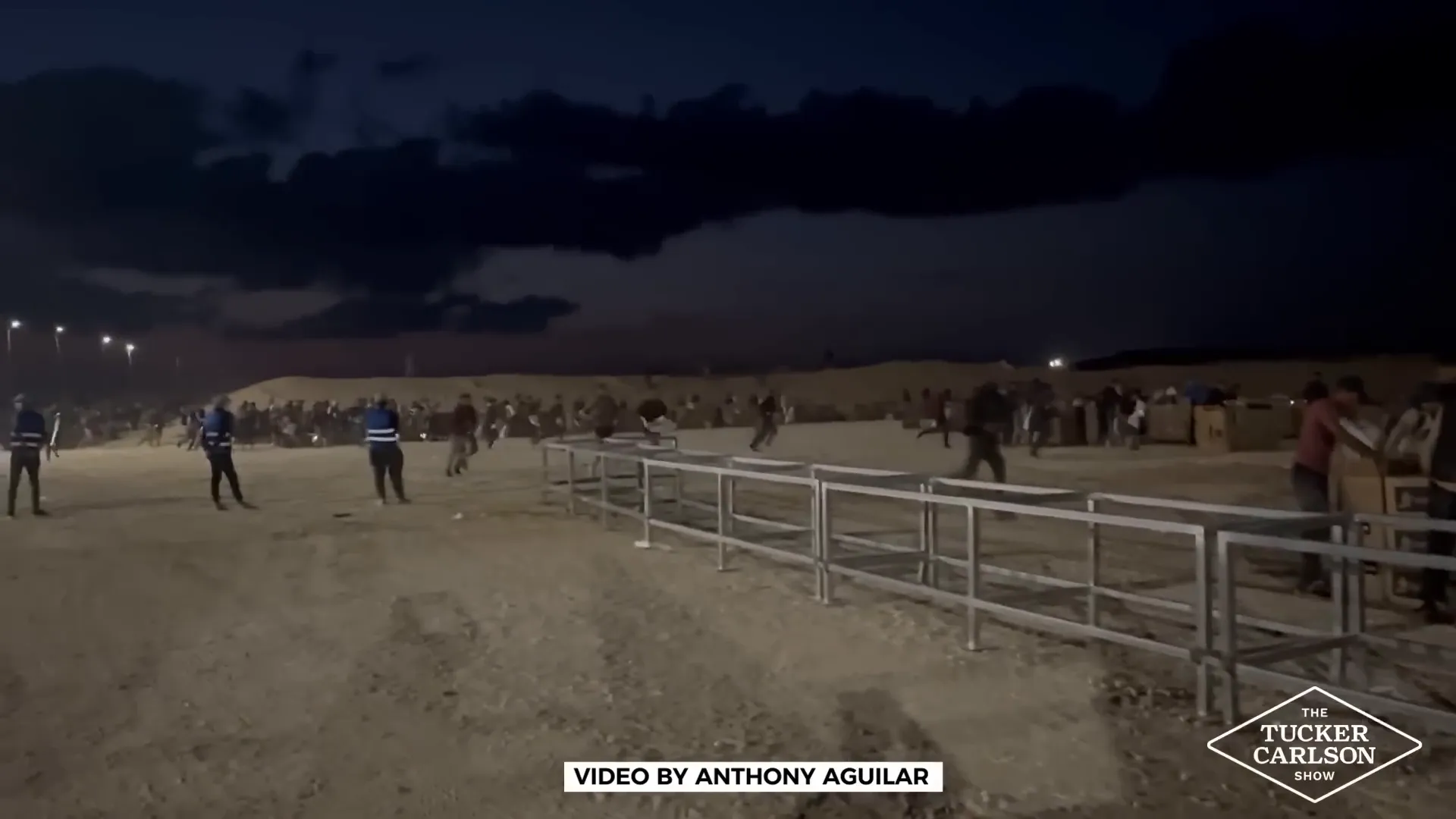
He recalls the “eight minutes of mayhem” during which 25,000 boxes of food are stripped from the sites in a chaotic rush. The security ratio is one guard per 409 people, making safe crowd control impossible. After the distribution, the crowd is cleared using stun grenades, pepper spray, tear gas, and live fire aimed at feet or in the air—still a violation of international law.
Aguilar emphasizes that despite the violence, he personally never had to draw his weapon or use force against civilians, underscoring the immaturity and recklessness of others involved.
The Killing of Amir: A Child’s Tragic Story
One of the most poignant moments in Aguilar’s account is the story of Amir, a young boy he met at a distribution site. Emaciated, barefoot, and carrying scraps of food, Amir showed Aguilar a profound gesture of respect by kissing his hand in Arab culture. Aguilar promised him that people care, that America cares.
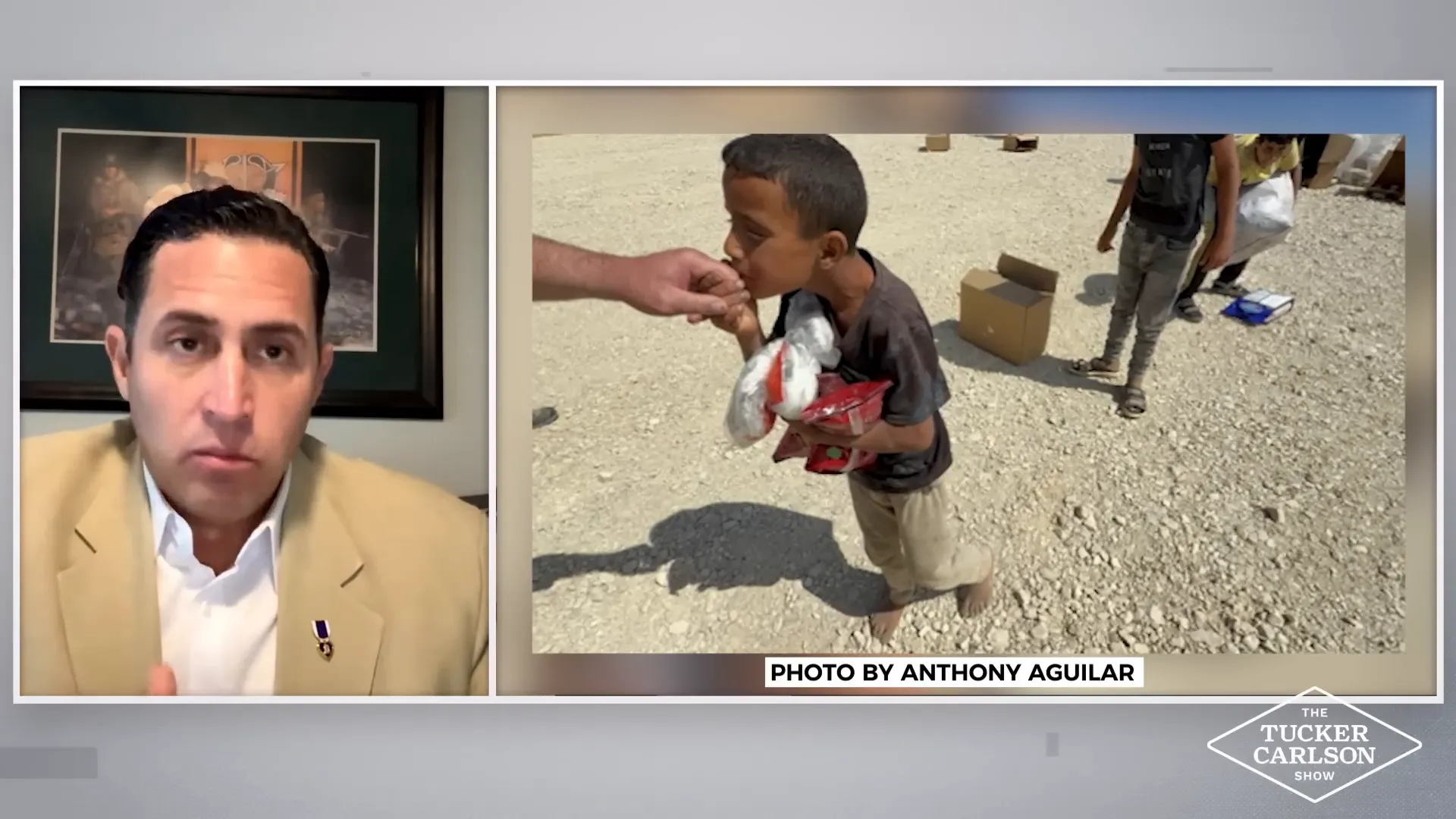
Tragically, Amir was killed by IDF gunfire as he left the distribution site, shot amid chaotic crowd control efforts. Aguilar describes this as a failure of discipline, leadership, and basic human decency. He refutes claims by GHF and others denying Amir’s death, pointing to verified photographs and videos that prove otherwise.
Dehumanization and War Crimes: The Treatment of Palestinian Civilians
Aguilar condemns the widespread dehumanization of Palestinians by both the IDF and some contractors on the ground. Civilians are referred to as a “zombie horde” and “the enemy,” despite being innocent bystanders—including women, children, the elderly, and disabled individuals.
He highlights multiple violations of the Geneva Convention, including:
- Displacement of civilian populations without allowing return
- Targeting civilians with lethal force for crowd control
- Labeling an entire population as enemy combatants
- Use of razor wire at civilian aid sites
- Placing humanitarian aid sites within active combat zones
Such actions, Aguilar warns, are not only illegal but betray American values and risk damaging the United States’ global standing.
What Must Be Done: Calls for Accountability and Change
Aguilar urges the immediate cessation of funding to the Gaza Humanitarian Foundation, demanding transparency and accountability for the tens of millions of dollars spent. He calls for a return to the United Nations aid model, which was capable of delivering aid at scale with proper oversight.
The aid mechanism must be capable of serving over 2.2 million people with three meals a day, including essentials like water, fuel, medicine, and hygiene products—not just dried food. The current system, with its limited sites and insufficient aid, perpetuates starvation and suffering.
Furthermore, Aguilar stresses the need for the Israeli military to be held accountable for its conduct in Gaza. He acknowledges the complexity of the situation but insists that leadership failures have led to unacceptable civilian casualties and violations of international law.
He appeals to both American and Israeli leadership to uphold humanity, discipline, and respect for human dignity, warning that failure to do so will have dire consequences.
Final Thoughts
Tony Aguilar’s testimony is a powerful reminder of the human cost of conflict and the importance of integrity, transparency, and accountability in humanitarian efforts. His military background, combined with his direct experiences in Gaza, provide a credible and urgent call to action for policymakers and the public alike.
As Aguilar poignantly states, this is not just a story of politics or ideology—it is the story of human beings suffering in a conflict zone, demanding our attention and compassion.
For those seeking to understand the realities on the ground in Gaza and the role of the United States, Aguilar’s insights are indispensable. It is a story that deserves to be heard widely and acted upon with urgency.
Credit to Tucker Carlson for providing the platform for this revealing and courageous interview.

Be the first to comment