
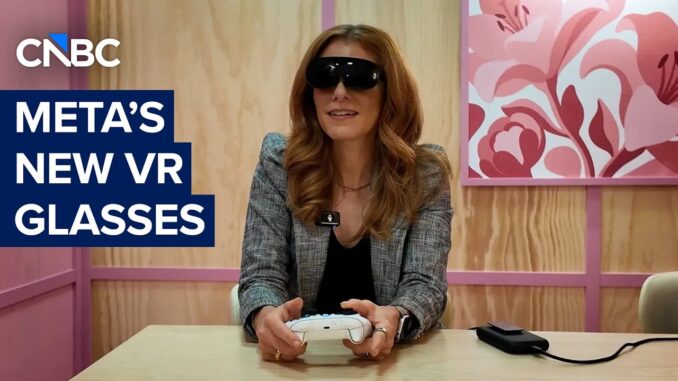

Meta’s newest virtual reality device looks more like a pair of oversized sunglasses than a traditional headset. Put them on, and a large, high-resolution screen can make a Billie Eilish performance feel as though it is playing in a movie theater. The glasses can also run apps, games and a workspace with virtual monitors.
Unveiled at Meta Connect, the glasses are scheduled to go on sale in spring 2027 for $1,299. CNBC Television’s reporting offers a hands-on look at what this new form factor does well and where it still feels unusual.
Glasses on your face, a computer in your pocket
The device pairs dark, wraparound glasses with a separate, wired processing unit, or puck. The glasses feel lighter than other VR headsets I’ve tried, though the puck has some weight to it. It can go in a pocket rather than sit on your face. Mark Zuckerberg said the eyewear is five times lighter than the Meta Quest 3 headset.

These are different from both a Quest headset and Meta’s display glasses. The display glasses let you look through their lenses at the world around you. With this VR device, cameras capture your surroundings and show you a video version of them inside the glasses. You can still see the room, but looking at it through cameras takes some getting used to.
Look, tap and swipe to get around
Inside the glasses is a home screen of apps. Their cameras track your hands, so you can select something based on where you’re looking and a tap of your fingers, then scroll with a swiping motion. You do not need a wristband for those basic interactions.
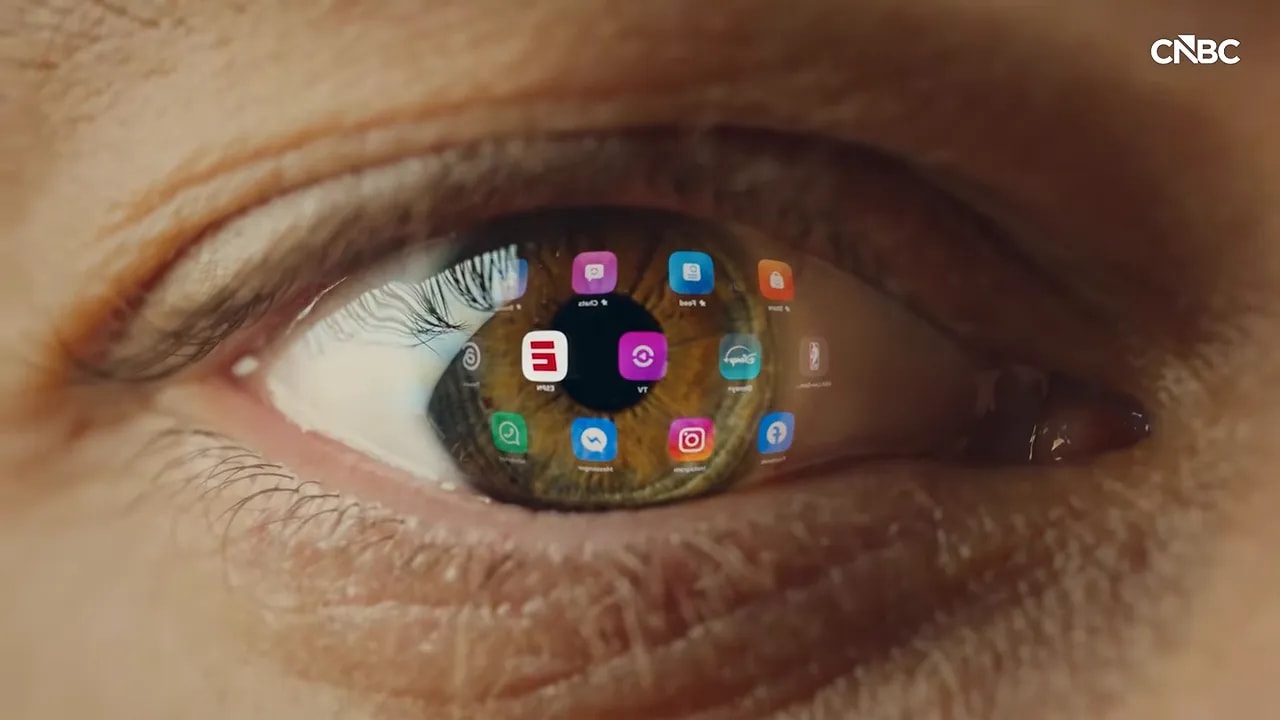
Entertainment is an obvious use. The 5K display is designed for games, shows and sporting events, and the large virtual screen makes video feel especially immersive. There are everyday apps here, too: you could open Instagram and leave a comment using a virtual keyboard.
The workspace is the most interesting part
The feature that stood out most to me was the ability to put a virtual keyboard on a flat surface and type there. It turns an ordinary tabletop into part of the workspace, without requiring a physical keyboard for that interaction.

Sync the glasses with a laptop, and you can also open large virtual monitors for the applications and websites you want to use. That is a different proposition from simply carrying a smaller screen: it gives you room to spread out your work while keeping the physical setup compact.

The glasses can be used without pairing them with a phone or computer. Laptop syncing adds the virtual-monitor workflow, but it is not required for the device’s other functions.
A new route into virtual reality
At $1,299, these glasses are an attempt to make VR useful beyond gaming. The lighter fit, hand controls and virtual workspace make the case for wearing them to get things done as well as to play or enjoy a show.
The trade-off is the camera-based view of the real world. It is striking to have a huge display in glasses this size, but it still feels different from looking directly through a lens. For people more interested in apps, entertainment and portable work than a conventional gaming headset, that balance may be what makes this new form factor worth considering.
Video and reporting credit: CNBC Television. CNBC’s Julia Boorstin tried the glasses in the hands-on report.

Be the first to comment