
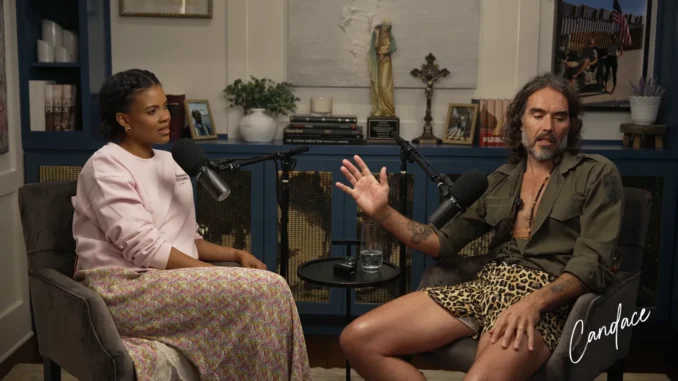

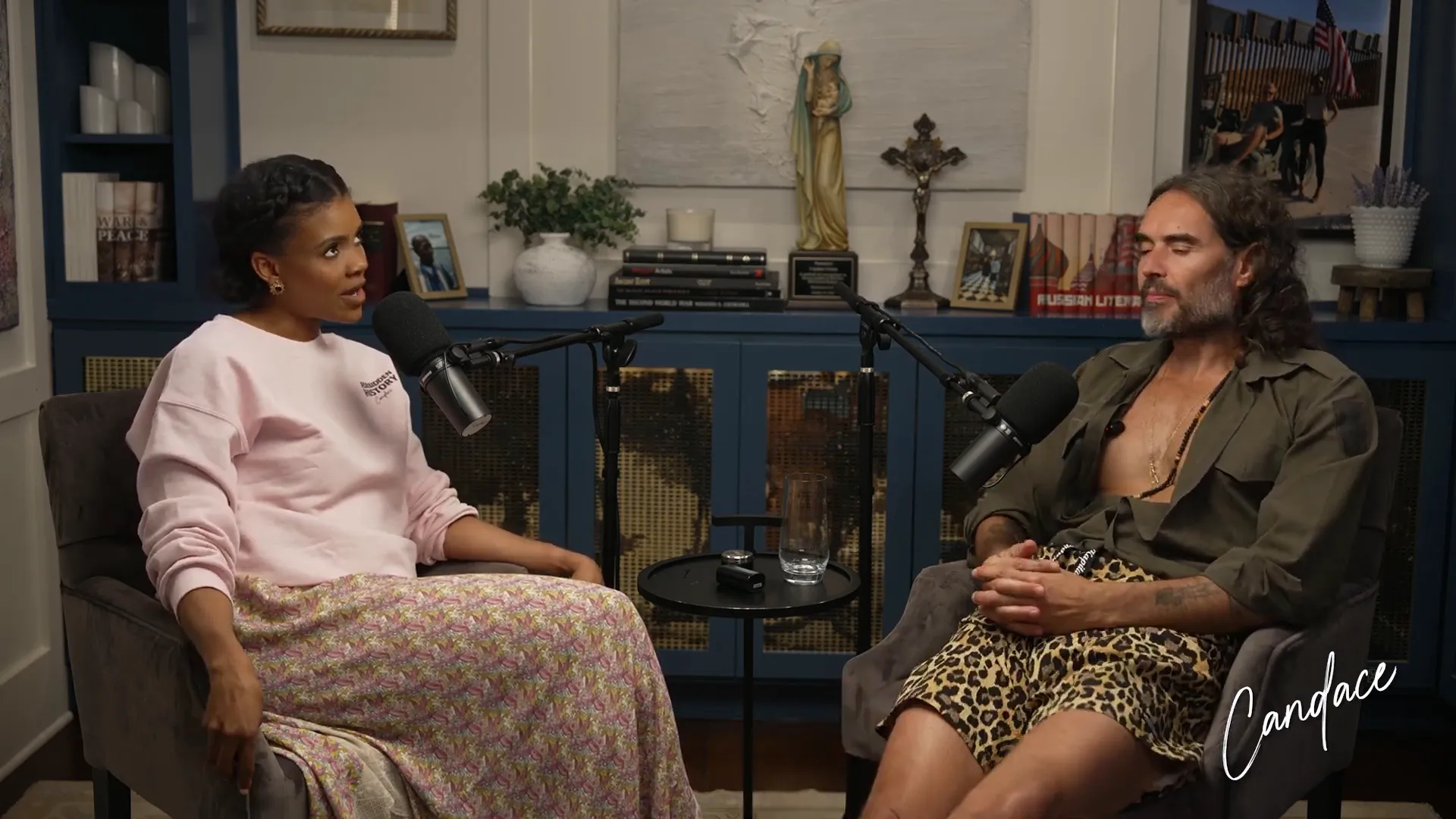
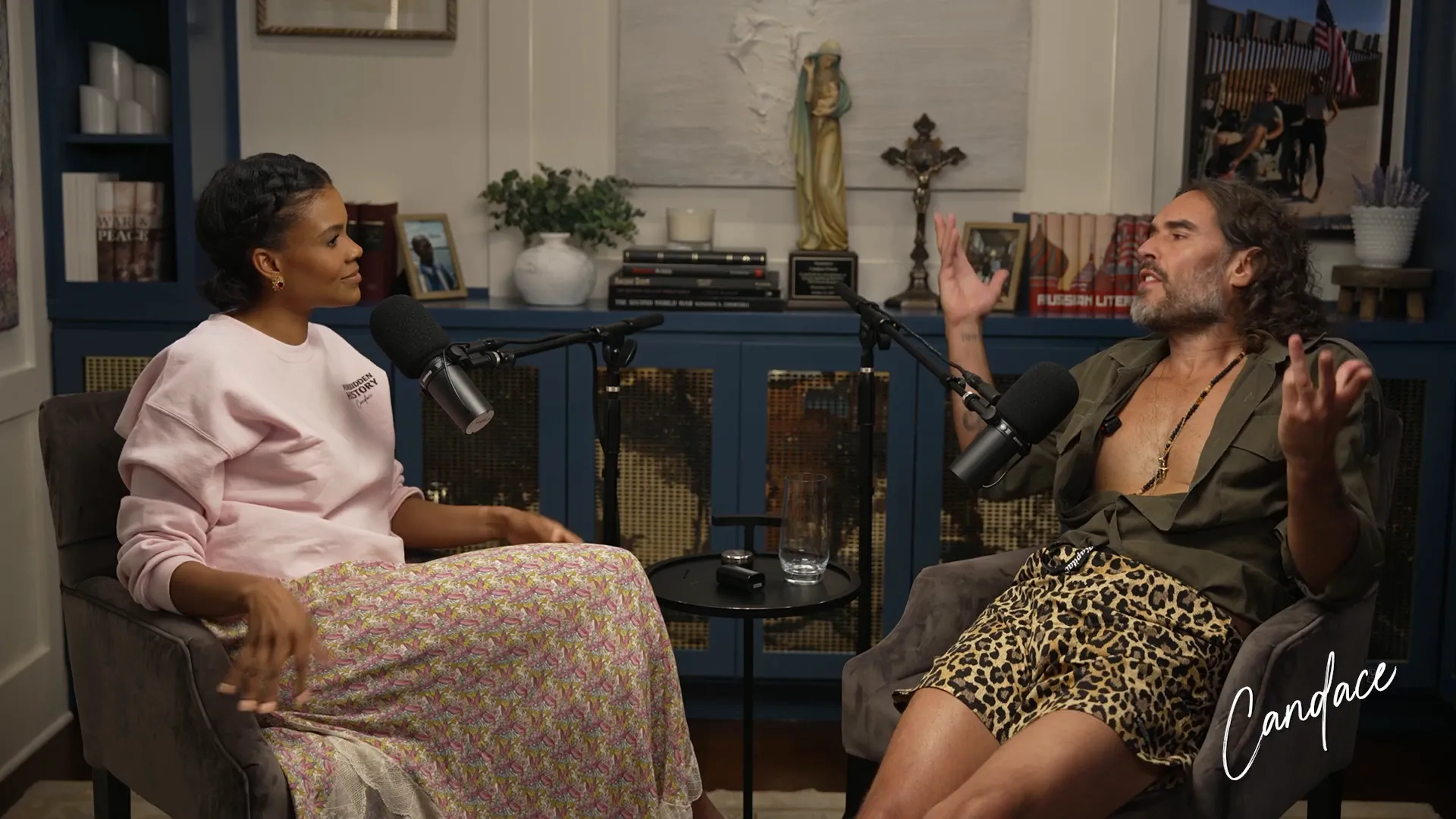
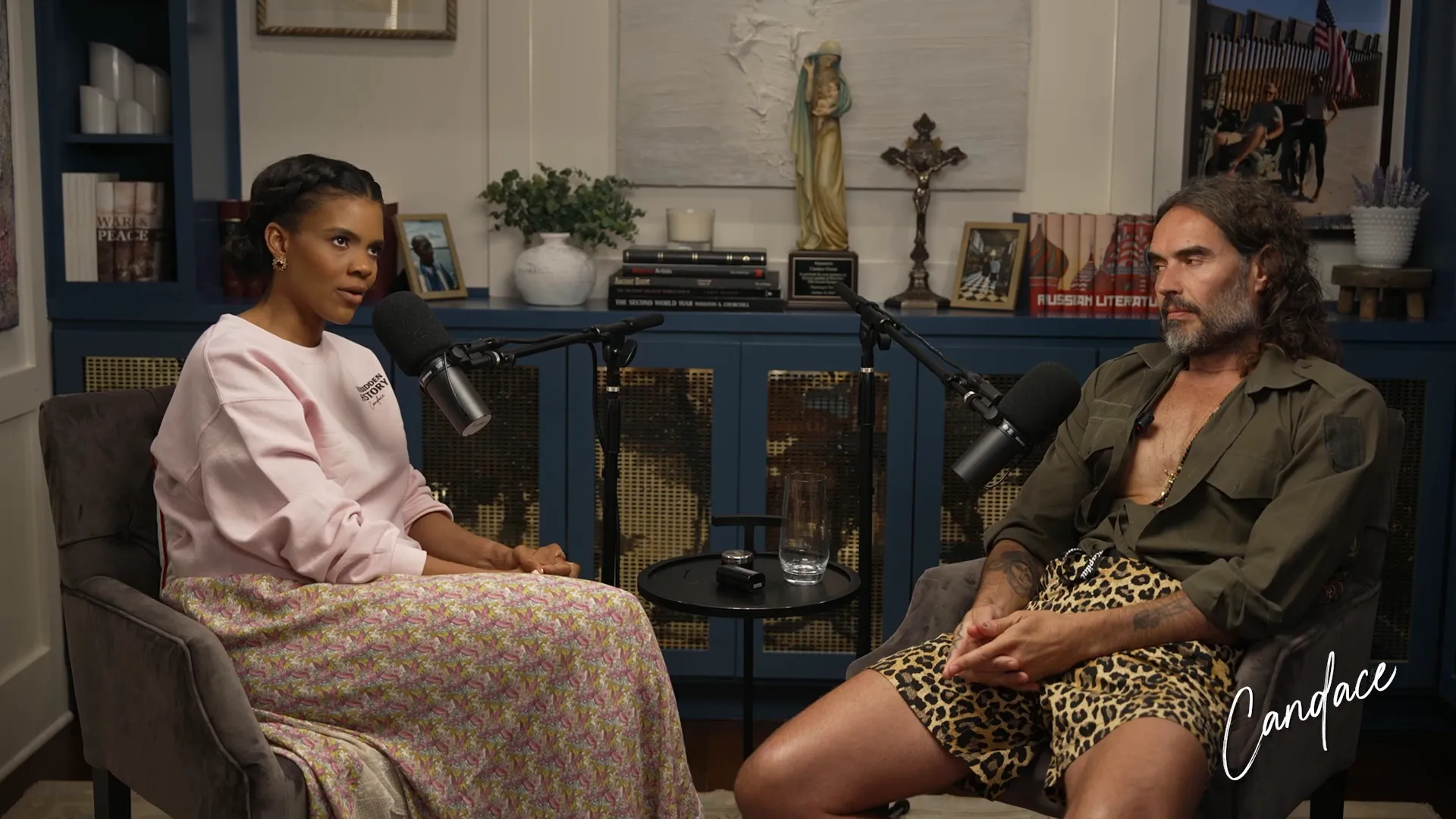
In a captivating conversation that spans politics, Hollywood, faith, psychology, and culture, Candace Owens sits down with Russell Brand to explore some of the most pressing issues of our time. Their discussion delves deep into the nature of modern society, the influence of media and technology, and the transformative power of faith and personal growth. This article distills their rich dialogue into key insights and reflections that resonate beyond the screen.
Authenticity, Identity, and the Actor’s Journey
Russell Brand opens with reflections on the tension between public personas and the “real self,” especially in the acting world. He shares how being someone else can be just as “annoying” as being oneself, emphasizing the importance of “finding yourself in the constant living flow” rather than feeling suspended or disconnected.
He also discusses the dynamic between actors and directors, contrasting the meticulous control of a director like Stanley Kubrick with a more spontaneous approach to filmmaking. Brand admits to sometimes prioritizing capturing the moment over technical perfection, even if it means accepting imperfections like a hand accidentally in the shot.
Parenting as a Cast of Characters and the Role of Autonomy
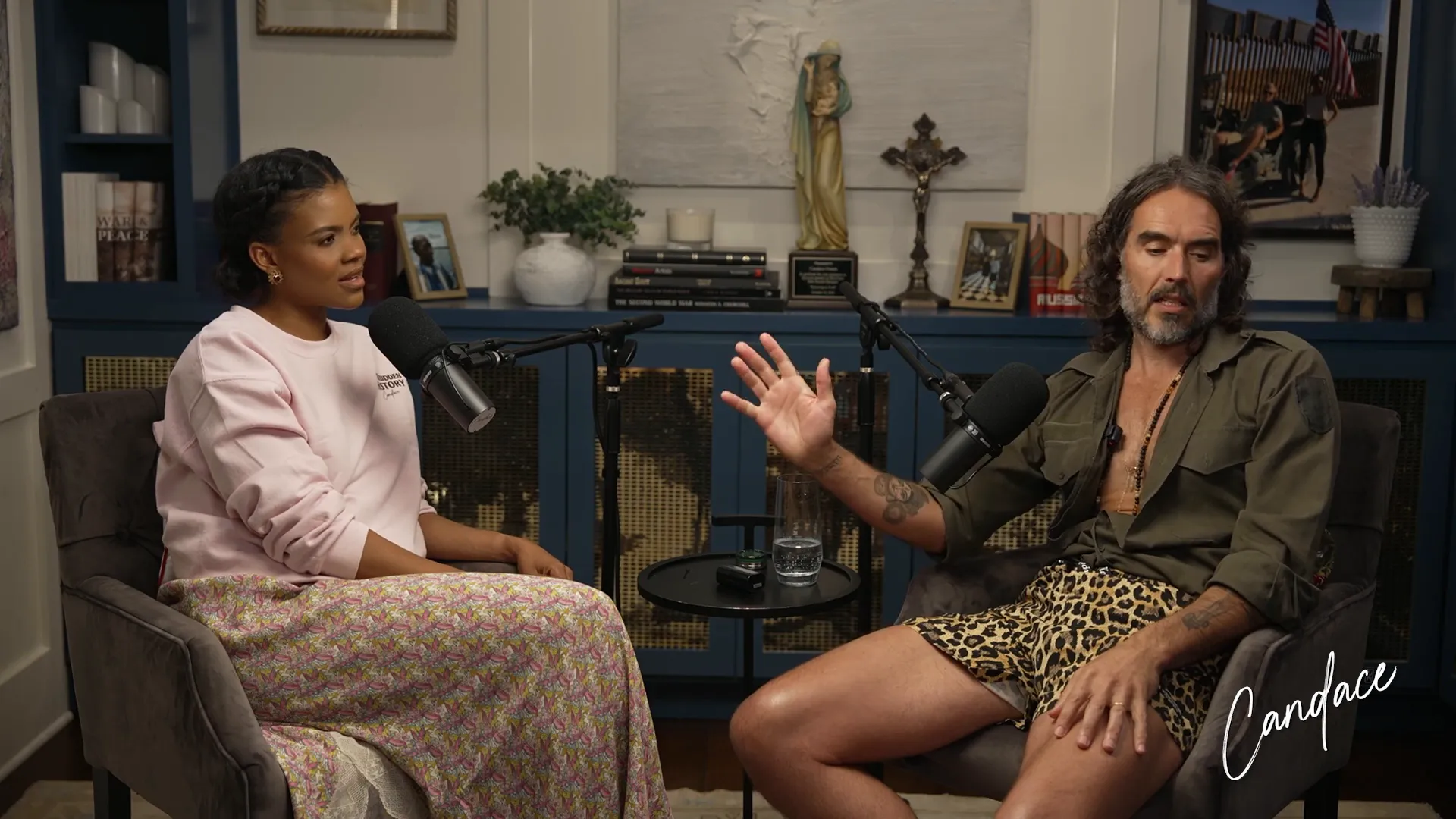
Brand likens parenting to creating a cast of characters, where children become the heroes of their own stories. He poetically compares the word “parent” to “parenthesis,” suggesting that parents hold their children gently, allowing them space to grow without interference from external forces like the state or peer pressure.
Both Brand and Owens discuss the importance of protecting family autonomy and resisting societal attempts to impose control. Brand humorously recalls his “communist” past and how Owens “saved” him from it, underscoring their shared journey toward a more grounded, faith-oriented worldview.

Faith, Saintliness, and Cultural Divides
Drawing on the story of Saint Francis and the metaphor of burrowing downward only to ascend, Brand and Owens explore the idea that life is a spiritual journey back to eternity. Despite their political differences—Brand identifying with the left and Owens with the right—they find common ground in faith and the shared human experience.
They criticize the polarization in society and express hope that cultural shifts, particularly a move away from divisive left-right paradigms, are underway. Brand calls for unity and love as the fundamental duties of humanity.

Hollywood Babylon: The Dark Side of Fame and Media
Brand shares insights from Kenneth Anger’s controversial book Hollywood Babylon, revealing how Hollywood was deliberately designed as a counterfeit religion, with movie theaters as “cathedrals” and stars as objects of worship. He highlights the industry’s roots in occult practices and sex magic, exposing the malign cultural impact of fame and hedonism.
They discuss how turning away from this false light leads to media backlash, as seen in Brand’s own journey from celebrated entertainer to a man of faith. The conversation touches on the exploitation and objectification in entertainment, including the normalization of pornography and its broader societal consequences.

Vaccine Skepticism and Distrust of Authority
Both Owens and Brand share personal experiences that led them to question vaccines and medical authority. Brand recounts an adverse reaction to the Gardasil vaccine and his subsequent research, which fueled his skepticism. Owens discusses a broader distrust of authority due to repeated encounters with dishonesty in institutions.
They praise Robert F. Kennedy Jr. for his courageous stance on vaccine safety and emphasize the sacred parental duty to protect children, highlighting the importance of informed consent and personal research.
Technology, Control, and the Future of Society
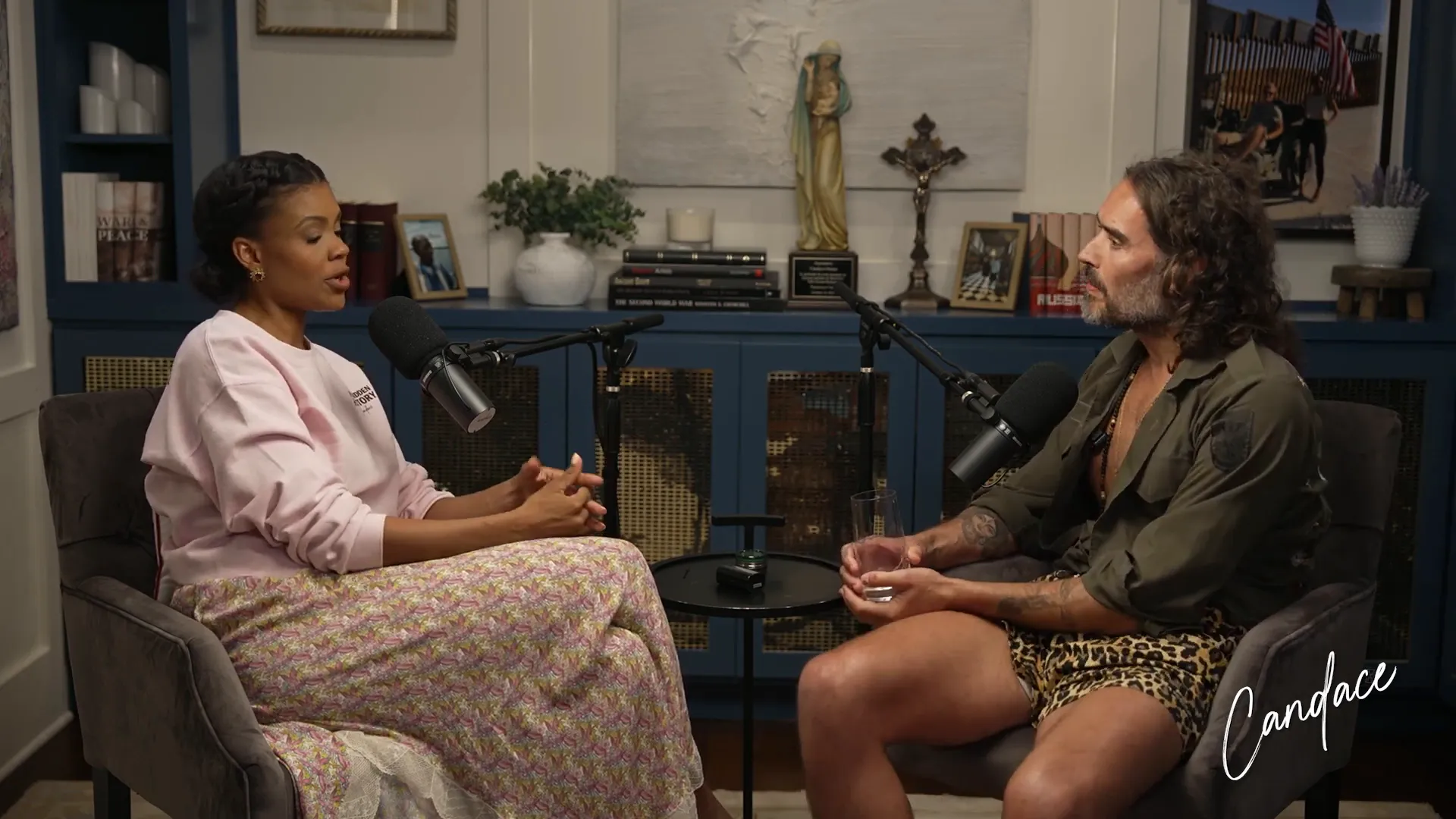
The conversation turns to the technological revolution, with Brand warning against the dangers of over-reliance on technology and centralized control. He laments modern society’s loss of basic survival skills, like growing food or navigating without GPS, and critiques the push toward automation and artificial intelligence.
They explore the concept of false dependency on the state and corporations, contrasting it with natural dependence on God. Brand envisions a future where technology could enable decentralized communities that honor individual autonomy and faith-based living, rather than oppressive systems.
The Crisis of Morality and the Role of Family
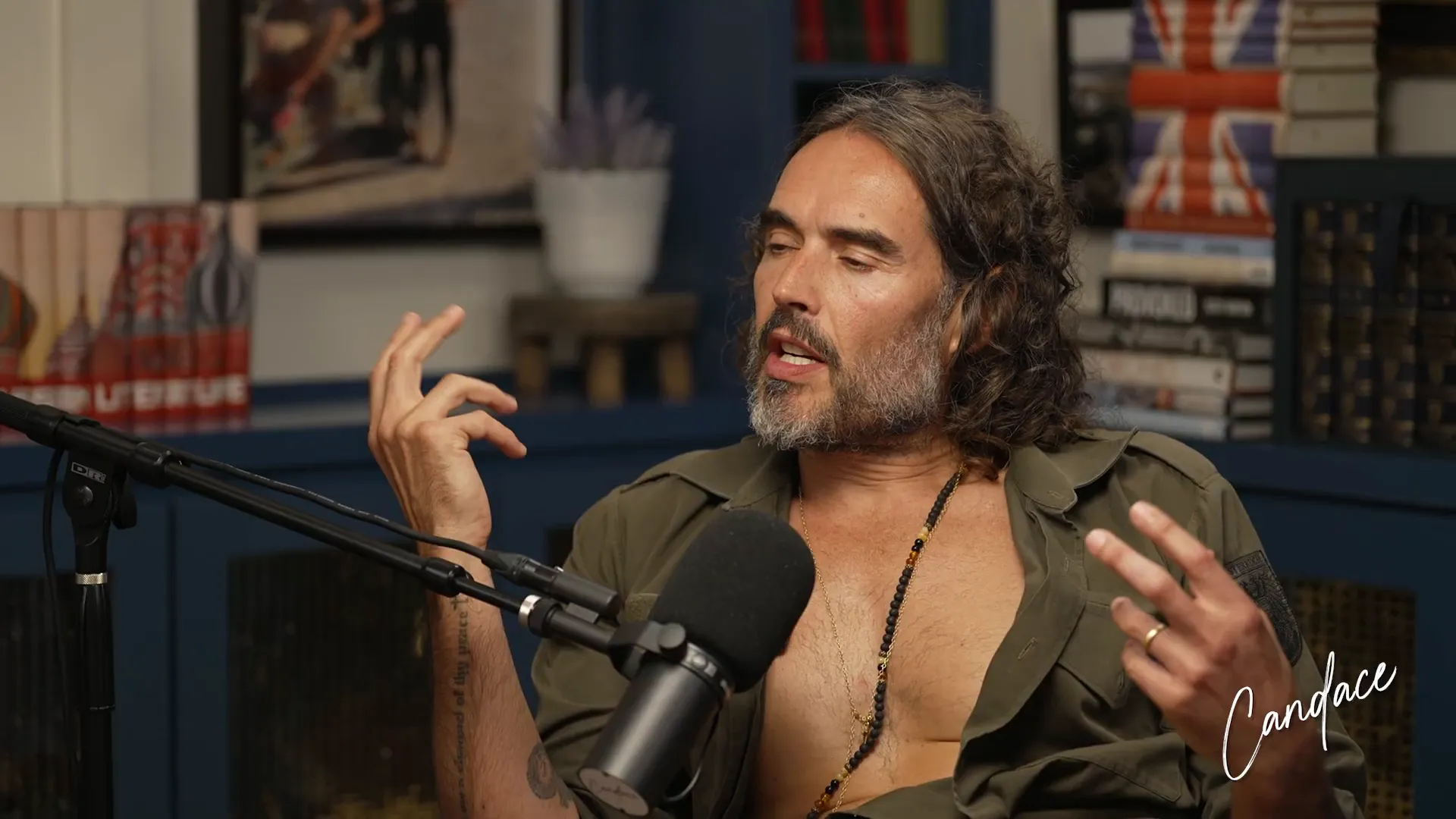
Owens and Brand examine the cultural assault on traditional family values, especially the feminist movement’s impact on motherhood and gender roles. They argue that embracing the family unit brings clarity, perspective, and wisdom that society often undermines through toxic ideologies.
They discuss the biological and spiritual importance of procreation, the challenges faced by women regarding motherhood, and the exhaustion and beauty inherent in parenting. Both emphasize the need to reclaim family as a cornerstone of cultural and spiritual health.
Addiction, Recovery, and Spiritual Awakening
Brand opens up about his 22+ years of sobriety, describing addiction as a form of self-worship and attachment. He details his journey of desperation, surrender, and spiritual transformation through the twelve-step program, which he regards as a divinely inspired path back to faith and service.
They explore how addiction mirrors the human struggle with sin and self-centeredness, emphasizing honesty, community, and turning one’s will over to a higher power as essential for recovery. Brand highlights the cultural overstimulation of desire and fear as obstacles to healing.
Psychology, Faith, and the Battle for the Mind
The discussion critiques modern psychology, particularly its focus on the self and validation, which they argue conflicts with Christian teachings. Brand references Freud’s dark legacy and the rise of subjective identities, warning against relativism and the loss of absolute truth.
They ponder the challenges faced by public intellectuals like Jordan Peterson in reconciling psychology with faith, emphasizing the difficulty of submission and the struggle against ego. The conversation ends with a call to embrace truth, humility, and the unity found in the church.
Conclusion: Embracing Faith, Family, and Purpose
Both Candace Owens and Russell Brand affirm their commitment to faith as the foundation for personal and societal transformation. They envision a revival rooted in love, forgiveness, and service, transcending political divides and cultural chaos.
Their hope lies in returning to eternal truths, reclaiming family and community, and navigating the technological age with wisdom and autonomy. As Brand humorously invites Owens into his “apocalyptic group,” they conclude with a shared resolve to follow a path of meaning beyond the distractions of modern life.

Be the first to comment