
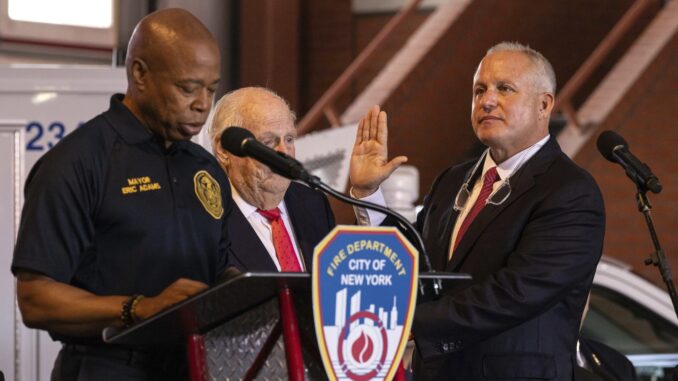

Big Apple, Big Opinions: Adams & Tucker Face Off
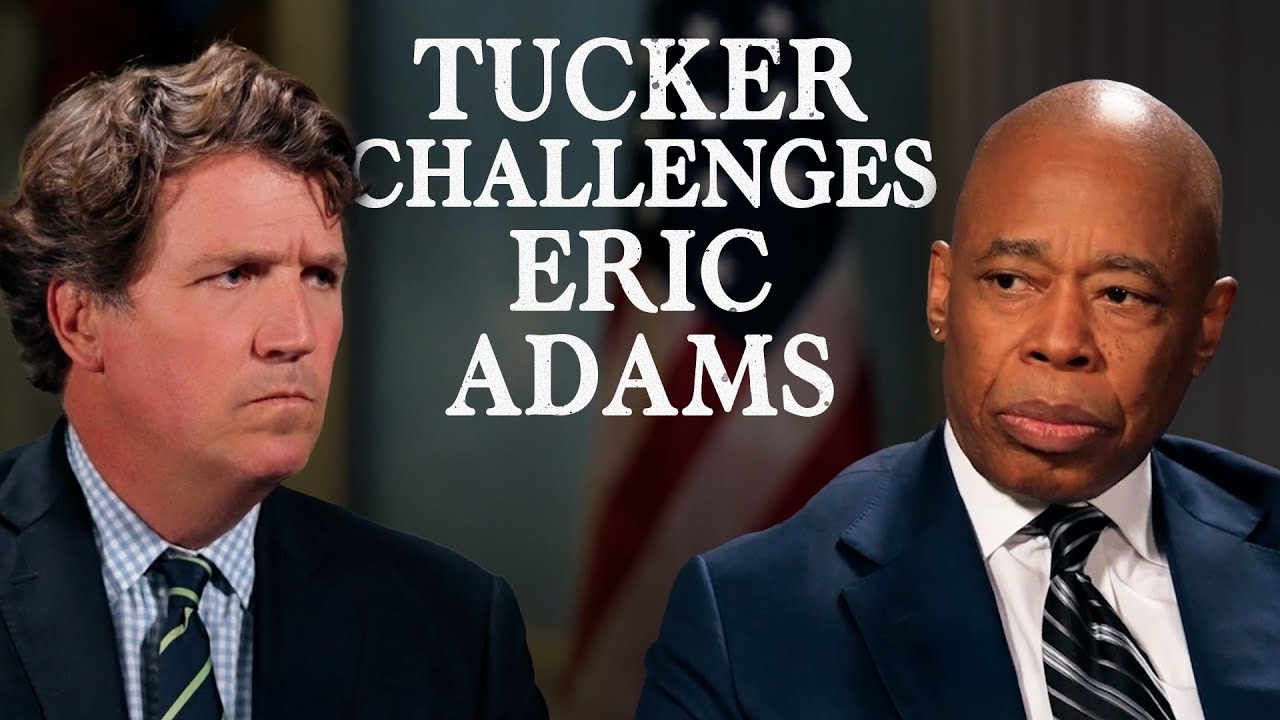
New York City Mayor Eric Adams recently sat down for a revealing and candid discussion with Tucker Carlson, touching on everything from his controversial indictment to the city’s ongoing immigration crisis, public safety challenges, and political dynamics. In a video created by Tucker Carlson, the mayor opens up about the personal and political struggles he faces, providing a rare glimpse into the complexities of running America’s largest city amid turbulent times.
Eric Adams’ Indictment Is Ridiculous
Mayor Adams begins by addressing the shocking indictment against him, which accuses him of accepting upgraded flights and improperly facilitating a fire inspection for the Turkish consulate in Manhattan. He calls the indictment “ridiculous” and “flimsier than I remember,” emphasizing that there was no bribery or wrongdoing involved.
“I didn’t open the consulate,” Adams clarifies. “I asked the FDNY to look into the inspection so they could get it done. There’s no evidence the building was a fire trap or out of compliance.” He finds it painful and frustrating to be under legal attack despite his commitment to law and order, noting that millions of dollars in legal bills have piled up while he’s been unable to respond directly due to the legal process.
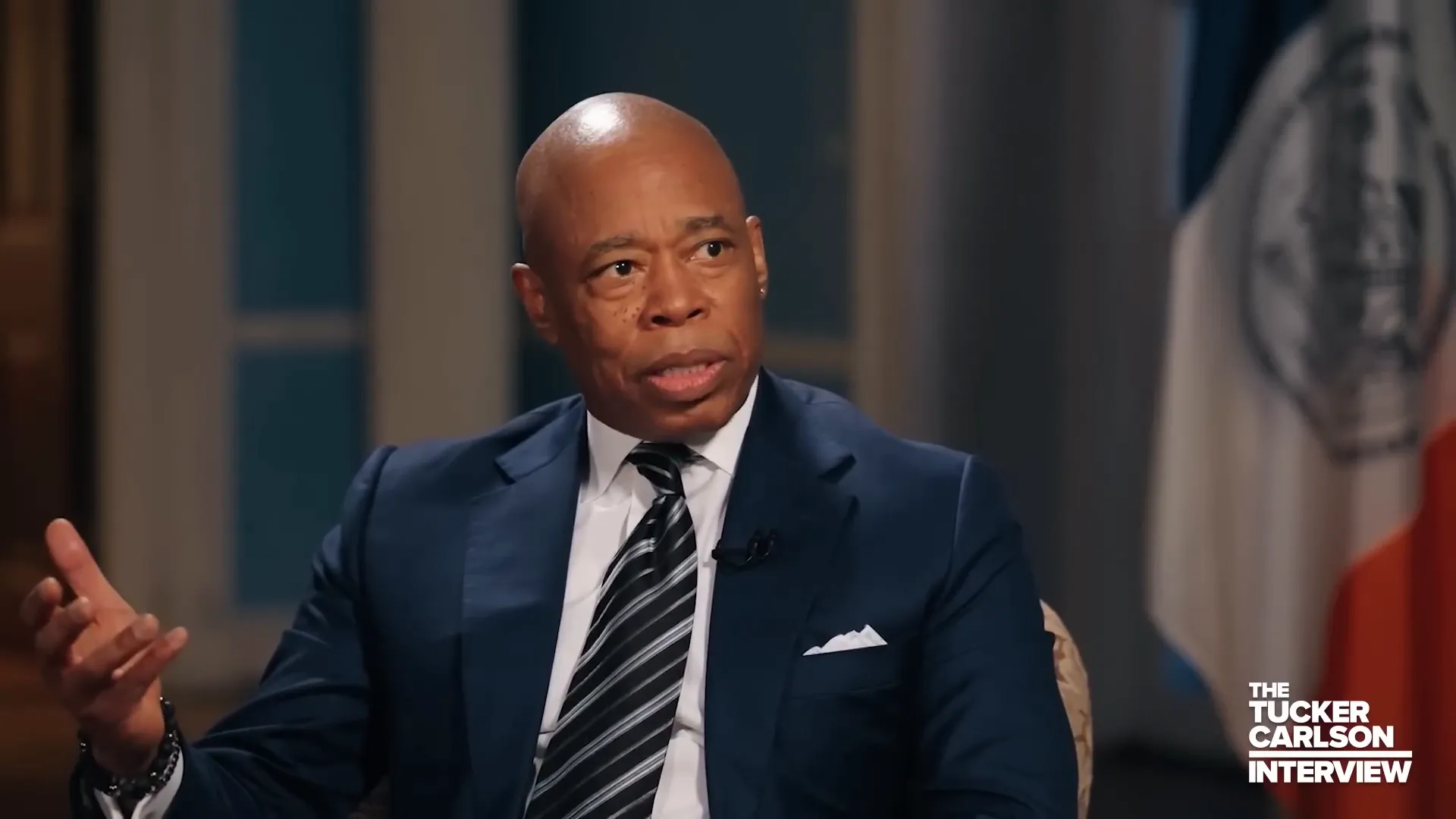
Adams also points out the double standard in Washington, where members of Congress routinely accept foreign government hospitality such as upgraded flights and motorcades without indictment. “No one’s ever been indicted for that. That’s less than what you did. Are you aware of that?” Tucker asks. Adams replies, “Yes, and I have a great attorney. I want to push back on the narrative.”
How Biden Destroyed New York with Immigration
The conversation quickly shifts to one of the mayor’s most pressing concerns: the immigration crisis overwhelming New York City. Adams reveals he made ten trips to Washington pleading for help, warning of the financial and social toll. He describes the influx of tens of thousands of migrants arriving with no jobs, no money, and nowhere to stay, forcing the city to bear a $6.5 billion cost.
“We have to feed, clothe, house, and educate 40,000 children,” Adams explains. Yet the federal government’s response was dismissive. “Be a good Democrat, Eric,” an aide told him, likening the crisis to a gallstone that “will pass.”
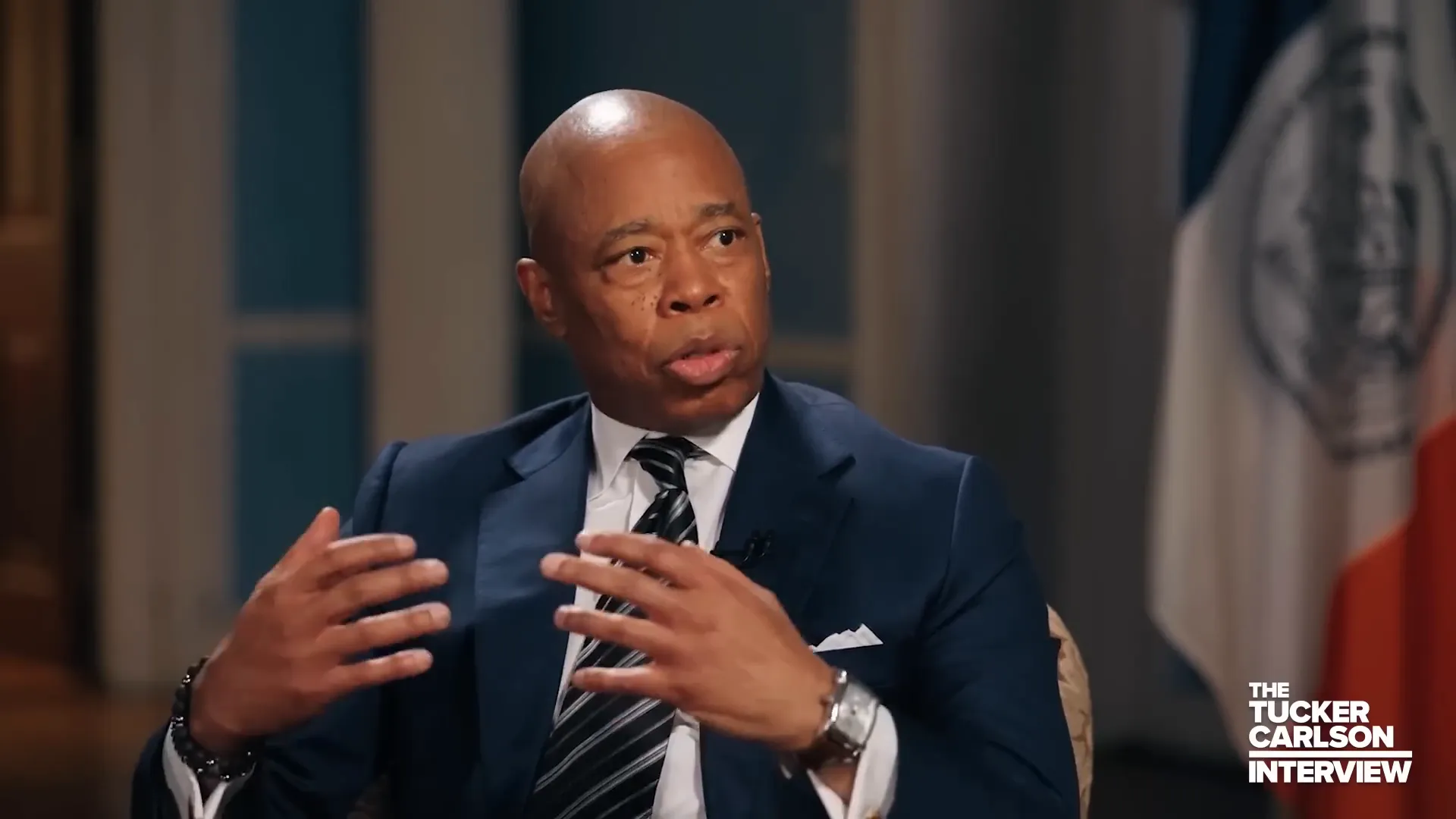
This lack of support forced the city to divert funds from critical areas like education and senior care. “We took $6.5 billion out of paying for chronically absent students we could have paid $200 million for,” Adams laments. He warns the long-term impact on cities like New York, Chicago, and Los Angeles is still unfolding.
The Real Cost: Education and Mental Health
Adams stresses the importance of education in preventing incarceration. “If you don’t educate, you’re going to incarcerate. That’s the common denominator in all of our prisons.” He highlights programs like dyslexia screening and learning disability support that have been underfunded due to the immigration crisis.
Mental health is another pressing challenge. “We’re facing a severe mental health issue throughout the country, but specifically here in New York,” Adams says. The trauma from COVID has left many young people chronically absent from school, compounding the problem.
What Do New Yorkers Think About the Illegal Immigrants?
Adams acknowledges the frustration of New Yorkers, especially those from working-class communities. He recalls a meeting with Jamaican immigrants where he urged them to stand against crime and gang violence, emphasizing that “those who are committing crimes, those who are part of gangs and being violent, they’re not one of you.”
He paints a picture of a city struggling to balance its identity as a sanctuary city with the practical realities of housing and supporting large numbers of migrants. “Sanctuary city says that as long as you’re here, you have a right to get the services your tax dollars are paying for,” Adams explains. Yet, he also admits confusion over why the city is legally compelled to shoulder this burden without adequate federal support.
Tucker Presses Adams on His Sanctuary City Policy
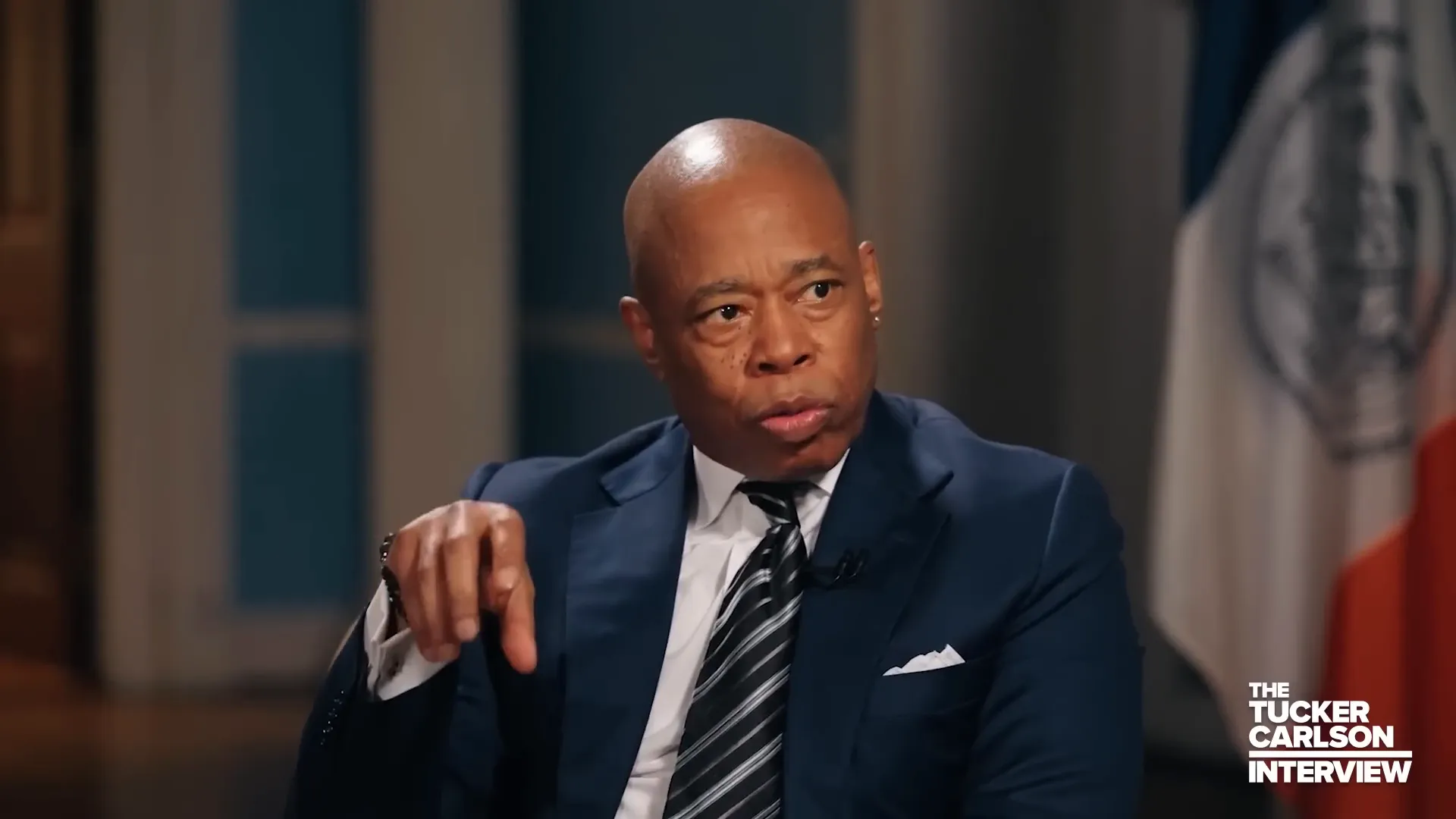
Tucker questions whether New York deserves the consequences of its sanctuary city stance, comparing it to an act of insurrection against federal law by ignoring immigration enforcement. Adams agrees that those who commit crimes should face removal after serving their time, but he defends the rights of immigrant families pursuing the American dream.
He also rejects the idea that New York is “welcoming everyone.” “We’re not welcoming everyone,” he insists. “My focus is on those who are harming innocent citizens.”
How Illegal Immigration Is Fueling America’s Labor Crisis
Adams highlights the national labor shortage, explaining that many cities, including New York, desperately need workers in sectors like nursing, food service, and backstretch jobs in Kentucky. He proposes a system where immigrants are directed to cities that need workers for a few years before choosing where to settle, helping to manage population pressures.
At the same time, Adams is deeply concerned about the high unemployment rates among native-born Americans, especially young African American men, where rates exceed 50%. He emphasizes New York City’s efforts to remove employment barriers in these communities, cutting unemployment by over 20%.
How to Clean Up New York
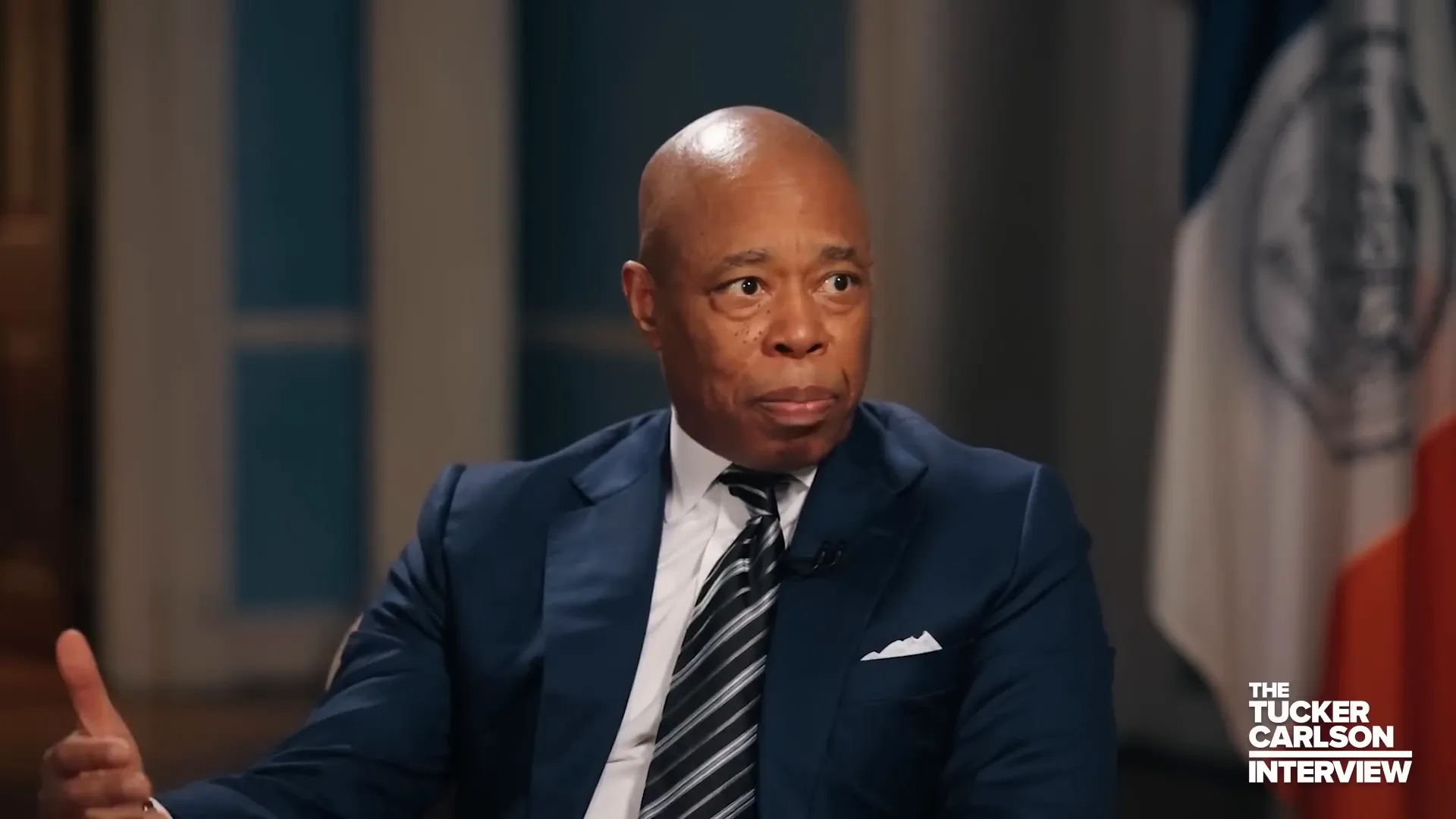
Turning to public safety, Adams recounts the progress made in reducing homelessness on the streets and combating quality-of-life crimes, despite legal challenges. “People are not sleeping on our streets,” he asserts, crediting his administration’s efforts to clear encampments and improve community conditions.
However, he admits frustration with the criminal justice system’s revolving door, where repeat offenders are often not prosecuted due to laws and policies. “The criminal justice system is not just police,” Adams explains. “We need judges, prosecutors, and lawmakers on board.”
Adams also addresses the pervasive issue of public cannabis smoking, which he says negatively impacts neighborhoods. After gaining authority from the state, the city has closed over 1,300 illegal cannabis shops and removed $67 million worth of illegal cannabis from the streets. He advocates for stricter management of where cannabis can be consumed, supporting the idea that it should be smoked at home.
Did Eric Adams Leave the Democrat Party?
When asked about his political identity, Adams rejects the notion that he has left the Democratic Party. Instead, he says, “The party left me, and it left working-class people.” He criticizes the party’s focus on issues that don’t resonate with everyday citizens, emphasizing his commitment to the concerns of families and communities.
Adams also reflects on the changing political landscape, noting that some longtime Democratic donors and real estate owners support his vision because they understand the importance of safe communities and quality schools for economic growth.
Will Adams Go to Jail?
The mayor acknowledges the serious legal jeopardy he faces, with potential penalties of up to 30 years in prison related to the indictment. Despite the gravity, Adams remains optimistic, placing his trust in his legal team to pursue every avenue for justice.
Adams’ Conversation with Donald Trump
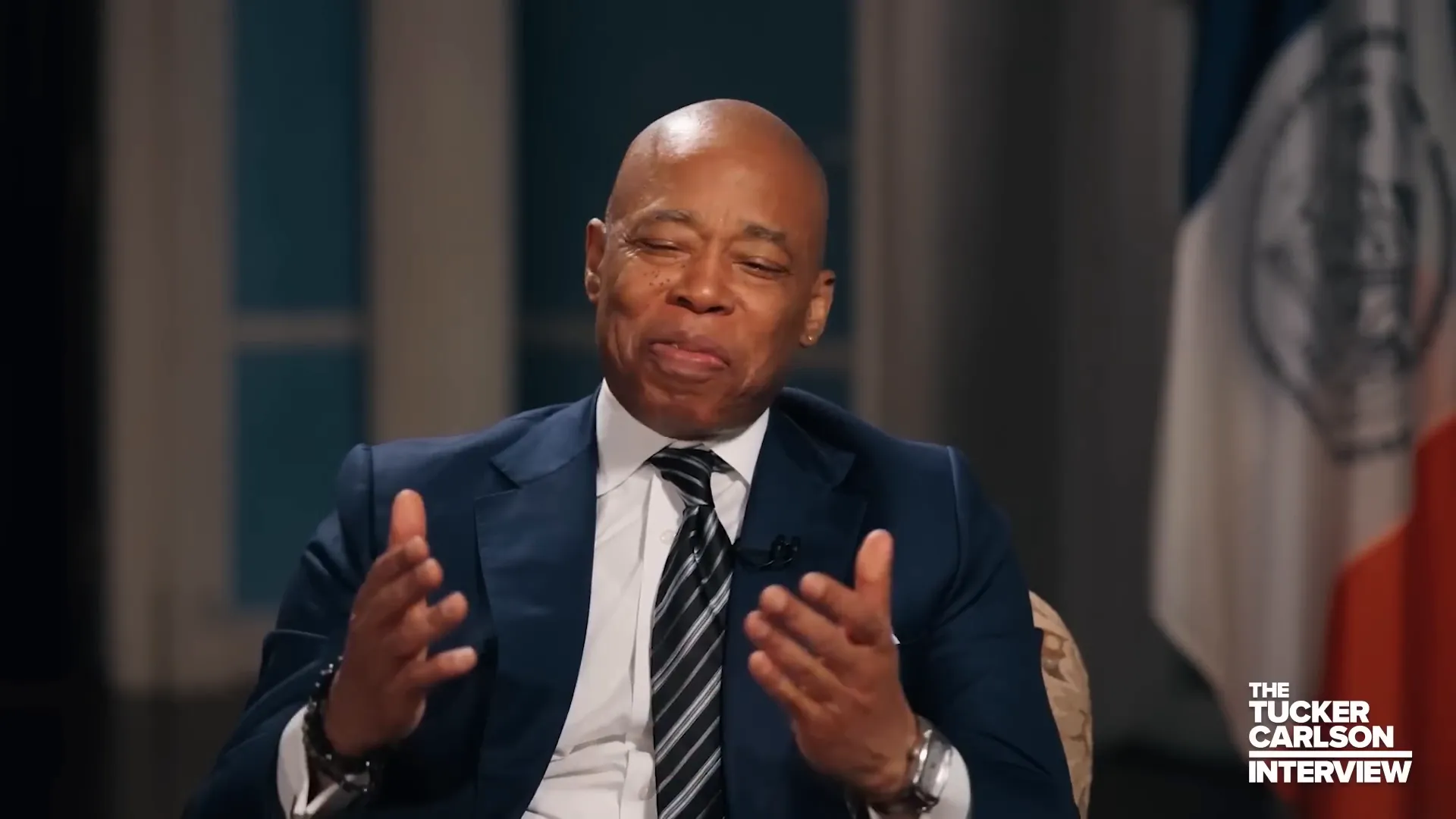
Adams reveals he has spoken with former President Donald Trump, describing their interaction as positive and collaborative. He stresses the importance of working with all leaders to improve New York City, regardless of political differences.
He also mentions efforts to cooperate with leaders from Washington and the state governor, emphasizing the need to listen to the American people and address border security and business challenges pragmatically.
America’s Mental Health Crisis
The discussion closes with a focus on the mental health crisis, which Adams describes as a national emergency exacerbated by the closure of psychiatric wards and the COVID-19 pandemic’s trauma. He notes that more than half of Rikers Island inmates have mental health issues, with 20% suffering severe illness.
Adams advocates for transforming one of the new jails into a state-of-the-art mental health treatment facility and calls for a more compassionate and effective approach to caring for the mentally ill in the community.
Conclusion
Mayor Eric Adams’ conversation with Tucker Carlson offers an unfiltered look at the challenges facing New York City and the political pressures weighing on its leadership. From a controversial indictment to the complexities of immigration, public safety, and mental health, Adams paints a picture of a city at a crossroads.
Despite the obstacles, Adams remains committed to fighting for New Yorkers, advocating for practical solutions, and bridging divides to secure a safer, more prosperous future.


Be the first to comment