


Methylene Blue Mania: Dr. Scott Separates Fact from Saladino’s Claims
Methylene blue has recently sparked considerable debate in the health and wellness community, particularly following a video by Dr. Paul Saladino cautioning against its use. In this comprehensive breakdown, Dr. Scott Sherr offers a thoughtful rebuttal, clarifying many misconceptions about methylene blue’s safety, dosage, and mechanisms—especially regarding its role in mitochondrial function and serotonin syndrome risk. Whether you’re curious about the science behind this compound or considering it as part of your health strategy, this article will provide clear, evidence-based insights to help you understand the nuances.
Is Synthetic Methylene Blue Actually Harmful?
Methylene blue was initially derived from petroleum-based products, which naturally raises concerns about synthetic ingredients in supplements. However, Dr. Scott reminds us that the natural vs. synthetic debate isn’t black and white. Not everything natural is safe—some natural substances, like certain mushrooms, can be deadly. Conversely, synthetic compounds can be essential, especially given the realities of modern living, including exposure to poor lighting, water, food quality, and environmental toxins.
Dr. Scott points out that while Dr. Paul Saladino embraces an ancestral lifestyle in Costa Rica, most people cannot live that way consistently, making synthetic aids like methylene blue potentially valuable in today’s environment.
Methylene Blue and Monoamine Oxidase Inhibition: Dose Matters
One of the primary biochemical effects of methylene blue is its inhibition of monoamine oxidase (MAO), specifically MAO-A and to a lesser extent MAO-B. This inhibition can increase levels of neurotransmitters such as norepinephrine, serotonin, and dopamine.
However, this effect is highly dose-dependent. Low doses of methylene blue—typically the range used clinically (4 to 50 milligrams)—cause minimal MAO inhibition. Significant inhibition only occurs at much higher doses, which are rarely used outside of emergency settings.
Dr. Scott disagrees with Dr. Saladino’s suggestion that the mood-enhancing effects of methylene blue are primarily due to MAO inhibition. Instead, he believes the benefits are more complex and not solely attributable to this mechanism.
Serotonin Syndrome: A Rare Concern with Oral Methylene Blue
Serotonin syndrome, a potentially dangerous condition caused by excessive serotonin, has been linked to methylene blue but almost exclusively in intravenous (IV) use combined with other serotonergic drugs like SSRIs or SNRIs.
Oral methylene blue, even at higher doses, has not been shown to cause serotonin syndrome. Dr. Scott advises caution and working closely with a healthcare provider if you are on serotonergic medications. Starting with very low doses and increasing slowly minimizes any risk.
Clinically, serotonin syndrome related to oral methylene blue is extremely rare and not something commonly observed in medical practice.
Redox Cycling and Energy Production: How Methylene Blue Works
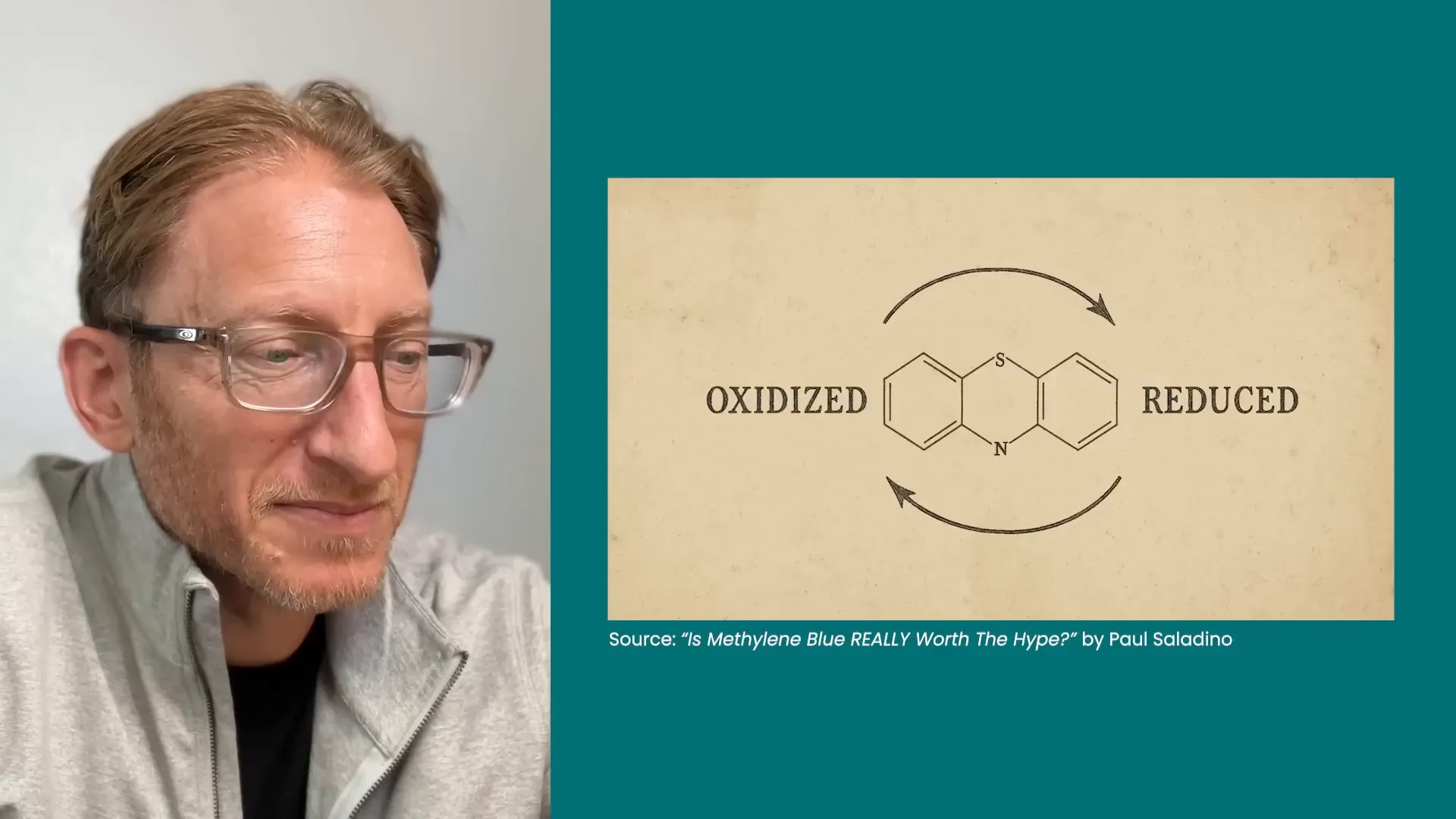
Methylene blue is unique in its ability to act as a redox cycling compound—it can donate and accept electrons. This quality allows it to enhance energy production by donating electrons to the mitochondrial electron transport chain (ETC), and simultaneously act as an antioxidant by scavenging free radicals.
This dual role means methylene blue can both boost cellular energy and support detoxification processes, which is rare among compounds available today.
High-Dose Myths: Does Methylene Blue Turn Your Brain Blue?
Concerns about methylene blue turning the brain blue stem from cases involving extremely high IV doses (300-500 milligrams), typically used in critical care for conditions like septic shock or cardiopulmonary arrest. These doses are far above what is used in wellness or clinical supplementation.
Dr. Scott emphasizes that such high doses are reserved for emergencies and are not recommended for routine use. Typical oral doses are much lower—between 4 and 50 milligrams—and do not cause any blue discoloration of brain or organs.
Medical and Surgical Uses of Methylene Blue
Methylene blue has established medical uses, particularly in emergency medicine for treating methemoglobinemia—a condition where the iron in hemoglobin is oxidized and can’t carry oxygen efficiently. Every emergency room in the United States stocks methylene blue for this purpose, and it is on the World Health Organization’s list of essential medications.
Additionally, methylene blue is used in surgeries, such as hysterectomies or transplant operations, for medical marking to detect and prevent damage to organs like the bladder.
Debunking the Myth: Does Methylene Blue Improve Mitochondrial Function?
Dr. Saladino claims methylene blue does not improve mitochondrial function and that any perceived benefits are due to MAO inhibition. Dr. Scott challenges this, explaining that:
- 94% of U.S. adults are metabolically unhealthy, often with underlying mitochondrial dysfunction.
- Methylene blue can compensate for mitochondrial dysfunction by bypassing partially dysfunctional complexes in the electron transport chain.
- It also increases the density of Complex IV (cytochrome oxidase), enhancing mitochondrial efficiency over time.
While Dr. Saladino’s cited study used doses far exceeding clinical levels (5 to 100 times higher), Dr. Scott points out that low doses have been shown to be safe and effective for mitochondrial support and cognitive enhancement.
How Methylene Blue Bypasses Mitochondrial Complexes
Mitochondrial dysfunction often results in partial blocks in complexes I and II of the electron transport chain, caused by toxins, metabolic issues, stress, or medications. Methylene blue can bypass these impaired complexes by moving electrons directly to downstream complexes, allowing continued ATP production despite upstream dysfunction.
While bypassing complexes results in producing less ATP than a fully functional ETC, it’s beneficial when parts of the chain are not working correctly. This temporary support allows the body to maintain energy production while addressing underlying causes through lifestyle, nutrition, and supplementation.

Clinical Benefits Observed with Methylene Blue
Clinically, many patients report improved energy, better focus, reduced brain fog, and enhanced exercise tolerance when using methylene blue. These benefits go beyond MAO inhibition and are likely related to its mitochondrial support and antioxidant properties.
Dr. Scott and many colleagues use methylene blue regularly in practice and observe significant positive effects, especially in patients with autoimmune issues, chronic inflammation, mold exposure, or post-viral syndromes like COVID-19.
Research on Methylene Blue in Neurodegenerative Diseases
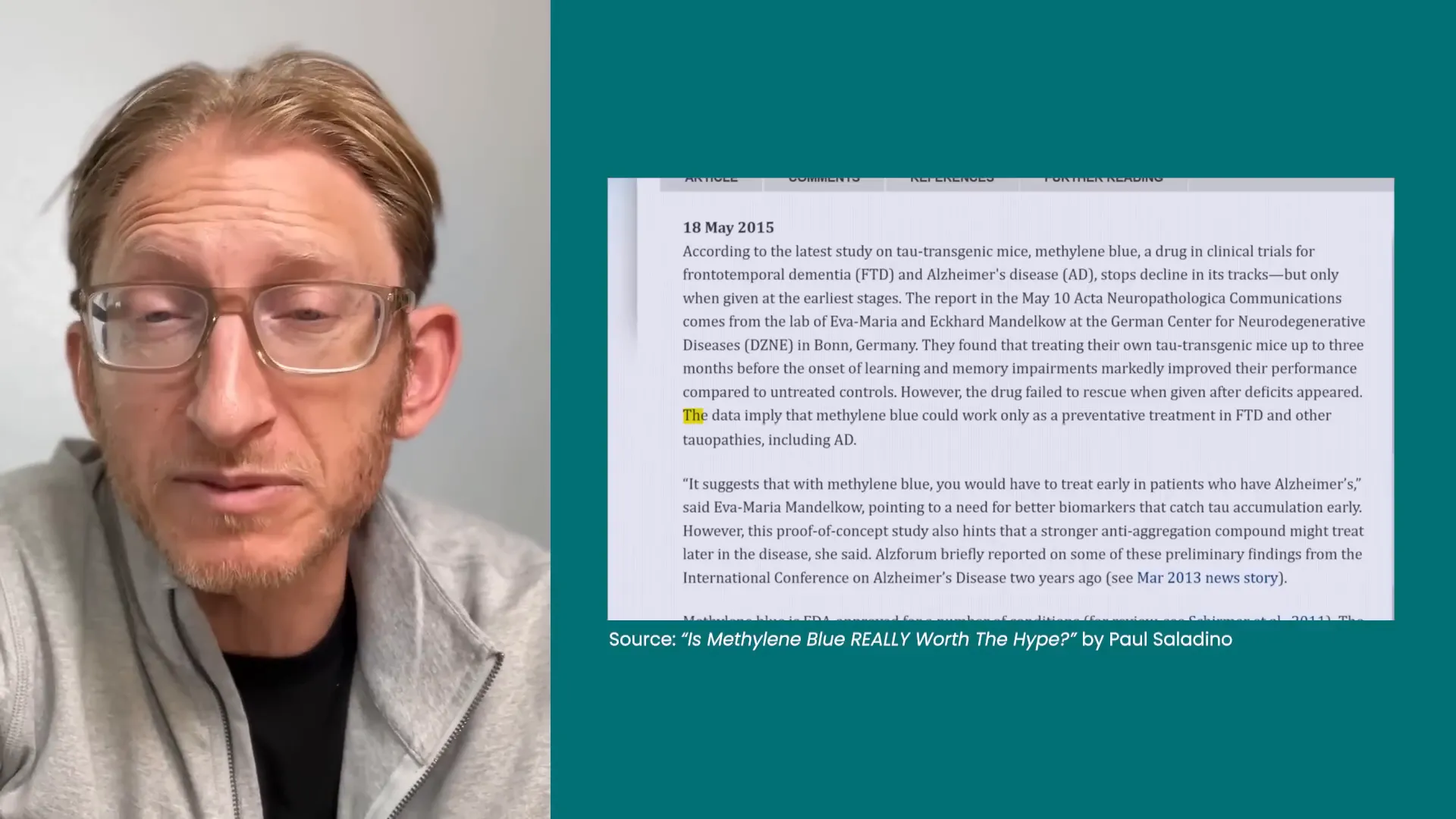
Methylene blue has been studied in Alzheimer’s and Parkinson’s diseases due to its mitochondrial effects. In Alzheimer’s, low doses (around 8 mg twice daily) showed more promise than higher doses, which may increase oxidative stress via hydrogen peroxide production.
This nuance highlights the importance of dosing: too much methylene blue can cause stress, especially if antioxidant systems like glutathione are compromised.
In Parkinson’s disease, new research is investigating methylene blue’s potential to improve mitochondrial function and support dopaminergic neurons.
Who Should Consider Using Methylene Blue?
Dr. Scott stresses that methylene blue is not a universal cure. It’s most appropriate for individuals with mitochondrial dysfunction or those unable to fully optimize their health through diet and lifestyle alone.
Given that 94% of U.S. adults have some metabolic dysfunction, methylene blue at low doses (4 to 16 mg) can be a safe and effective adjunct to support mitochondrial health. However, it should be used carefully, especially when combined with medications affecting serotonin or blood pressure.
Ultimately, methylene blue is a tool within a broader health optimization strategy, not a standalone solution.
Final Thoughts: Methylene Blue as Part of a Larger Strategy
In conclusion, methylene blue offers a unique combination of mitochondrial support, antioxidant activity, and detoxification potential, especially at low doses. While it is not a substitute for proper nutrition, lifestyle, and supplementation, it can provide meaningful benefits for those struggling with mitochondrial dysfunction or environmental stressors.
Dr. Scott encourages a measured approach: start with low doses, monitor effects, and work with healthcare providers to integrate methylene blue into a comprehensive plan that includes optimizing vitamins, minerals, and overall health.
Remember, methylene blue is not a cure-all but a powerful ally in the journey toward better energy and wellness.

Be the first to comment