
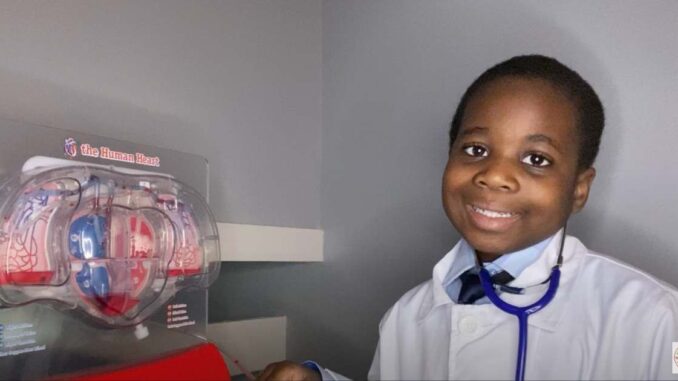

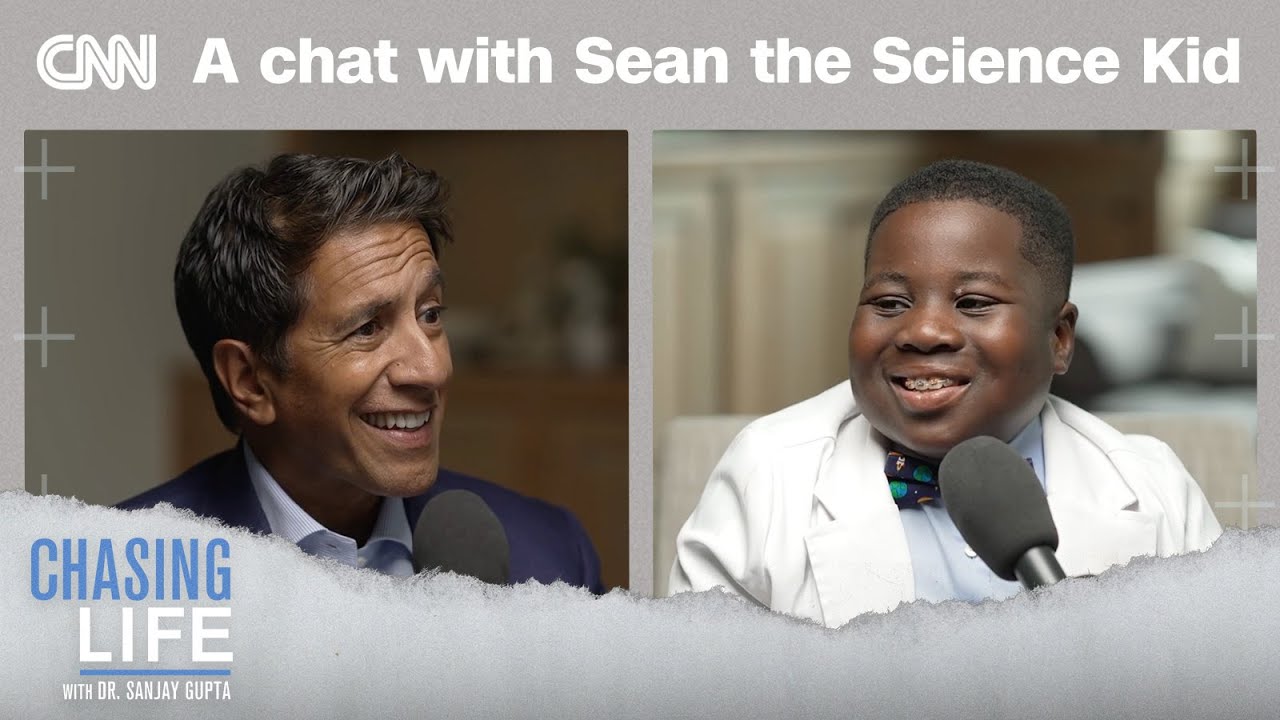
This piece recaps a conversation between CNN’s Dr. Sanjay Gupta and 10-year-old science communicator Sean—known online as “Sean the Science Kid.” Produced by CNN, the interview highlights Sean’s curiosity, his approach to teaching science to millions of followers, and a rapid-fire exchange on topics from memory and neuroplasticity to psychoneuroimmunology and cryogenics. For more from the channel, visit CNN’s YouTube channel: https://www.youtube.com/channel/UCupvZG-5ko_eiXAupbDfxWw
Meet Sean: A lifelong learner turned science communicator
Sean describes his interest in science as a “gravitational attraction”—a passion that began in early childhood and quickly turned into a mission to share clear, accurate science with others. He started learning from educational channels and, by age four or five, wanted to start his own channel to explain what he’d learned.

Memory like a superpower — and its trade-offs
Sean reveals he has hyperthymesia, a condition that makes certain memories extremely persistent. He explains how specific triggers—like a song—can set off neural loops that bring him instantly back to a moment from years earlier. That vivid recall brings both joy and occasional anxiety.
Sean: “It’s activated by trigger… the neurons, they just start firing in a loop until it brings me back to like three years ago when I heard the same song.”
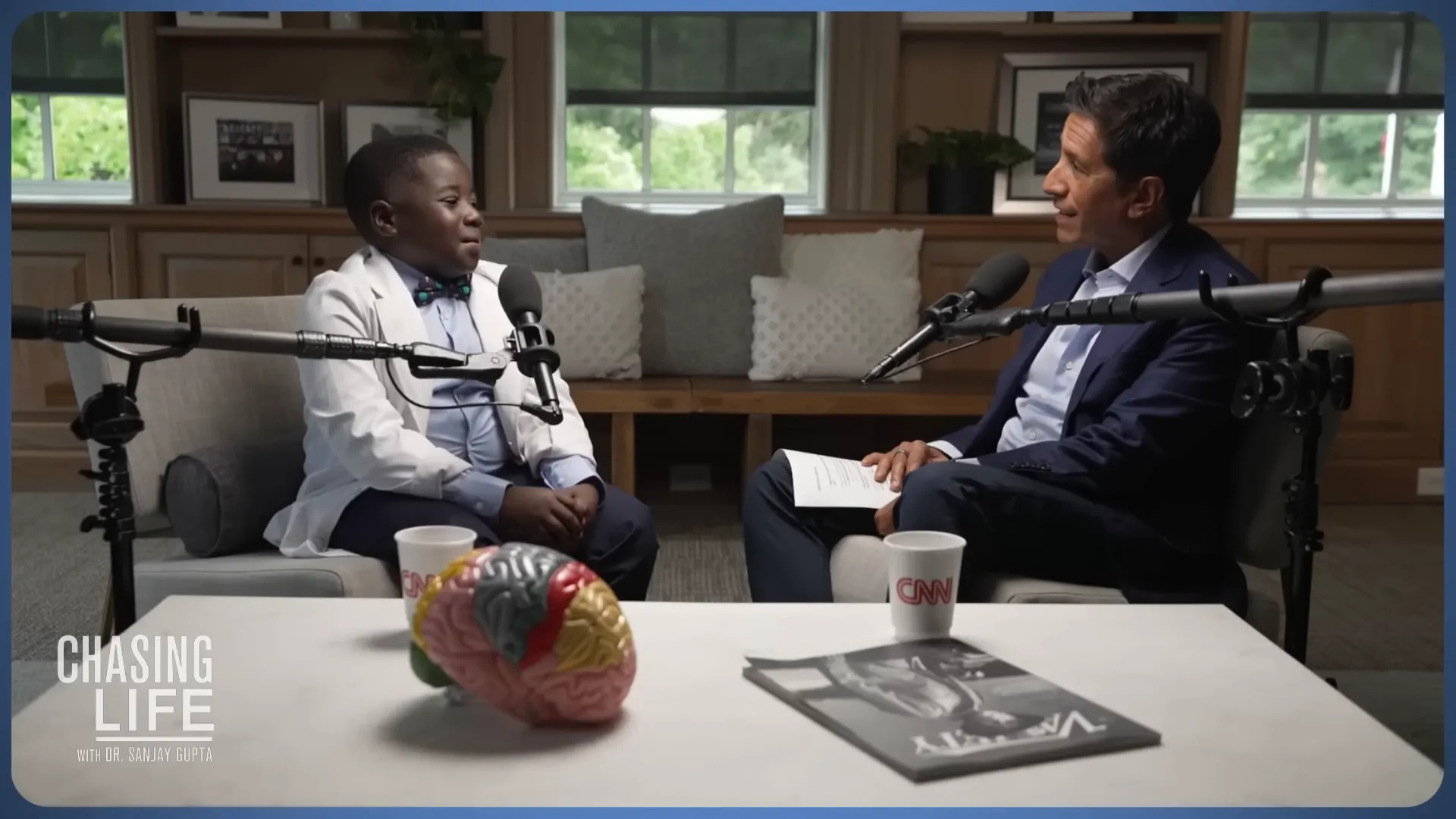
While hyperthymesia gives Sean an exceptional grasp on facts and experiences, he also acknowledges limits—he sometimes forgets routine things, like a task his mom asked him to do. He frames memory as something precious: the hippocampus, he says, is what lets humans treasure their past.
Big ambitions: neurocardioseurgeon (and more)
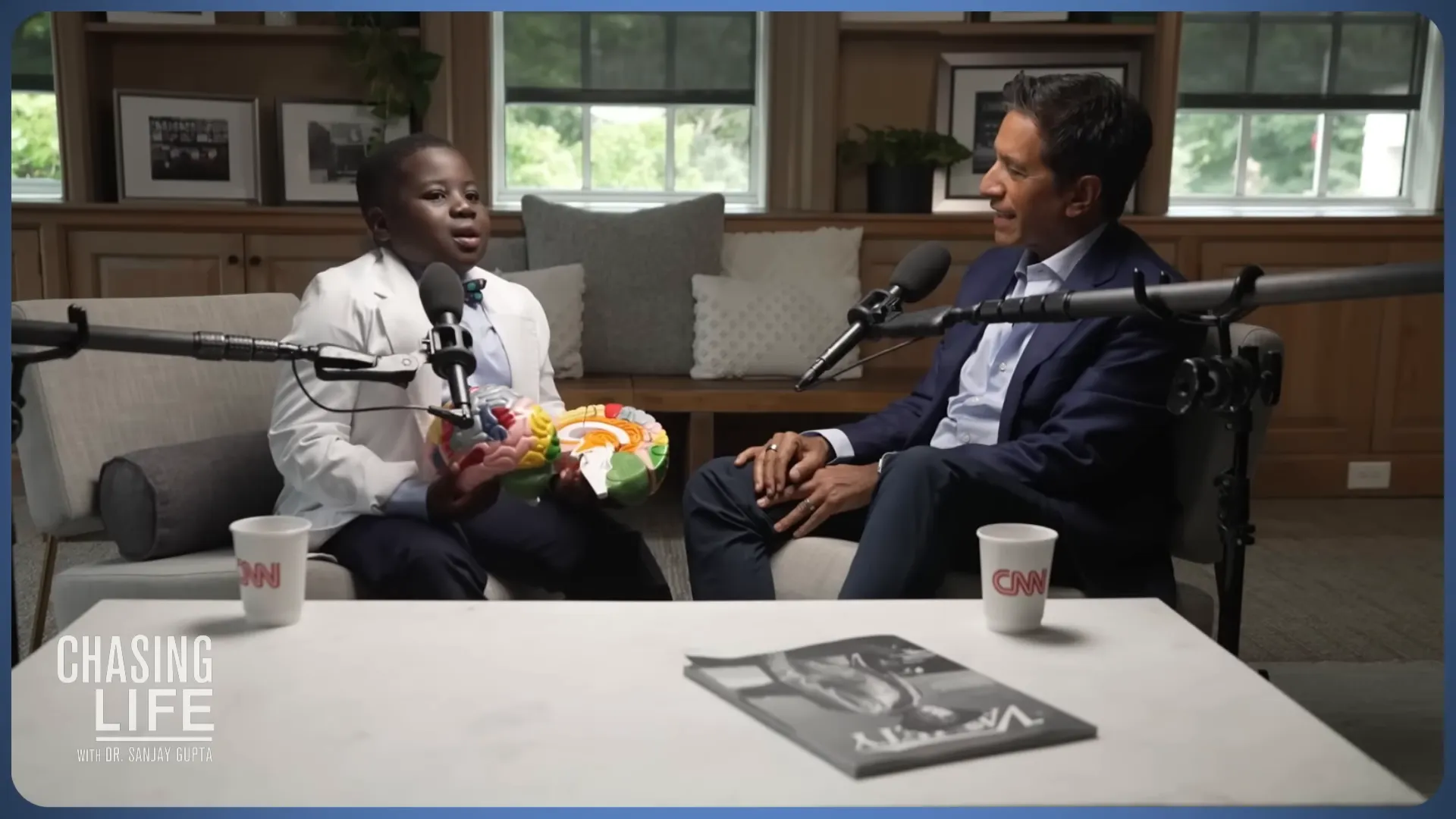
Far from limiting himself, Sean combines interests. He coined the term “neurocardioseurgeon” at age four to describe a specialty that treats both brain and heart—reflecting his fascination with how those organs form a vital loop of communication. He also plans to study theoretical physics, illustrating the breadth of his curiosity.

Education, gifted programs, and social balance
Mostly self-taught early on, Sean’s intense learning prompted his parents to seek advice about teaching him to play. After some trial and error he enrolled in a school for gifted learners that allowed him to advance at his own pace. Sean acknowledges he “does everything too much”—learning, playing, reading—but frames that drive as central to who he is.
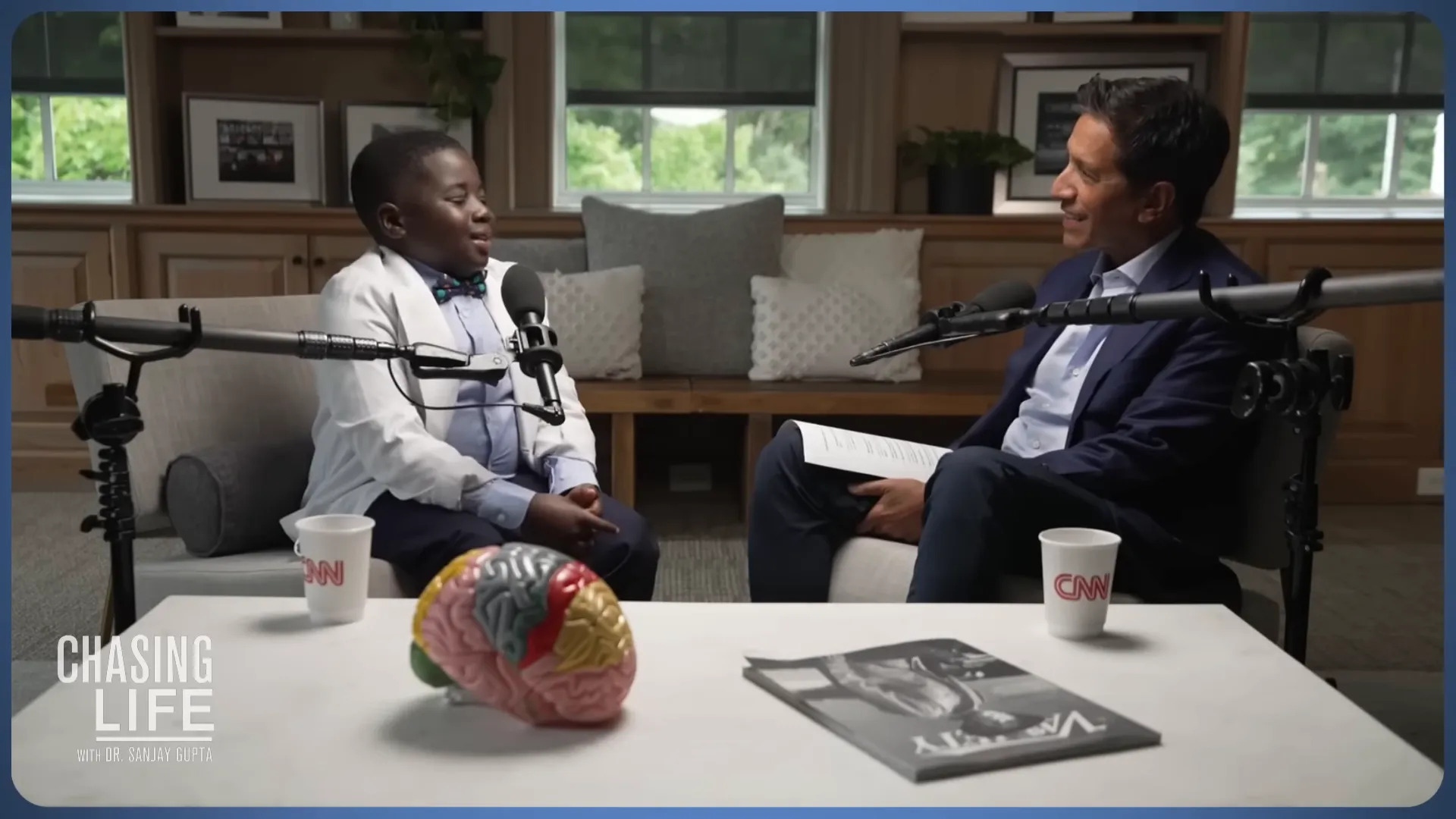
Why science literacy matters — and how to spot fake science
Sean emphasizes that science explains everything from the air we breathe to how we move and feel. He worries about misinformation—clickbait headlines, misleading images, and simplified or fabricated “science” that spreads quickly online.
Sean: “If you find a website that uses clickbait language, is not from a credible source and doesn’t explain things concise and clearly… then you can tell that it’s probably clickbait.”

His practical rules for credibility are simple: check the source, beware of clickbait language, and insist on clear explanations rather than vague claims. He calls out the phenomenon of sensational headlines that plant false beliefs which spread before corrections can catch up.
Rapid-fire science topics Sean asked Dr. Gupta
The rest of the conversation is a lively Q&A: Sean fires curiosity-driven questions at Dr. Gupta, ranging from brain plasticity to futuristic ideas like cryogenics.
Neuroplasticity and neurogenesis
Sean and Dr. Gupta discuss neuroplasticity—the brain’s ability to rewire itself—and neurogenesis, the creation of new brain cells. Dr. Gupta highlights how modern neuroscience challenges the old idea that brain functions are rigidly localized, and how new cells can form even in adulthood, offering hope for recovery and resilience.
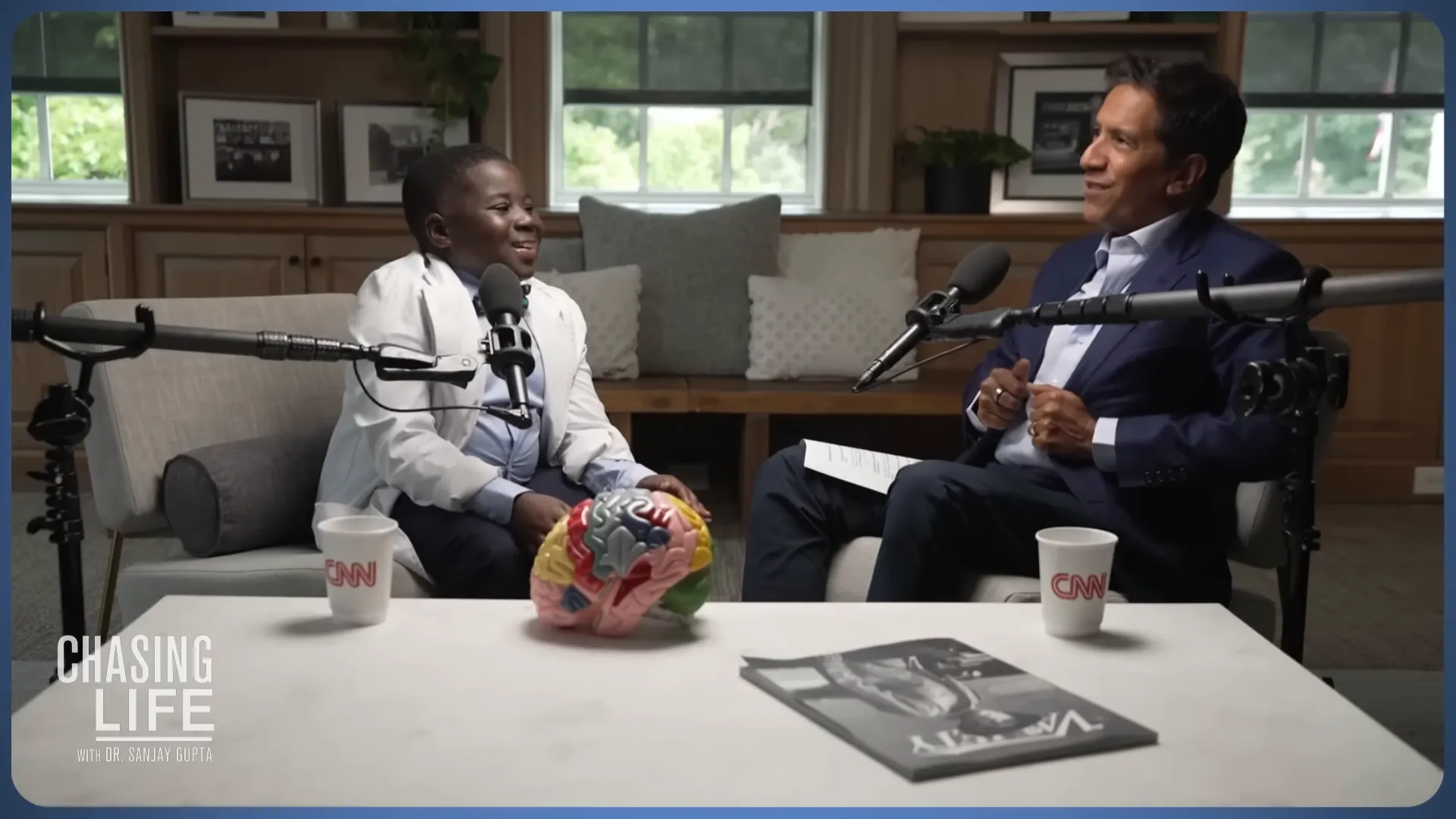
Psychoneuroimmunology: mind, brain, and immune system
Sean asks whether emotions affect how quickly people heal. Dr. Gupta explains the role of expectations and the placebo effect: belief and experience can measurably influence immune response and recovery—an idea at the heart of psychoneuroimmunology.
Dr. Sanjay Gupta: “Expectations and experience are inextricably linked… If you expect to get better faster, activate your immune system, then all that will actually happen.”
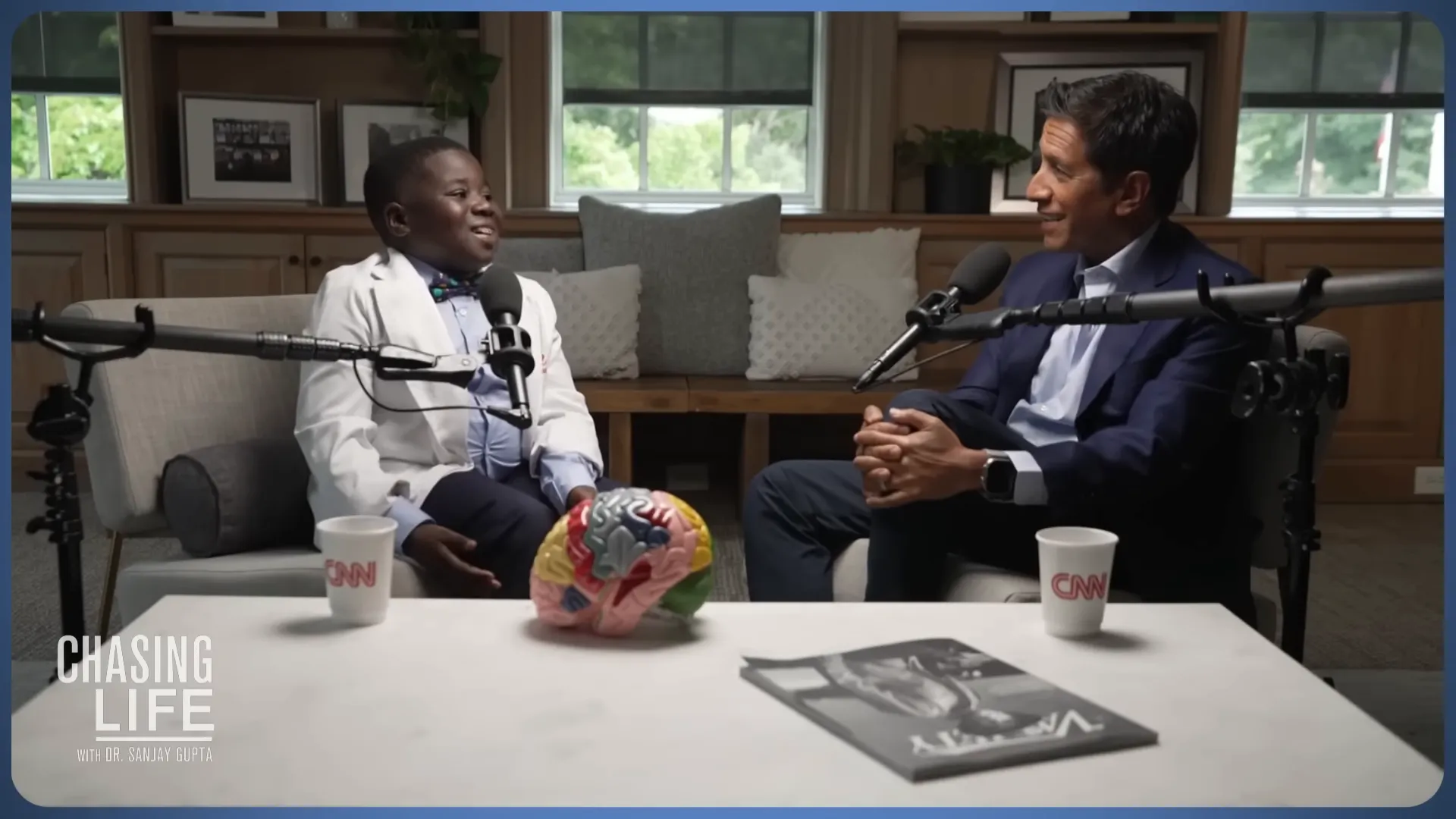
Cryogenics and suspended animation
On cryogenics, Dr. Gupta is cautiously optimistic but realistic: while cooling and slowing metabolism can be done experimentally, long-term suspended animation and reliable reanimation remain formidable challenges. Still, he encourages curiosity about the science—and even bets on young innovators like Sean to make future breakthroughs.

Favorite neurochemical: endorphins
When asked about his favorite brain chemical, Dr. Gupta picks endorphins—our body’s natural morphine—linking them to pleasure, pain relief, and the placebo effect. The pair laugh about saying long scientific words and how those neurochemicals shape feeling and recovery.
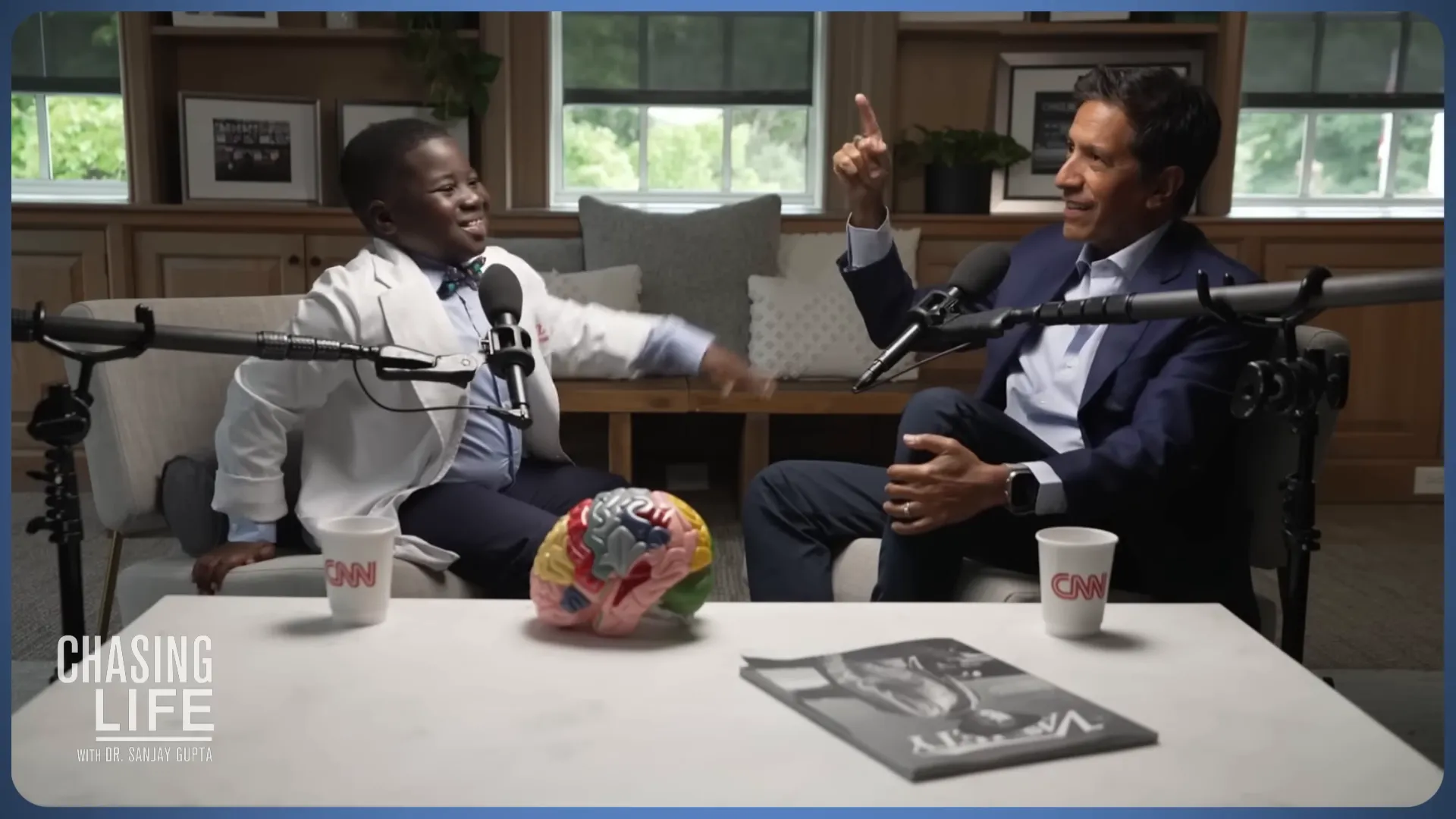
Optimism, responsibility, and advice to other kids
Sean is candid about the state of the world—concerned by violence and social turmoil—but remains optimistic about his own future. He encourages other kids to dream big and to believe in themselves, even when their goals seem scary or others doubt them.
Sean: “Never stop believing in yourself and your dreams… If your dreams don’t scare you, they’re not big enough.”
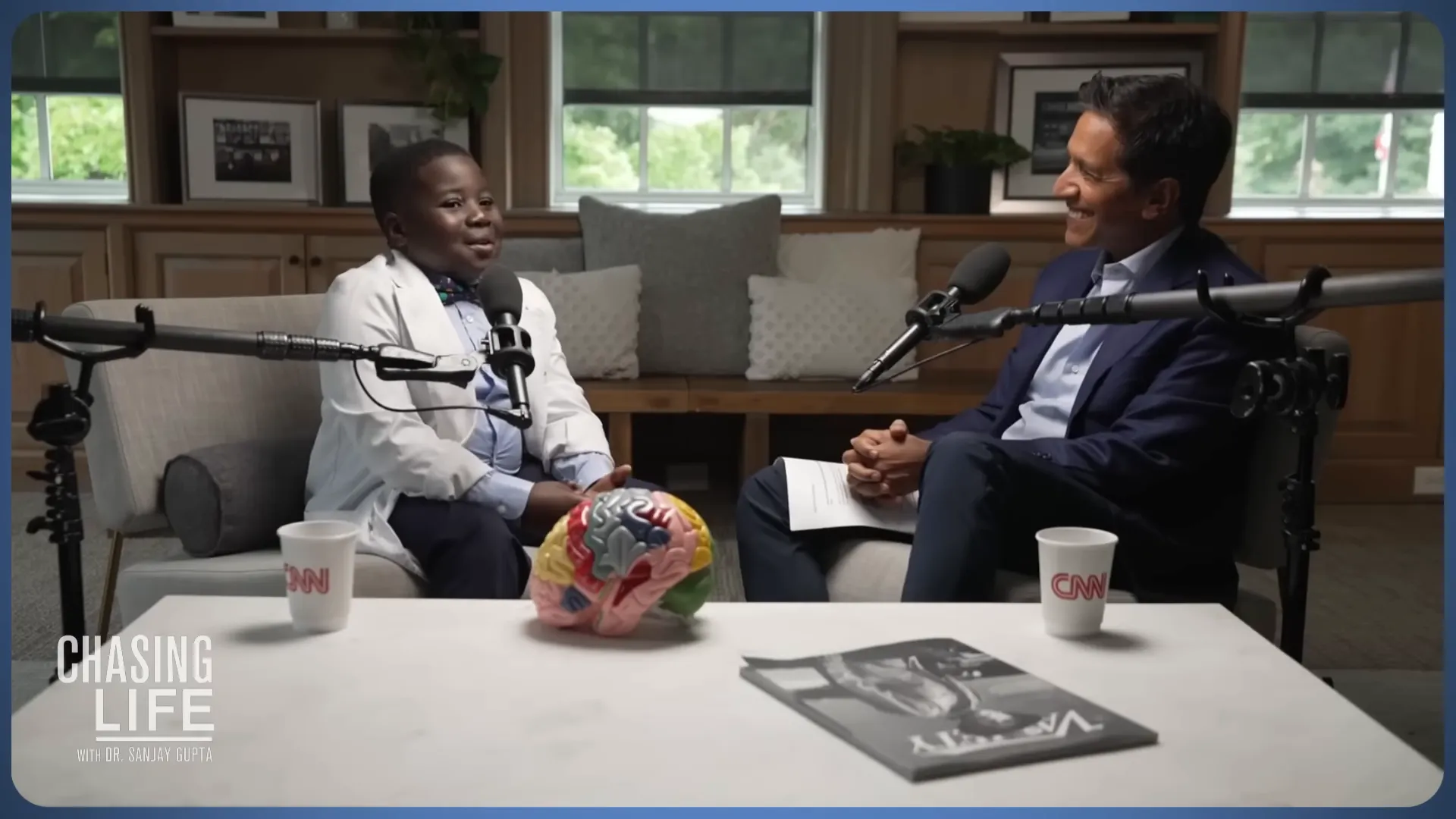
Closing: a charge to the next generation
Dr. Gupta leaves Sean with encouragement and an open line of mentorship—part admiration, part passing of the torch. Sean’s blend of deep curiosity, commitment to accuracy, and desire to teach reflects a new generation of science communicators who want to make reliable knowledge accessible.
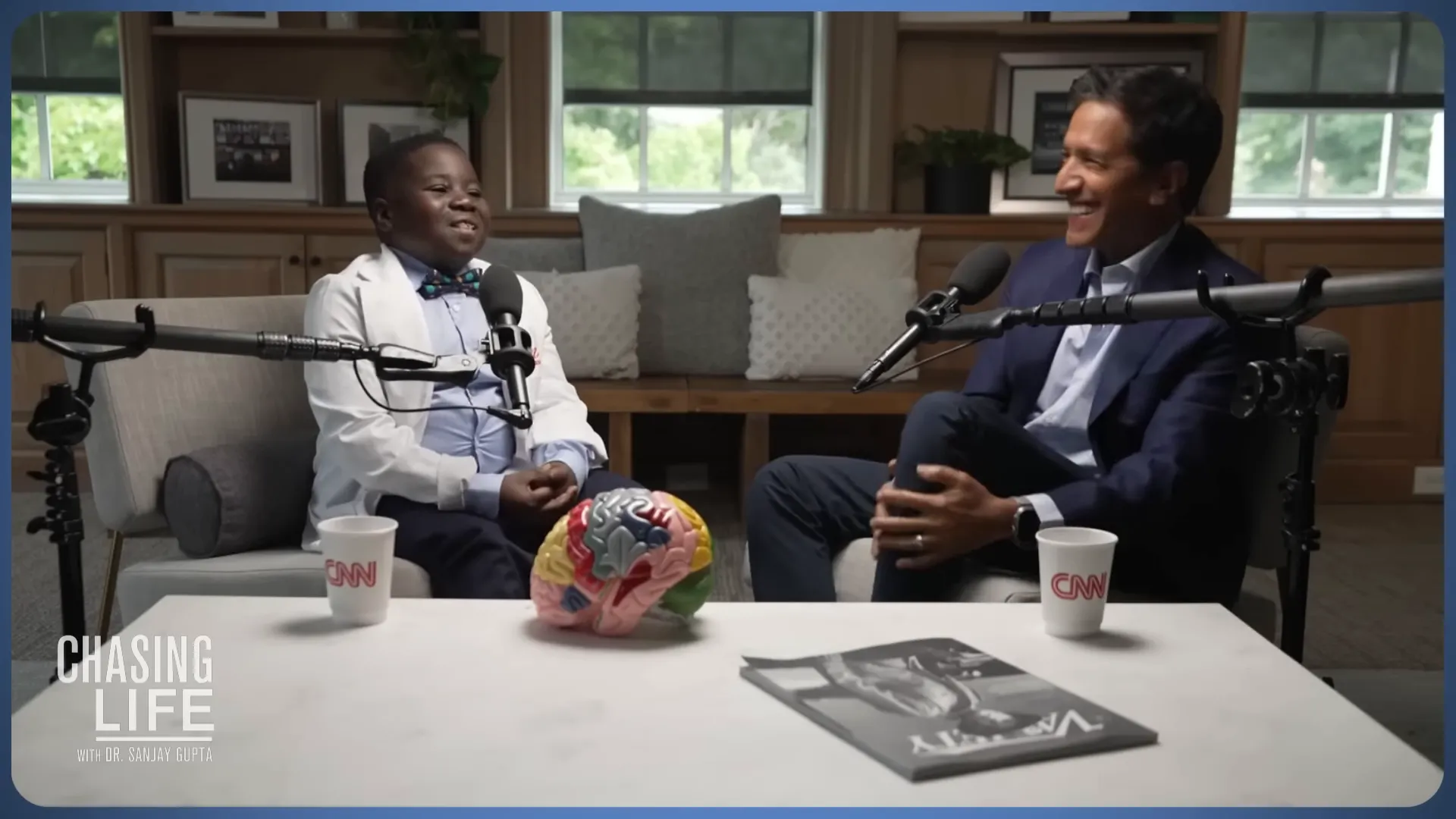
To hear the full conversation, listeners can find the episode on CNN’s Chasing Life podcast: https://link.chtbl.com/Rbf2HhVZ
For more from the channel, visit CNN on YouTube: https://www.youtube.com/channel/UCupvZG-5ko_eiXAupbDfxWw


Be the first to comment