


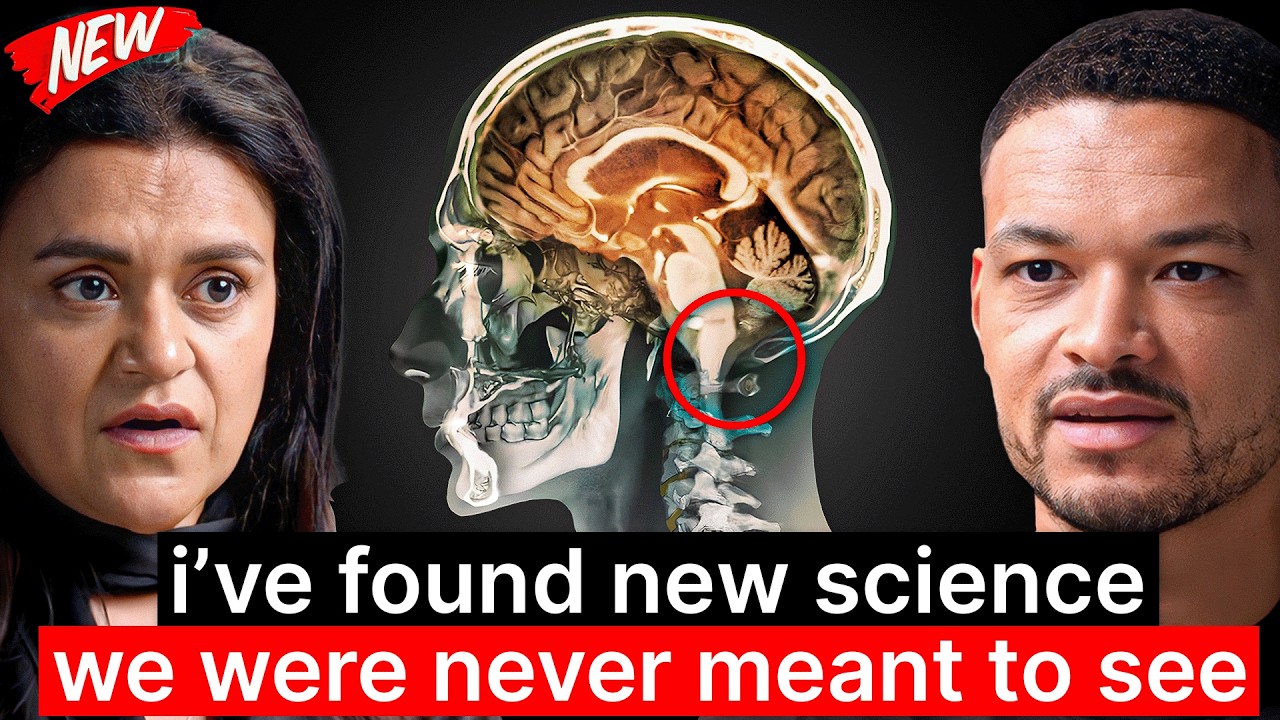
This article summarizes a conversation released by The Diary Of A CEO featuring neuroscientist and psychiatrist Dr. Tara Swart. In the discussion Dr. Swart describes her personal grief journey, the science she investigated, and her hypothesis that the mind can access information beyond the physical brain. For the original episode, visit The Diary Of A CEO channel
Why this conversation matters
Dr. Tara Swart combines clinical neuroscience, psychiatry, and lived experience to make a provocative claim: human cognition is far broader than the ordinary five senses, and — under certain conditions — people can receive verifiable signs from loved ones who have died. Coming from a scientist who trained in neuropharmacology and psychiatric diagnosis, the claim shifts the conversation from anecdote to an invitation to examine evidence, mechanisms, and practical strategies for healing.
Tara Swart’s personal story: grief turned into inquiry
Dr. Swart lost her husband, Robin, to leukemia in 2021. The loss led to a series of experiences that she initially questioned as possible psychiatric symptoms. She recounts intense, repeated signs—robins in gardens, a vivid waking vision beside her bed, changes in body temperature and unexplained physical pain—that ultimately prompted rigorous research rather than mere explanation-by-coincidence.
“Once he’d actually passed away, I remember a really strong feeling of looking at his body and just knowing that wasn’t him.” — Dr. Tara Swart
Her method was both personal and scientific: she treated sign-receiving as a skill to train, then searched literature across neuroaesthetics, near-death experiences, terminal lucidity, and somatic memory to form testable hypotheses.
Key scientific threads she follows
1. Expanded sensing: more than five senses
Dr. Swart summarizes a literature review suggesting humans have many more senses than the classical five. She cites a working count of thirty-four senses (including interoceptive and non-conscious bodily detectors). The implication: cognition relies on many streams of information that are usually filtered out.
2. The brain as filter
Tara frames the brain as a filter that constrains a broader mind so humans can operate in material reality. Loosening that filter—through grief, creativity, meditation, or altered states—can increase access to non-ordinary information, she argues.
3. Terminal lucidity and near-death cases
She draws on documented examples of terminal lucidity (sudden temporary recovery before death) and near-death experiences where people report encounters, accurate verifiable details, or restored cognition despite severe neural damage. These cases challenge a strictly materialist account that equates mind entirely with brain tissue.
“How can a brain that’s irreversibly damaged suddenly function completely normally?” — question posed about terminal lucidity and near‑death cases.
4. Creativity, hyperconnectivity, and altered states
Dr. Swart outlines a neurocognitive model linking creativity, hyperconnectivity across cortical regions, and lowered latent inhibition (a looser filter), which can heighten novelty salience and allow unexpected associations. In vulnerable states—like grief—these features can produce experiences that look like psychosis, or they can open beneficial expanded awareness depending on cognitive reserve and integration.
Training to notice and interpret signs: practical steps
Dr. Swart treats sign-receiving as trainable. Her recommended practices are accessible, evidence‑informed, and often derived from ancient traditions:
- Start with belief and curiosity: not as blind faith, but as willingness to look.
- Neuroaesthetics — The art of noticing: cultivate novelty salience by actively seeking beauty and surprises in the environment.
- Nature exposure: many signs take natural forms—birds, spirals, cloud shapes; spending time outdoors raises the probability of noticing meaningful patterns.
- Community and nonjudgmental support: a receptive circle makes it safer to test and interpret subtle experiences.
- Somatic work (body-based therapies): massage, dance, yoga, craniosacral therapy—these can release trauma that limits expression and sensing.
- Creative practice: creating or beholding art increases associative thinking and lowers habitual filters.
- Gut health and physiology: supporting the gut–brain axis reduces inflammation and preserves cognitive flexibility (see practical gut guidance below).
- Deliberate experiments: pick a narrow, unusual sign (e.g., “show me a phoenix symbol three times by 11 pm”) and set tight criteria to reduce confirmation bias.
How to structure small experiments
- Choose a specific, emotionally meaningful cue (rare enough to reduce chance matches).
- Define time and count criteria (e.g., three occurrences by a fixed time).
- Use community—share the experiment with a friend who can validate.
- Record outcomes and context to evaluate whether pattern exceeds chance expectation for you.
Healing grief: an integrated roadmap
For people in acute grief Dr. Swart emphasizes a layered approach:
- Allow and feel emotions: don’t repress—talking therapy helps when available.
- Somatic release: movement, singing, drumming, crying, massage—these access nonverbal trauma held in fascia and posture.
- Nature, creativity, and ritual: these provide meaning and channels for processing loss.
- Open to signs (if helpful): small, personally meaningful signs can provide comfort and guidance, but interpretation should stay compassionate and grounded.
Gut, vagus nerve, and intuition
Dr. Swart highlights the gut–brain axis as a primary physiological channel for intuition:
- The gut microbiome, intestinal neurons, and brain interact bidirectionally; the vagus nerve is a major conduit.
- Chronic inflammation and Western-diet dysbiosis can reduce cognitive resilience and interfere with subtle sensing.
- Supporting gut health (diet, exercise, sleep, stress management, targeted nutrients) helps protect the hippocampus and overall brain function, creating the physiological baseline that supports higher intuition.

Altered states and emulating near-death experiences
Dr. Swart discusses structured ways people can safely access transformative altered states:
- Dark retreats: extended periods (7–49 days) in controlled darkness and silence can induce visionary experiences similar to near-death reports and produce increased compassion, reduced death anxiety, and renewed purpose.
- Holotropic/connected breathwork: certain breathing protocols can create experiences physiologically analogous to moderate doses of psychedelics.
- Psychedelic-assisted therapy: acknowledged as powerful but often regulated; she mentions that comparable experiences can be approached via breathwork, ritual, and immersive nature encounters.

How Dr. Swart frames meaning, purpose, and the non‑material question
Dr. Swart does not insist on a single religious framework. Instead, she describes a transcendent layer that may be called consciousness, collective mind, or cosmic field. Her conclusion is cautious and empirical: current data from near‑death experiences, terminal lucidity, and converging reports of signs suggest the mind may not be reducible to brain tissue alone. She invites continued scientific inquiry rather than dogmatic belief.
“The only explanation is that the mind is not emergent from material matter.” — Dr. Tara Swart
Her public hypothesis: the brain may operate as a filter or receiver of a broader conscious reality. She points to respected scientists who entertain similar models and emphasizes that such ideas are testable and worth research.
Practical starter checklist (for readers)
- Keep a short noticing journal: record unusual sensory events and emotional context.
- Schedule weekly nature time and a creative practice (15–30 minutes).
- Try one somatic exercise each week (dance, breathwork, yoga, or massage).
- Improve gut health fundamentals: sleep, varied diet rich in fiber, movement, and stress management.
- Run one tight “sign experiment” with a friend as validator.
- If grieving, pair talking therapy with body-based practices; reach out for compassionate community support.
Where the research might go next
Dr. Swart believes science will continue to close the gap on these questions. She expects better-controlled databases for near-death reports, physiological markers from dark-retreat and breathwork studies, and improved understanding of how trauma and “hidden wisdom” are encoded in body tissue and fascia. She emphasizes rigorous testing, open-minded skepticism, and compassion in interpretation.

Conclusion
Dr. Tara Swart offers a scientifically framed, experience-informed pathway for reconsidering how the mind, body, and possible post‑death communication interact. Whether read as a researcher, clinician, or someone wrestling with loss, the takeaways are practical: heal the body, cultivate noticing, lean into creativity and community, and run careful personal experiments. The conversation opens a door to further research and to personal practices that many readers may find comforting, clarifying, and empowering.
For the full nuanced discussion and to hear the exchange in Dr. Swart’s own voice, see the original episode on The Diary Of A CEO YouTube channel:

Be the first to comment