



Jeff Hampton of Hampton Law explains a simple—but powerful—four-word question that can force an officer to either let a motorist go or articulate a lawful basis for continuing to hold them. Backed by a recent unanimous Supreme Court ruling, this approach combines decades of Fourth Amendment case law into a practical script drivers can use to protect their rights on the roadside. For more, visit Hampton Law
How a new Supreme Court decision changed the landscape
The Supreme Court’s decision in Barnes v. Felix shifted how courts evaluate police conduct during stops and encounters. Instead of focusing narrowly on the single moment force was used or the instant something went wrong, the Court instructed that judges must consider the full sequence of events leading up to any climactic moment. In short: context is king.
“Consider all the relevant circumstances, including facts and events leading up to the climactic moment.” — Justice Kagan (Barnes v. Felix)

That change matters because pre‑force or pre‑detention behavior—how the stop began, how the officer spoke, whether the stop was prolonged, and how an officer reacted when a driver asserted rights—can now be used to assess whether the officer acted reasonably. What used to be a “moment of threat” analysis is now a totality-of-the-circumstances test that looks backward as well as at the climactic moment.
Foundational cases that inform the roadside question
- Delaware v. Prouse — Police may not randomly pull drivers over to “fish” for violations; an officer needs a legal reason (traffic violation or reasonable suspicion).
- Rodriguez v. United States — Officers cannot prolong a traffic stop beyond its original purpose (e.g., writing a ticket) without separate reasonable suspicion of other criminal activity.
- Terry v. Ohio — Defines reasonable suspicion for detentions and pat‑downs.
- Mendenhall and Berkemer v. McCarty — Help define when a person is “seized” and how a reasonable person would perceive being free to leave.
- Heibel v. Sixth Judicial District — Supports stop‑and‑identify laws in jurisdictions that require a detainee to give identifying information when lawfully stopped.
The four words: “Am I being detained?”

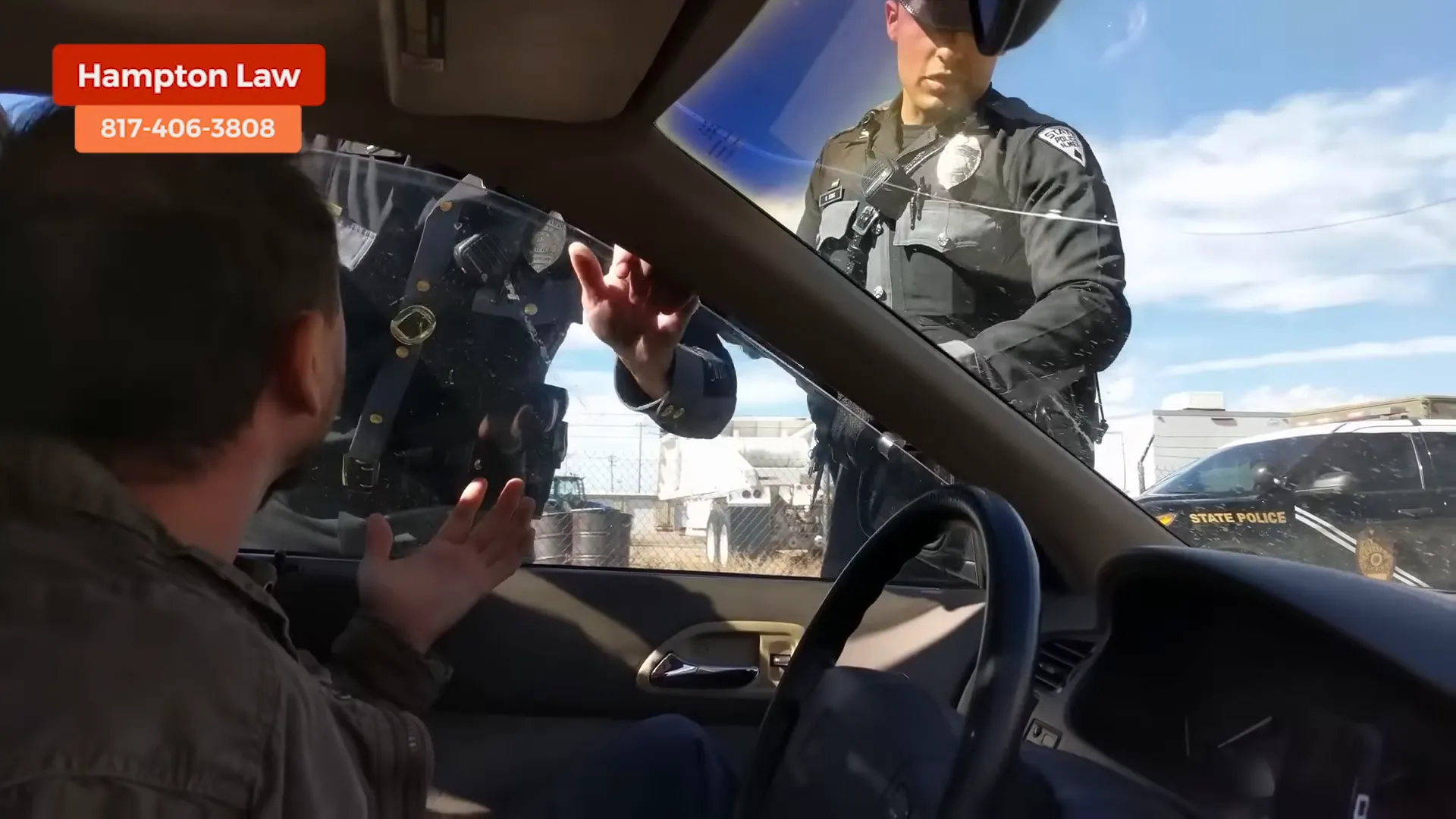
Those four words are deceptively simple, but used correctly they create immediate legal implications for the officer on the scene. When spoken politely and clearly, they place the officer on notice that the motorist knows their rights and expects the officer to either:
- Say “No” — the motorist is free to leave; or
- Say “Yes” — the officer must be able to articulate a specific legal basis (reasonable suspicion) for detaining the motorist.
Why each word matters
- Am — Present tense. Demands a contemporaneous status check: what is happening right now?
- I — Personalizes the question. It focuses the request on the speaker, preventing group‑style verbal deflections (e.g., “everyone just hang tight”).
- Being — Emphasizes ongoing action (or inaction) rather than hypotheticals about the future or past. It anchors the Fourth Amendment seizure inquiry to the moment.
- Detained — A technical legal term under the Fourth Amendment. It signals that the questioner understands detention is a seizure requiring reasonable suspicion (Terry) and invites the officer to declare the precise grounds for that seizure.
How to use the question—practical roadside script

- When the officer approaches, comply with state law by handing over license, registration, and proof of insurance.
- Politely ask, “Am I being detained?” (That’s it—four words.)
- If the officer says no, say something like: “Officer, based on that I am going to leave.” Record and depart immediately.
- If the officer says yes, follow up: “Officer, may I ask on what specific legal grounds?” Record the officer’s stated reason; their words become an important contemporaneous record.
- Immediately and clearly invoke these rights: “Officer, I refuse consent to any search of my person, places, or things. I exercise my right to remain silent and I will not answer any further questions unless my attorney is present.”
- Then stop speaking. Do not volunteer information or explanations.
- Record the entire encounter (dashcam, phone video). Do not rely solely on the officer’s body camera—your recording is independent evidence.
- If you are held for an extended time (for example, waiting for a canine unit), politely repeat “Am I being detained?” every 30–60 minutes to create a record that time is passing without lawful justification.
Why Barnes makes this question even more potent
Because Barnes requires courts to evaluate the officer’s entire conduct, anything the officer did before a use of force or before escalating a detention becomes admissible in the assessment of reasonableness. Prolonged stops, baiting tactics, evasive or hostile commands, and the officer’s reaction when a motorist asserts rights can all be considered. Time itself becomes evidence: a long, unexplained delay that was previously seen as incidental now weighs against an officer trying to justify later actions.
Practically, this means:
- Officers are less likely to rely on vague chit‑chat to create post‑hoc justifications.
- Repeated questioning of “Am I being detained?” timestamps the encounter and highlights unjustified extensions of detention (Rodriguez).
- Recorded pre‑force misconduct can be used in civil rights claims and may factor into loss of qualified immunity in egregious cases.
When “Am I being detained?” will not get you out
There are important exceptions where the question will not magically end a detention. Know them.
- DUI checkpoints / roadblocks — The checkpoint itself is a lawful basis for the brief stop. If stopped, hand over documents as required, then exercise the right to remain silent and refuse consent to any search. If the officer claims reasonable suspicion of impairment, that converts the stop into a regular detention.
- Officer has reliable information that you match an armed suspect — If police reasonably believe you are armed and dangerous or match a suspect description, they have more leeway to detain and take officer‑safety steps (including limited frisking).
- Stop‑and‑identify states — If your state has a stop‑and‑identify law (under Heibel), you must provide name and ID when lawfully detained. Provide required information, then say: “Officer, I have nothing else to say. I exercise my right to remain silent. I do not consent to any searches and I request an attorney.”

Quick checklist before you leave the scene
- Hand over license, registration, and insurance if required.
- Ask: “Am I being detained?” and note the officer’s answer.
- If detained, ask for specific legal grounds and record the response.
- Clearly refuse consent to searches and invoke the right to remain silent and to counsel.
- Record the encounter with your phone or dashcam; keep repeating the detention question if the stop is prolonged.
- Know your state’s stop‑and‑identify rules and whether checkpoints are lawful in your jurisdiction.
Final takeaways
Jeff Hampton’s guidance boils down to a few practical, legally grounded actions: use the four words “Am I being detained?” to compel an immediate status response; record everything; refuse consent to searches; invoke silence and counsel; and know your state laws. The Supreme Court’s Barnes decision strengthens this tactic by requiring courts to consider an officer’s entire sequence of conduct, making pre‑detention behavior and unjustified delays relevant when assessing reasonableness.
This approach is not a guarantee of safety or release in every situation, but it creates contemporaneous legal records and forces officers to either justify their continued detention on the spot or release the motorist. For more resources and additional explanations from Hampton Law, visit their channel


Be the first to comment