


You probably feel that you know the outline of human history. Ancient cities, pyramids, empires, kings with unfortunate hobbies. But almost everything we know belongs to a surprisingly small part of the story.
Before anyone wrote a single word, our ancestors underwent one of the greatest transformations in human existence. They cultivated the earth, built permanent settlements, organized enormous construction projects and laid the foundations of civilization.
Almost all of their experiences have vanished. We have no eyewitness accounts, no descriptions of their celebrations, no record of the names they called each other. Only fragments in stone, bone and clay.
This is the dark matter of human history: a mostly invisible past whose effects surround us. Like wind shaking the leaves, we recognize its presence through what it changed.
New DNA sequencing techniques, better dating of ancient remains, mathematical models, aerial archaeology and lidar are making parts of this world more visible. They cannot recover a forgotten conversation. But they can help us reconstruct the world in which it happened.
A Different Starting Point for Human History
Our calendar divides human history at a rather awkward place. By the beginning of the Common Era, humanity was already very much in the middle of things. Cities, writing and complex societies had existed for thousands of years.
The Human Era calendar offers a different perspective: add 10,000 years to the familiar date. The year 2026 becomes 12,026.
Its starting point sits roughly at the beginning of the Holocene, around 12,000 years ago, when the last ice age ended and Earth’s climate became warmer and more stable. This is a useful place to begin the story of the world we inhabit today, not a claim that civilization appeared everywhere on one particular morning.
Greater climatic stability made it easier for communities to invest in crops, settlements and plans that would take years to pay off. The foundations of modern human life began to accumulate.
And the people doing all this were not emotionally primitive versions of us. They were modern humans, with familiar desires, fears, affection, jealousy and dreams. Their world was different. Their humanity was not.
Karahan Tepe: Building a New Kind of World
Imagine our timeline beginning in the hills of southern Anatolia and northern Syria. Here, around 12,000 years ago, a remarkable connected cultural world was emerging.
At Karahan Tepe, people carved monumental structures into the landscape. Using stone and wooden tools, they shaped bedrock and created columns several meters high. T-shaped pillars, animals, human figures and expressions of fertility filled their constructions.
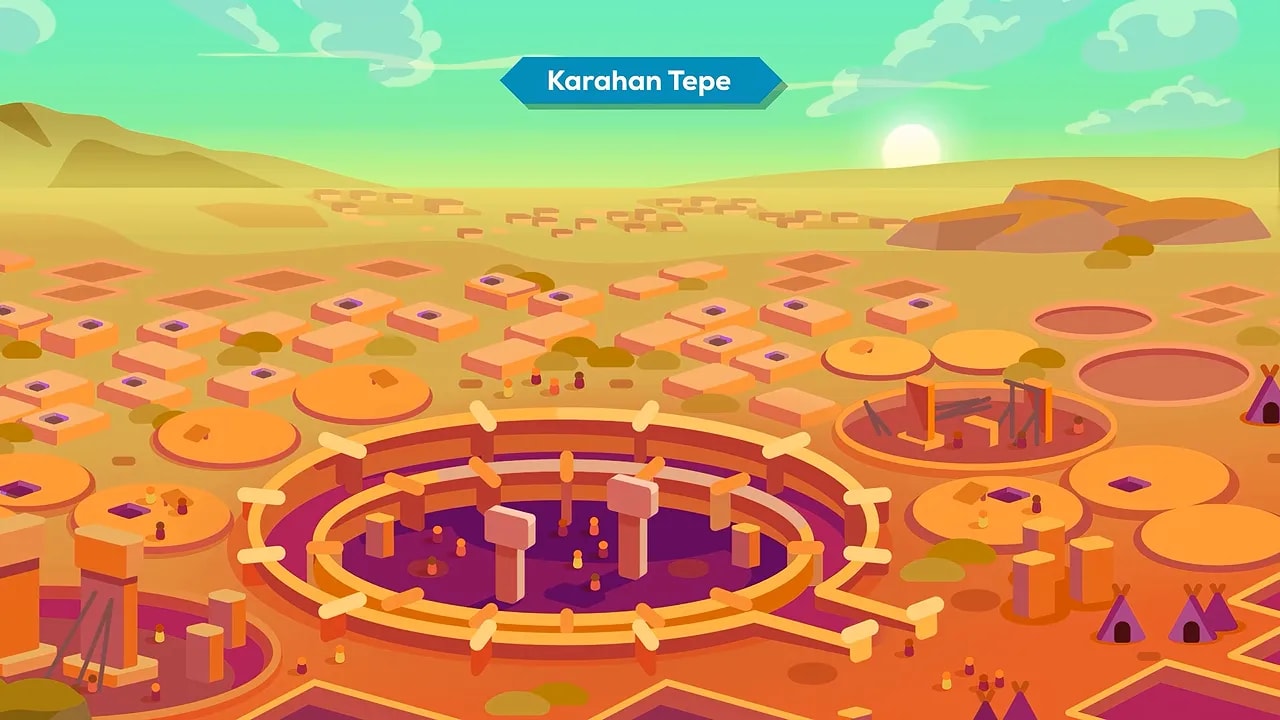
Picture hundreds of people arriving from communities across the region for a gathering unlike anything they had experienced before. The exact celebration is an imaginative reconstruction, but the extraordinary scale of the work is tangible. These monuments arose roughly 7,000 years before the pyramids.
What were they for? Were people honoring gods whose names have disappeared? Expressing their inner worlds? Creating places that brought scattered communities together?
We do not know exactly why they built them. Monumental architecture survives much more easily than the intentions of its builders.
But moving and carving so much stone required energy, cooperation and organization. While some people worked on the structures, others had to obtain food. Gathering grain, preparing bread, brewing beer and hunting animals could support the people occupied with construction.
The important change was not simply a bigger building. It was a growing ability to coordinate people around demanding shared projects.
When Gathering Became Cultivation
For generations, people had learned how plants grew and how planting useful seeds could produce food later. With a more predictable climate, communities began cultivating plants more deliberately rather than relying only on wild harvests.
They opened the soil, removed unwanted plants and set aside food they could eat today to grow more food tomorrow. A small act, with enormous consequences.
Permanent settlements, cultivation, ritual and community developed together. It is tempting to put them in a neat order, but the emerging way of life was a tangled process, not a checklist.
Perhaps people gathered at night in their monumental spaces to drink, sing, dance, argue and make promises to unknown gods. We cannot recover those evenings. We can only imagine them around the surviving stones.
The modern name Taş Tepeler groups the sites associated with this cultural world. More settlements and monumental projects appeared, including Göbekli Tepe, the largest found so far in this group.
As farming gradually became a way of life rather than a seasonal activity, food could support more people. Larger communities made room for more specialized work, longer exchange networks, craftspeople, artists and people overseeing collective efforts.
Trade, Crowded Homes and Life Among the Dead
Around 10,000 years ago, perhaps 5 to 10 million humans inhabited the planet. There was no single road everyone followed. Communities experimented with hunting, gathering, coastal resources and cultivation in different combinations. Some ways of life endured. Others disappeared.
Exchange networks were already old, but now they became busier. Tools, beads and seashells traveled between communities. So did a particularly useful material: obsidian.
This dark volcanic glass can fracture into razor-sharp edges. The black gold of the Stone Age moved hundreds of kilometers, linking distant settlements into webs of contact.
Villages grew larger and more elaborate. Why did so many people choose to cluster together? More hands for harvesting, family connections, trade, shared festivals and safety may all have played a part. We cannot reduce thousands of individual decisions to one explanation.
Çatalhöyük: A Settlement Without Streets
Travel west to Çatalhöyük in present-day Türkiye, around 8,500 years ago. Here, densely packed houses pressed against one another without streets or alleys between them.
People moved across rooftops and entered their homes through openings above, using wooden ladders. Farmland and herds of sheep and goats surrounded the settlement.

The interiors were anything but blank boxes. Animal paintings decorated rooms. Plastered bull skulls were incorporated into walls, with striking red ochre adding color. Figurines depicted animals and human bodies.
Were female figurines goddesses? Did they carry some other meaning? Were some simply expressions of admiration for the human form? An object can survive while its meaning disappears completely. The UNESCO overview of Çatalhöyük provides additional context on the settlement’s architecture and art.
Everyday life could have included meals of bread and nuts, cheese and beer. We can imagine household chatter, irritation at noisy neighbors or admiration for someone brave enough to confront a leopard. These details help us picture human lives, but they are not recorded conversations.
One practice is especially striking: the dead could remain inside the household.
People buried bodies beneath the floors of their homes. Some remains were later disturbed, and skulls could be removed and treated separately. Across the broader world of these early communities, skulls were decorated, painted or given modeled features using plaster and other materials.
Perhaps these practices preserved memories or maintained a relationship with ancestors. Perhaps they served purposes we would struggle to recognize. Whatever their meaning, the boundary between the living and the dead was arranged very differently from ours.
Farming Spreads, Along With New Tensions
During the fourth millennium of the Human Era, farming communities spread outward from Southwest Asia, carrying plants, animals, technologies and new habits with them.
Across Europe and Asia, they met people whose communities had long depended on hunting, fishing and gathering. These encounters did not all follow the same pattern.
- Some groups exchanged materials and shared technologies.
- Some farming and foraging communities lived alongside each other for centuries.
- Some competed for access to the same landscapes.
- In many regions, farming gradually became the dominant way of life.
It was not always peaceful. Skeletons preserve injuries from arrows, clubs and other weapons. Mass graves contain bodies deposited together, sometimes with arrowheads still embedded in bones. Some hold people struck from behind; others include whole families.
Violence was part of this history, but its overall frequency remains uncertain. A terrible discovery tells us that something happened. It does not automatically tell us how typical it was.
Growing permanent settlements also created practical pressures. Food needed storage. Resources needed management. Disputes needed resolution. Communities had homes, fields and supplies to protect.
Somewhere in this mostly silent past were attacks, defenses, victories and devastating losses. Their scale may have been smaller than later wars, but their consequences were enormous for the people involved.
And war was only a fraction of their lives. They also made peace, played with children, shared meals and mourned people they loved. Archaeology can reveal a wound more readily than a reconciliation.
By around 8,000 years ago, farming had spread across much of Southwest Asia and into Europe. New forms of life were flourishing. Then the climate delivered a nasty surprise.
An Ice Dam Fails, and the World Changes
Around Human Era year 3800, roughly 8,200 years ago, a catastrophe unfolded in North America.
The retreating glaciers had created an enormous lake system, larger than today’s Caspian Sea. Vast ice sheets held the water back.
A dam made of ice. In a warming world. Not an arrangement with wonderful long-term prospects.
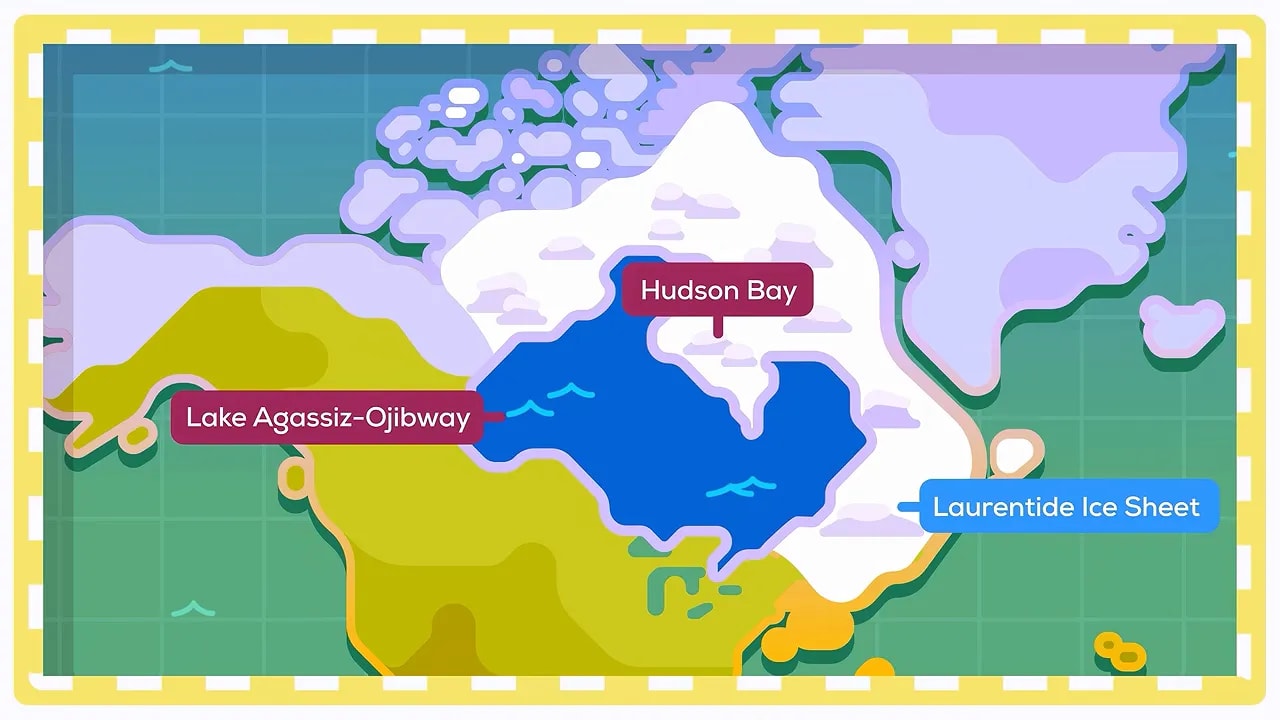
When the barrier failed, immense quantities of freshwater drained into the ocean. Sea levels rose by an estimated 1 to 2 meters, and the ocean circulation carrying warm water northward slowed.
Across the North Atlantic, Europe and parts of the Near East, conditions became colder and drier. Some regions cooled by several degrees. Rainfall patterns shifted, and prolonged drought placed enormous pressure on communities that had increasingly come to depend on predictable harvests.
This was bad. A system built around reliable growing seasons suddenly became much less reliable.
Survival Through Adaptation
People did not all respond in the same way. Some relied more heavily on animals. Others turned toward marine food, shifted settlements from plains into nearby mountains or left in search of somewhere better.
Movement toward rivers and lakes carried agricultural practices and technologies into new places. Over time, farming villages in the Nile Valley helped lay the foundations for the civilization that would later emerge there.
In Mesopotamia, communities increasingly reshaped their relationship with rivers. They dug canals, directed water toward fields and stored the grain those fields produced.

Irrigation required more than digging a ditch. It demanded cooperation over water, labor and food. Over the long run, productive fields and stored surpluses supported population growth and helped make possible the first city-states.
After a century or two, the climate stabilized and the droughts ended. Agricultural societies had survived a major test. Not without suffering, migration or loss, but with persistence and new ways of sustaining themselves.
From Mega-Settlements to Cities
Around Human Era year 5000, roughly 7,000 years ago, the pace of change began to quicken. More dependable food supplies supported larger populations, and some settlements expanded to extraordinary sizes.
By around 6,000 years ago, the Trypillia culture in what is now Ukraine built vast settlements such as Talianky. Concentric rings of houses accommodated thousands of people who cultivated wheat, barley and peas and kept animals.
These were not merely larger versions of the earliest villages. They represented new scales of collective life.
As large communities became more common, exchanges between them carried both goods and ideas. Copper working, the plow and the wheel became part of a world in which innovations could travel through increasingly connected networks.
Uruk and the Problem of Remembering Everything
By around Human Era year 6800, we arrive at Uruk, one of the world’s first great cities. Tens of thousands of people lived among monumental temples and the demands of genuine urban life.
A small village can manage many things through personal knowledge and memory. A city cannot keep all its grain, livestock, obligations and distributions inside people’s heads.
A specialized class of administrators became increasingly important. They counted supplies, distributed resources and collected contributions that supported the city’s activities and expansion.
To manage all this, people developed accounting systems. Marks on clay objects and tablets recorded quantities of barley or sheep. Over time, these systems developed into writing.
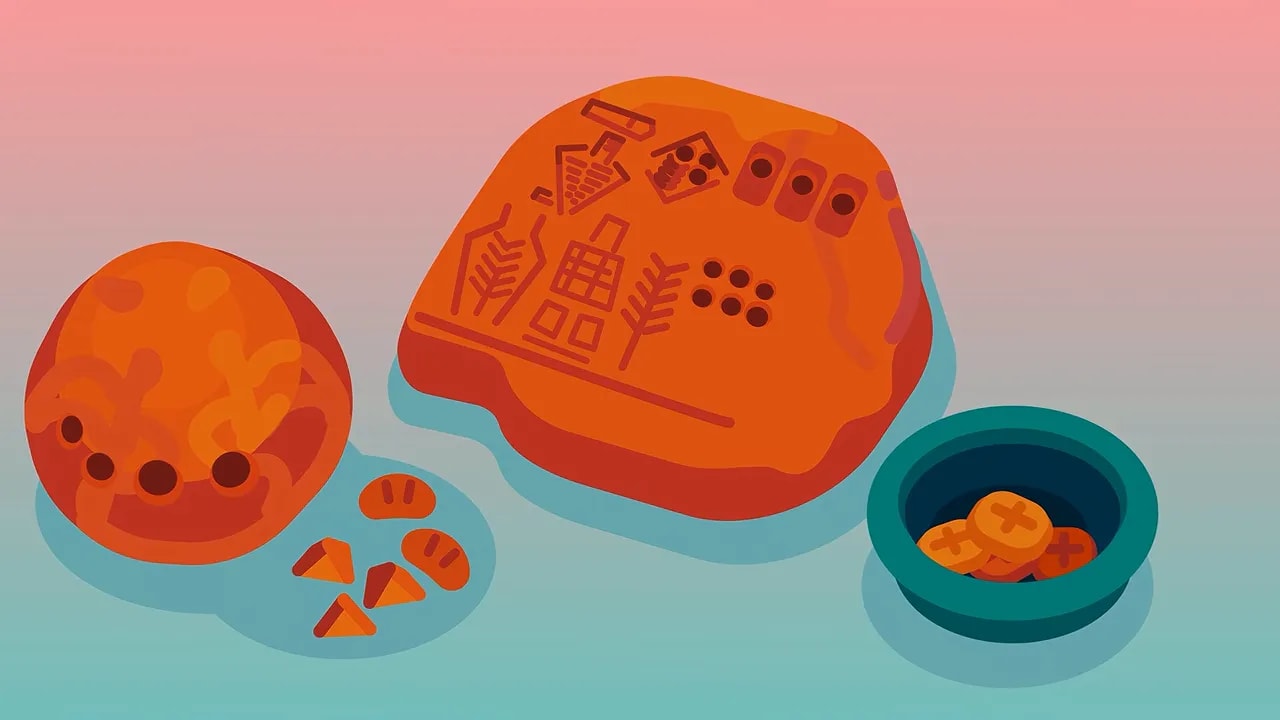
The boundary between the unwritten past and recorded history is not a triumphant speech. It is something wonderfully mundane: a record scratched into clay.
A Name Emerges From the Darkness
On an early tablet associated with barley and beer, we encounter Kushim, presented in this story as the first recorded name.
After millennia of anonymous builders, farmers, craftspeople and families, a name finally reaches us.
It is not much of a biography. We do not know how this person felt that day, whether they drank any beer or what their ordinary life was like. Writing makes the past more visible, but it does not make it complete.
Still, that tiny survival is moving. A few marks can stand for the countless forgotten people whose work and experiences made our world possible.
The beginning of civilization was not one invention or one settlement. It was a long, uneven transformation involving cultivation, shared construction, exchange, migration, conflict, adaptation and new forms of organization.
We inherit its results every day. Almost none of the people responsible left us their names.
For the evidence and further reading behind this history, explore the research sources and references.
Celebrating the Whole Human Era
This longer perspective is why our Human Era Calendar is such a cherished project. It counts from the dawn of the transformations that shaped civilization, reminding us that our own lives belong to a much larger human story.
The 12,027 Human Era Calendar celebrates the dark tales and legends people used to make sense of the world before science. Each month explores human imagination through original Kurzgesagt artwork.
It also comes with a postcard featuring one of six concept sketches by our illustrators. The Human Era Calendar Artbook collects the calendar illustrations created over the years, while the Space Video Artbook explores another part of our work. Both include sketches, stories and facts from the team.
These are celebrations of art about humans, made by humans, for humans. Purchases support our independent science channel and give artists and researchers the time careful work requires, helping us create free educational work that sparks curiosity.
Original video credit: This article is adapted from We Finally Know More About Humanity’s First Civilization by Kurzgesagt – In a Nutshell. Full credit for the original research, storytelling and illustrations belongs to the channel.

Be the first to comment