
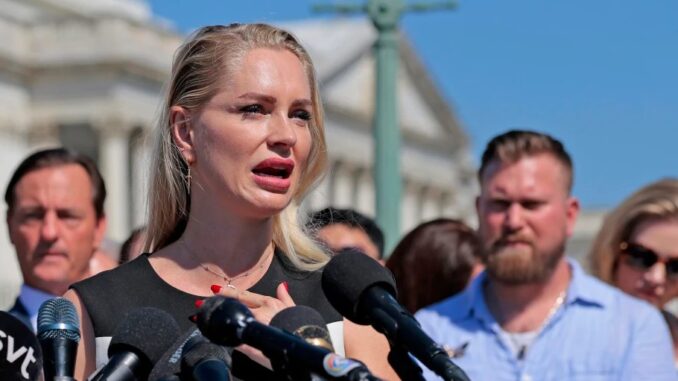

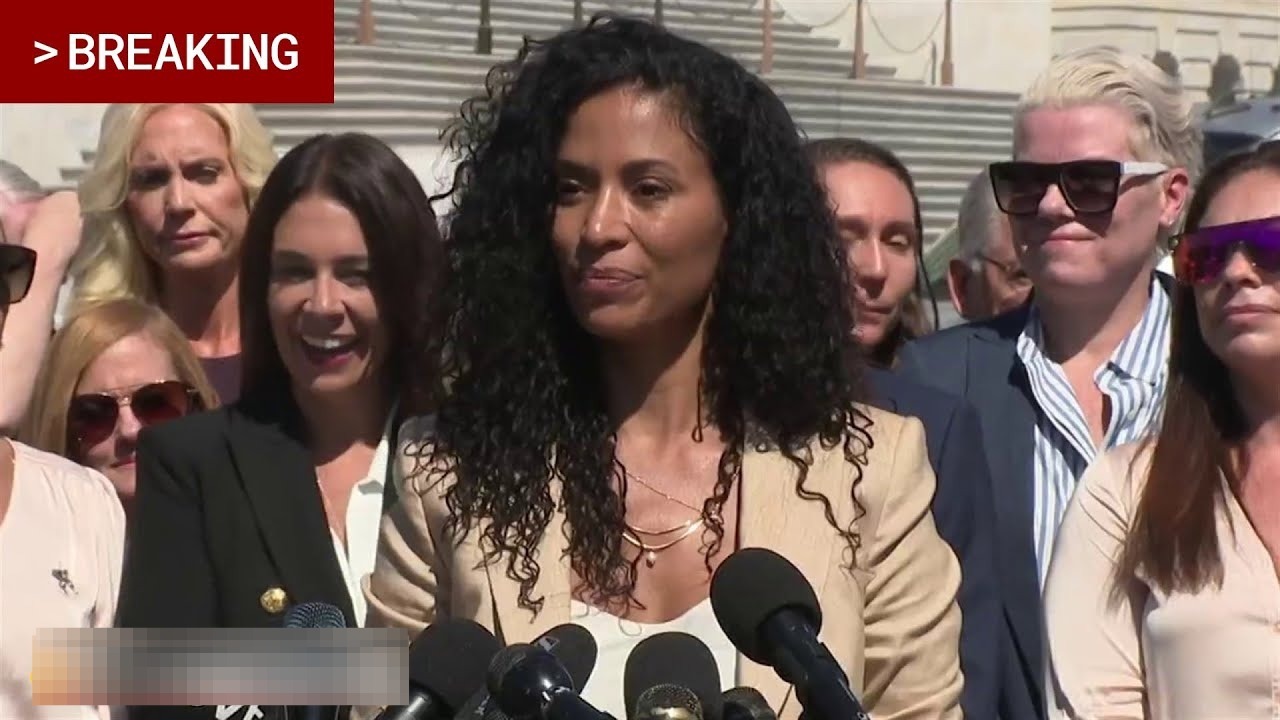
In a powerful on-camera moment outside Capitol Hill, a group of survivors spoke about decades of abuse, trafficking, and the secrecy that enabled Jeffrey Epstein and his enablers. The clip, published by MSNBC, features testimony from Lisa Phillips — host of the podcast From Now On — Shante Davies, Anushka de Giorgio and other survivors and attorneys pressing for accountability and transparency. Original video by MSNBC: https://www.youtube.com/channel/UCaXkIU1QidjPwiAYu6GcHjg
From modeling shoots to Epstein’s island: witnesses describe how abuse was normalized
Lisa Phillips opened by recounting how, while on a photo shoot in 2000, she was taken to Jeffrey Epstein’s private island. She described the experience as “a glimpse into a very dark and disturbing world” and connected Epstein’s influence to the highest reaches of fashion, arts and entertainment. Lisa named Katie Ford of Ford Modeling Agency as a person Epstein introduced her to, underscoring how his reach permeated professional industries where young, ambitious women look for opportunities.
Those accounts reinforce a pattern survivors described consistently throughout the event: promising introductions and offers that concealed coercion and abuse. Multiple speakers emphasized that Epstein was not merely a serial predator, but an international trafficker whose operations affected women in New York and beyond.
Demanding accountability: survivors’ message to Congress
The testimony shifted from personal recollection to public demand. Survivors made clear they were not seeking pity but action. They urged federal lawmakers to choose whether they will continue to protect powerful predators or finally protect survivors.
“We are not asking for pity. We are here demanding accountability, and I’m demanding justice.”
Speakers called for transparency around government files they believe hold crucial information: who Epstein knew, who protected him, and how he operated so long without consequence. One survivor framed the secrecy as not just a cover-up but as complicity that prevents healing and hinders prevention.
“This secrecy is not protection. It’s complicity.”
Creating a survivor-compiled list: purpose and protections
One of the most notable announcements was that survivors have been discussing the confidential creation of their own list of people they say were regularly part of Epstein’s world. The intent, they said, is to help other frightened survivors who know to whom they were trafficked but feel unable to speak publicly.
Attorneys at the event confirmed that law firms working with survivors have already compiled lists from victim interviews, but emphasized the legal and personal risks to survivors who name powerful people publicly. Defamation suits, public attacks, and re-traumatization are real threats that keep many victims silent.
Organizers stressed the list would be created by survivors, for survivors, and handled confidentially. They also made a clear point: the Department of Justice should release its own records that many believe contain the names and documents needed for full accountability.
Reaction to Ghislaine Maxwell’s transfer: fear of impunity
Survivors and their lawyers expressed outrage when they learned Ghislaine Maxwell had been transferred to a lower-security facility. Several speakers characterized Maxwell not simply as a recruiter, but as an active participant in the abuse — a “major architect” of the trafficking scheme.
“This woman abused children… She was present, she was complicit, she was enabling.”
The transfer — and reports that it was not promptly communicated to survivors — sparked deep concern that powerful figures might be treated leniently, sending a dangerous message about accountability in cases of sexual exploitation.
Politics, power and the cost of silence
Many survivors described how Epstein boasted about his famous and powerful friends, noting that such connections helped shield him and deter victims from speaking out. One witness recounted Epstein boasting of his friendship with Donald Trump and of keeping framed photos that signaled his social connections.
When asked about the president calling Epstein’s case a “hoax,” survivors described the emotional harm of dismissive rhetoric. They called for public humanization of survivors and invited political leaders to meet with them directly to understand the lived reality behind the headlines.
“There is no hoax. The abuse was real.”
Legal strategy and next steps
Attorney speakers explained that while many names are known to survivors and counsel, releasing those names publicly carries risks and may complicate potential prosecutions. They signaled willingness to assist in compiling confidential lists and coordinating with prosecutors when appropriate, but also warned that survivors have been repeatedly failed by institutions and need protections if they are to come forward.
The survivors urged Congress to pass legislation that would force disclosure of government files tied to Epstein’s activities. They argued that bringing those records into the open would provide the transparency necessary to hold enablers and facilitators accountable — not just the primary perpetrator.
Why this matters: prevention, transparency, healing
The larger point of the testimonies is straightforward: secrecy helped Epstein and his network operate for years. Survivors argued that openness, legal accountability, and survivor-centered protections are essential to preventing future trafficking schemes that exploit wealth and influence.
They framed their efforts — including the confidential list — as a way to protect current and future survivors, to confront institutional complicity, and to transform pain into systemic change.
How to follow the story
Readers who want to learn more or watch the full testimony can find the original clip on MSNBC’s channel. For reference: MSNBC channel — https://www.youtube.com/channel/UCaXkIU1QidjPwiAYu6GcHjg
The survivors’ message is clear: transparency matters, protections for survivors matter, and accountability cannot be optional. Whether through legislation, release of government files, or carefully managed survivor-led disclosures, the aim is the same — to prevent predators from using power and secrecy as shields.

Be the first to comment