


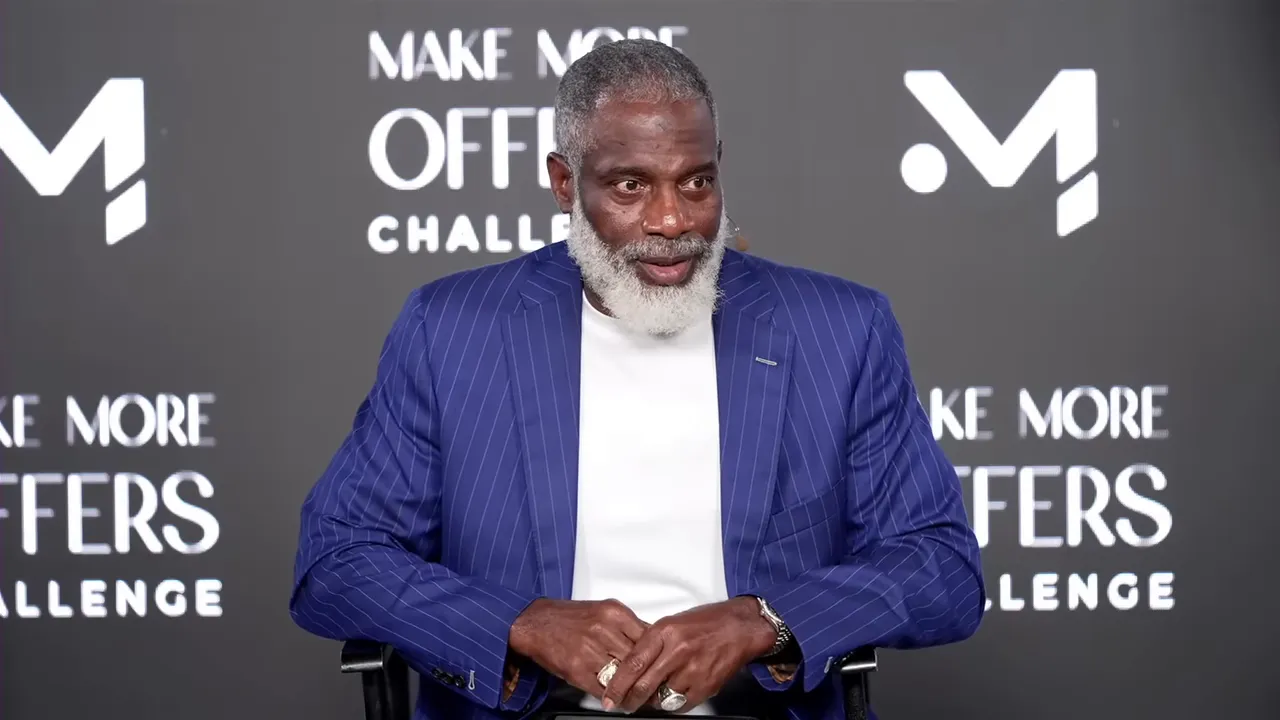
Myron Golden explains a counterintuitive—but proven—path to wealth: stop selling low-ticket products to people who can barely afford them and start selling premium offers to people who can say “yes” without blinking. This article captures the strategies, mindset shifts, and real-world examples Myron shares to help entrepreneurs move from trading time for money to building true wealth.
Credit: Myron Golden
Why most new entrepreneurs accidentally buy a job
Myron opens by pointing out a common mistake: when people think they’re starting a business, they often just “buy a job.” If you can weld, fix plumbing, or write code, you might assume you can run a business that does that work. But running a business is far more than doing the technical work—you now have hundreds of customers, dozens of responsibilities, and unlimited hours. That trade-off explains why solopreneurs often make more money than employees but have far less time.
He emphasizes a crucial awareness: time is more valuable than money. Whereas many people prioritize money over time, wealthy people tend to value time much more highly—and they pay to save it.
Four business model archetypes (formulas that reveal your path)
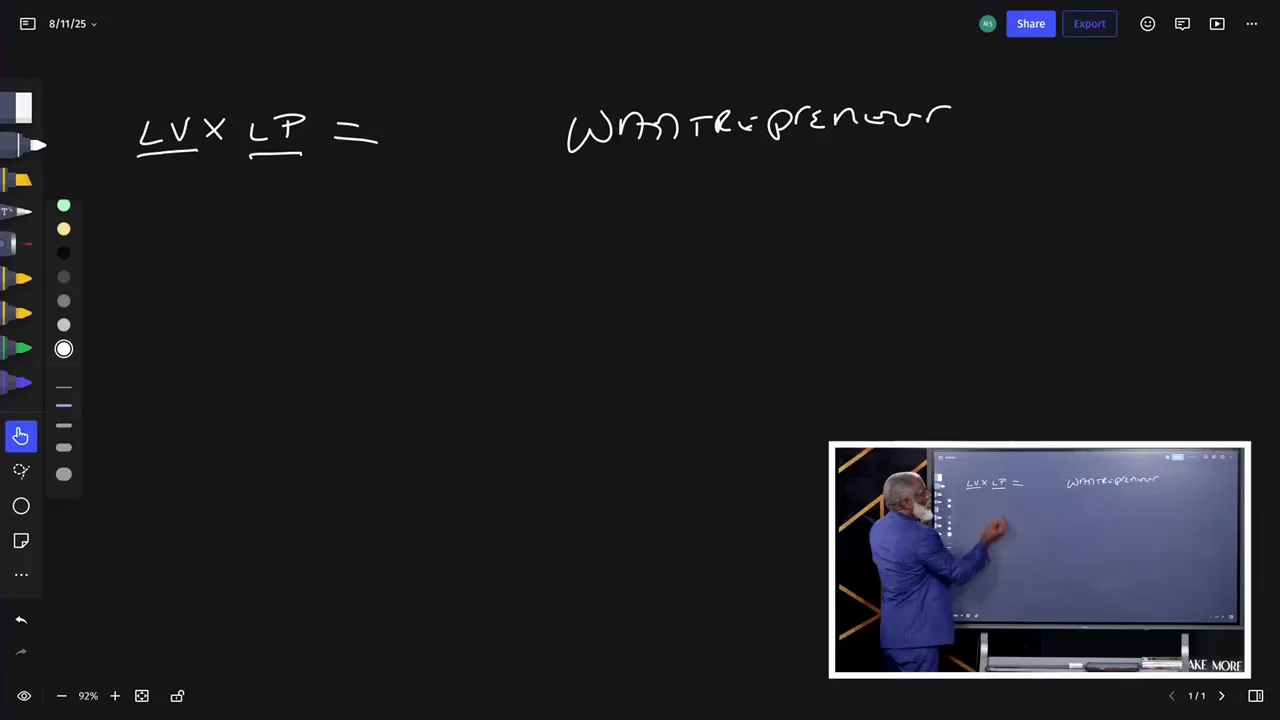
Myron lays out simple formulas that describe common business models. Each formula explains the relationship between volume and price:
- LV × LP = Wantreneur — Low Volume × Low Price. This is a hobbyist or side-hustle model. It teaches sales skills but rarely creates sustainable wealth.
- LV × HP = Entrepreneur — Low Volume × High Price. You sell fewer units but each sale yields high income (e.g., high-ticket consulting or services).
- HV × LP = Waltrepreneur — High Volume × Low Price. Think Walmart: thin margins, massive volume.
- HV × HP = Wealth Entrepreneur — High Volume × High Price. This is Myron’s favorite model: sell high-priced offers at scale to become wealthy.
Real-world examples
Network marketing often falls into LV × LP: lots of conversations, tiny margins (e.g., $15 per bottle of supplements). Conversely, a real estate agent can sell one $5 million home with the same number of conversations it takes to sell a $50,000 home—the difference is commission. The lesson: higher-ticket sales produce dramatically different financial outcomes for similar effort.

The essential secret: sell expensive stuff to rich people
Myron’s main thesis is both simple and powerful: sell premium offers to high-net-worth buyers. That’s the fastest path to wealth. Rich people are willing and able to pay for solutions that remove pain, save time, protect status, or create pleasurable future outcomes.
He shares his own pricing experiment: a seminar training he initially priced at $3,000 sold to two people, then $4,000 sold to seven people, and he kept raising the price—eventually selling the same program as a $35,000 offer. The deliverable didn’t fundamentally change; what changed was the buyer and Myron’s position in the market. Selling to wealthier buyers yields far larger returns and often requires no more energy than selling to needier buyers.

How to get started selling to rich people
Decide to do it. The first barrier is mindset: Myron learned from a room full of wealthy entrepreneurs that his ideas had value to leaders, not just to people in need. Once he decided he had something to offer affluent buyers, his approach changed.
Key steps he recommends:
- Decide to play the wealth game. Commit to selling premium offers; abandon the scarcity mindset that assumes “no one will pay that.”
- Find problems rich people will pay to solve. Rich people are people— they have health, financial, family, and status problems like everyone else. The difference: they have the means to pay for effective solutions.
- Sell results, not features. If a client earns $7,000 per sale, charging $7,000 a month to help them get five new sales is an easy value proposition they won’t abandon.
- Target businesses and professionals. Selling to businesses (B2B) often means clients are already spending money to survive—marketing, furniture for retail stores, or software—so your offer becomes a lever for revenue.
Niches that work: health, wealth, relationships
These three verticals consistently allow premium pricing:
- Wealth: Help businesses increase revenue or protect money through investing or tax strategies.
- Health: High-value personalized health services—blood testing, customized supplements, stem cell therapy, rehab machines—sell because they remove pain and preserve future health.
- Relationships & Family: Estate planning, trusts, concierge family services remove enormous future risk and emotional pain—clients happily pay for peace of mind (example: paying $13,000 for a trust attorney).
How premium pricing changes buyer behavior
Charging higher prices often increases client commitment. Myron describes hiring a $50,000 fitness coach: the financial investment creates accountability. “The heart follows the pocketbook”—when clients invest more, they are more likely to implement recommendations and achieve results.
Premium offers also simplify sales: affluent buyers are typically decisive and already know what they want. When you present a clear solution to what they desire, they can buy quickly.
Turn pain into premium offers: the three pain types
Myron categorizes the pains affluent buyers will pay to solve:
- Pain of what’s absent: Fixing a gap (e.g., getting back a high golf handicap to a previous level; buying fitted clubs to regain performance).
- Pain of what’s annoying: Eliminate minutiae and friction (e.g., hire a travel agent to avoid planning trips, or fly private to avoid TSA hassles).
- Pain from what’s anticipated: Prevent future suffering (e.g., investing in health to avoid being a “tired old man,” setting up trusts to avoid probate and taxes).

Mindset rules: entropy, intention, and growth
Myron invokes thermodynamics: nothing stays the same. Without intention and energy, every area of life trends toward disorder. “If you’re not getting better, you’re getting worse.” That applies to health, wealth, and skill. The wealthy mindset isn’t greed for its own sake—it’s an insistence on creating and preserving value so future generations have more opportunities.
“If you’re not getting better, you’re getting worse.” — Myron Golden
Practical tactics Myron uses and recommends
- Test high prices as practice. Price offers above what you expect to sell—if someone says yes, you just discovered the market and can raise price.
- Sell to businesses where purchases are recurring and tied to revenue, rather than solely to individual consumers with tight budgets.
- Keep repeating a proven pitch. Myron spent months refining his message; the market tells you what language works by saying yes or no.
- Offer guarantees or clear ROI math to eliminate buyer hesitation (e.g., if my help gets your business five additional $7,000 sales, would that return justify a $7,000/month fee?).

From entrepreneur to investor: protect and scale wealth
Once income grows, Myron advocates investing to protect wealth from taxes and inflation. He highlights real estate as a vehicle to retain and grow money (he saved millions through tax strategies). The goal is not just to make money, but to keep it and use it to create more freedom, influence, and a lasting legacy.
Conclusion: a roadmap to sell to rich people
In short, the fastest path to meaningful wealth is:
- Decide to sell premium offers to affluent buyers.
- Identify problems in health, wealth, or relationships that wealthy buyers urgently want solved.
- Create an offer that delivers clear, measurable results and price it accordingly.
- Refine your message through real conversations—learn what to say by recording the nos and repeating the yeses.
- Invest and protect the wealth you create so it compounds across generations.
Myron’s repeated message: stop selling to “needers.” Start selling to leaders. Solve problems, soothe pains, and supply pleasures—then scale the offers to people who can and will pay.
Want to explore the source material further? Visit Myron Golden’s channel

Be the first to comment