
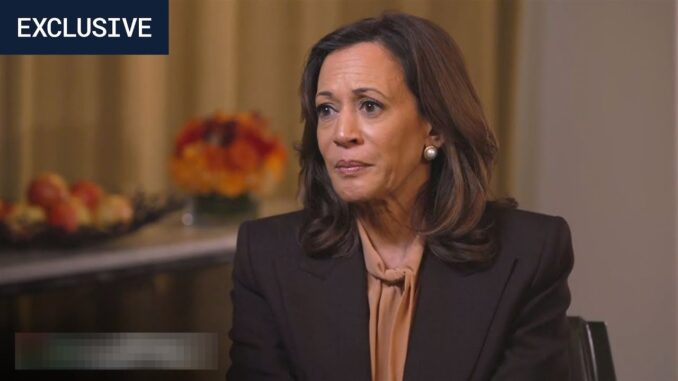

In a wide-ranging conversation on MSNBC’s The Weekend with host Eugene Daniels, former Vice President Kamala Harris laid out a stark assessment of recent political and legal developments in the United States. Harris addressed the indictments of high-profile figures, the perceived politicization of the Department of Justice, the deployment of military assets domestically, foreign policy developments in the Middle East, and her plans for a listening-driven book tour following the release of 107 Days. The interview was featured on MSNBC network channel.
Rule of Law Under Fire
Harris began by responding to the recent indictments of former FBI Director James Comey and New York Attorney General Letitia James. She described these moves as part of a broader, deliberate assault on legal norms and institutional independence.
“This is a full-on frontal attack on the rule of law in our country.”
She traced the problem back to several developments, including a Supreme Court decision that she says effectively insulated a sitting president from accountability for conduct while in office. Harris warned that immunity combined with a president who treats the Department of Justice as a personal lawyer creates dangerous incentives for weaponizing federal power against political opponents.
Vengeance, Not Justice
Harris characterized recent prosecutions of political figures as part of a “vengeance campaign” driven by personal insecurity rather than law enforcement imperatives. She pointed to cases where even conservative reviewers concluded insufficient evidence existed, yet indictments were pursued anyway.
“He feels that he has to use the power of the federal government and the United States Department of Justice to go after people who have disagreed with him.”
Her concern was both specific and systemic: these actions not only harm targeted individuals but also corrode public confidence in a justice system that is supposed to operate blind to political loyalty.
Courtroom Pushback and the Role of Judges
Harris noted a countervailing force: district court judges — appointed by presidents from across the political spectrum — are pushing back when they see abuses of power. She praised that judicial independence as critical, while warning that constitutional rights (Fourth, Fifth, Sixth Amendments) remain at risk in everyday encounters with law enforcement and prosecutorial choices.
Pressure on Civil Servants: Stay and Defend Institutions
Throughout her recent events in Washington, Harris repeatedly encouraged career civil servants to remain in place if they can, arguing that the future integrity of federal agencies depends on people who understand ethics and the rule of law continuing their work.
- She acknowledged the personal toll and pressure facing agency officials.
- She urged those who can to “stay and stick with it” for the sake of the country.
- She named agencies beyond DOJ—such as the FDA and HHS—where political pressure is forcing out experienced staff.
Should Democrats “Fight Fire With Fire”?
Asked whether Democrats should be more aggressive in how they manage the Department of Justice if they regain the presidency, Harris was clear about limits.
“No president should think of the Department of Justice as being their personal attorney. No president should try to influence prosecutorial decisions based on a political agenda, period.”
Her position balances a recognition that Democrats must be politically effective with a firm defense of DOJ independence as a democratic safeguard.
Militarization of American Streets
Harris expressed alarm at the deployment of military-trained units and equipment to American cities. She highlighted recent actions in Chicago and pointed to imagery reported of Blackhawk helicopters descending over U.S. neighborhoods — machines designed for war, not routine domestic law enforcement.
She called it troubling that senior commanders were asked to use cities as “training grounds” and said any idea of the U.S. military turning on its own citizens “is completely against every reason” service members sign up to protect the nation.
Middle East Ceasefire and Humanitarian Concerns
Turning to foreign policy, Harris said the ceasefire mediation involving the President and regional partners is worth acknowledging — and she commended the Qataris, Egyptians, and others for their roles. Her hope is that a real ceasefire results in the release of hostages, unfettered humanitarian aid to Gaza, and an end to widespread civilian suffering.
On the heated question of whether the situation in Gaza constitutes genocide, Harris emphasized the legal meaning of that term and deferred to courts and legal processes, while urging honest public reckoning given the high number of civilian and child casualties and restrictions on aid.
Rebuilding Trust: A Listening Tour
In the book 107 Days and during her book tour, Harris has emphasized that “working within the system by itself is not proving to be enough.” She described convenings held across towns and communities designed to listen, rebuild trust, and lift voices often excluded from national policymaking.
Harris framed the current national malaise as one of frustration, fear, and distrust—not only of institutions but between fellow citizens. She argued that solutions will not come exclusively from Washington and stressed the need to address immediate economic pressures that drove many voters to back promises they hoped would lower costs and improve daily life.
- She reflected that policies like an expanded child tax credit, paid leave, and affordable childcare could have addressed pressing household needs sooner.
- She cited her own 107 Days agenda, including proposals to expand home health coverage for caregivers balancing elder and child care.
On President Biden and Private Conversations
Harris responded to news that President Biden would begin radiation treatment for prostate cancer by calling him “a fighter” and saying she had left him a personal message of support. She also confirmed she had discussed the book with him, but kept the substance of that conversation private.
What Harris Urges Going Forward
Her overall prescription blends vigilance and civic responsibility:
- Defend judicial independence and support judges who push back against abuse.
- Encourage civil servants with integrity to remain in place where possible.
- Reject militarized approaches to policing American cities and defend constitutional rights.
- Address the immediate economic needs of families—childcare, paid leave, targeted relief—to rebuild trust across communities.
- Hold public conversations—listen to citizens outside D.C.—to restore empathy and a government worthy of the nation’s ideals.
Conclusion
Kamala Harris presented the interview as a call to action: to recognize the multiple pressures on American institutions and to act deliberately to protect them. Whether through public pressure, legal vigilance, or the quiet work of civil servants, she emphasized that the stakes are high because the rule of law and democratic norms are what hold the country together.
Watch the full interview on MSNBC’s YouTube channel: https://www.youtube.com/watch?v=eTZektF8Tgs
Return to the MSNBC channel for more coverage and updates.


Be the first to comment