
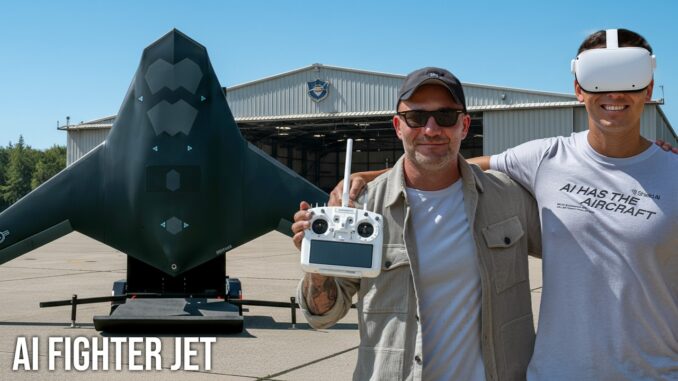

When Shield AI’s co-founder Brandon Tseng unveiled the real-world X-BAT and its Launch Recovery Vehicle, the demonstration felt like a page out of science fiction made operational. The X-BAT is a vertical takeoff, AI-piloted combat aircraft designed to operate without runways, carry fighter-class payloads, and perform electronic warfare—all while cruising higher and farther than similar platforms. The reveal blends aerospace engineering, lessons from SpaceX, and a decade of artificial intelligence development into a platform meant to change how air power is projected.
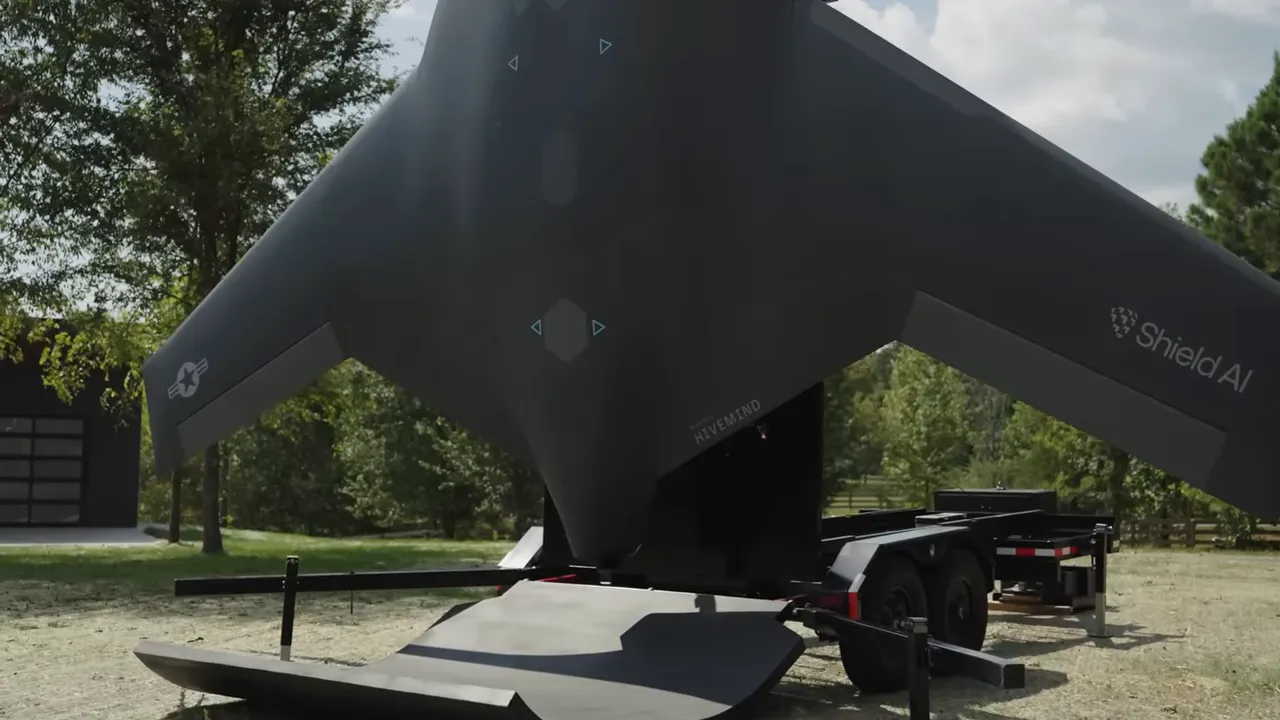
Meet the X-BAT and the LRV
The centerpiece is the X-BAT, paired with an LRV, the Launch Recovery Vehicle that handles launch and retrieval. At the event Brandon revealed a two-thirds scale model used for trade shows and public demonstrations. The model gives viewers a clear, tangible sense of what Shield AI is building: an autonomous fighter-scale aircraft that launches and lands vertically and can be redeployed quickly from non-traditional locations.
Brandon explained that the X-BAT is designed to operate “without a runway”—a capability he summed up succinctly: “Earth is our runway.” The LRV includes a blast shield to deflect engine heat during vertical launches and recoveries, addressing issues that have affected other short takeoff/vertical landing efforts.
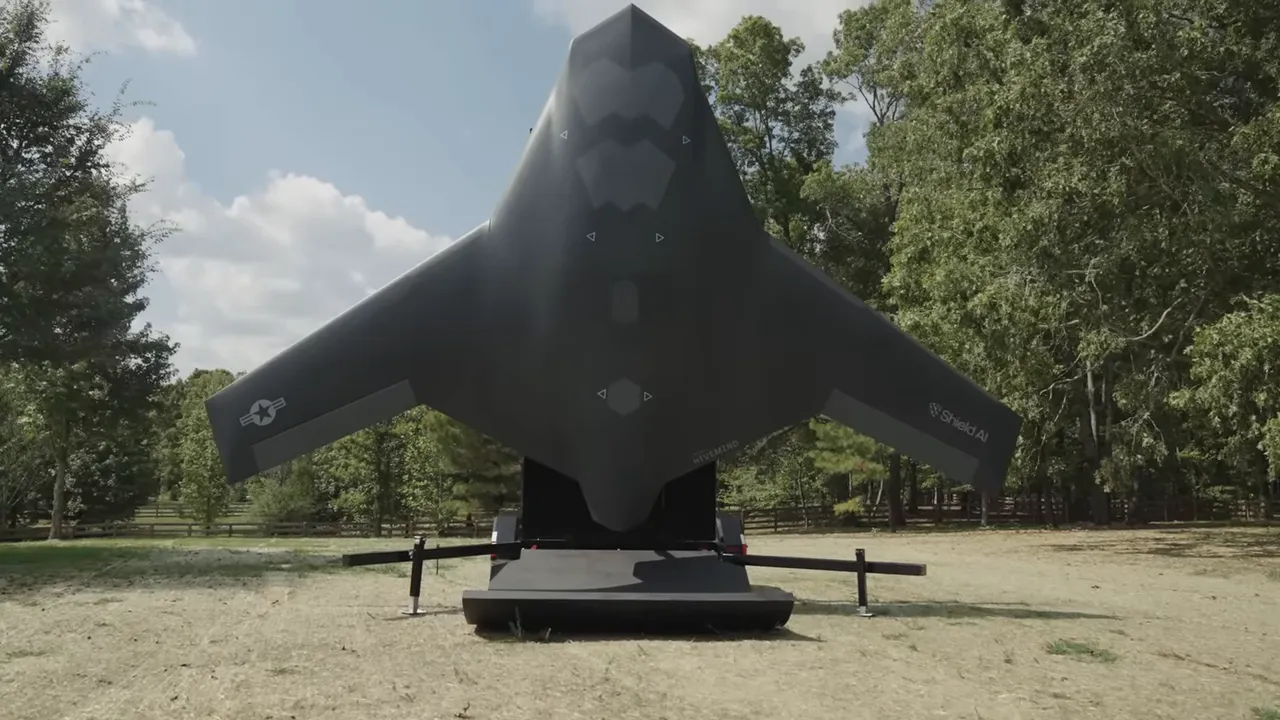
Performance, Range, and Payload
The X-BAT is not a small reconnaissance drone dressed in fighter clothing. Brandon emphasized that the platform carries a mission payload comparable to modern fighters like the F-18 and F-35. Key performance highlights include:
- Range: 2,100 nautical miles with full mission payload.
- Cruising altitude: 55,000 feet—higher than other aircraft in its class.
- Speed: Cruise at Mach 0.85 with the ability to dash supersonic when needed.
- Payload: Internal bays and wing hardpoints able to carry air-to-air missiles (four AMRAMs internally cited), air-to-ground weapons, long-range anti-ship missiles, bombs, and electronic attack payloads.

Flying at 55,000 feet improves missile kinematics and sensor performance. Less dense air at altitude extends the effective range of air-to-air missiles, and improved sensor placement increases detection and targeting ranges—both crucial in modern beyond-visual-range engagements.
Engine, Maneuverability, and Systems
The X-BAT uses the F100 engine family, the same class of engine found on F-15s and F-16s, but with a distinctive twist. Shield AI is employing a multi-plane thrust vectoring nozzle—an uncommon capability that significantly enhances maneuverability, especially at low speeds. Brandon likened the result to extreme demonstrative maneuvers seen in airshows and movies—highly agile flight regimes that give tactical advantages in contested environments.
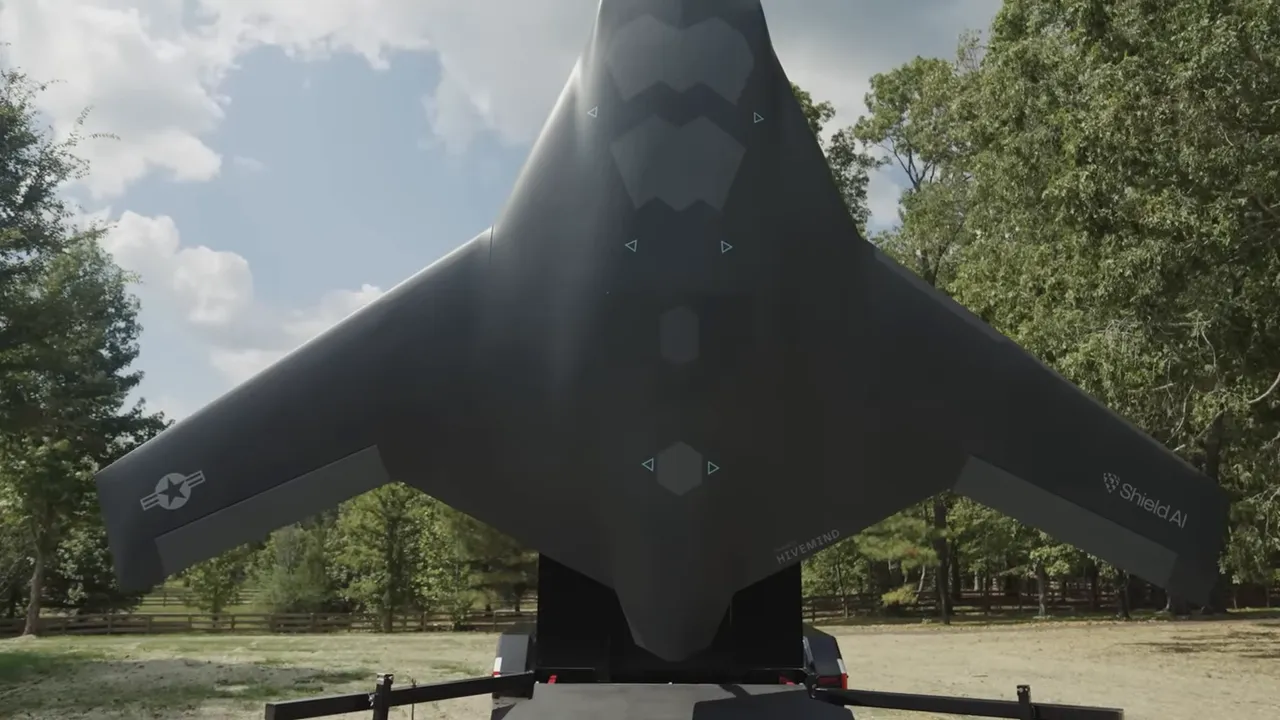
Another major differentiator is electrical power. Many competing loyal wingman and CCA platforms use business-jet engines that cannot generate enough electrical power to run advanced sensor suites and electronic attack systems. The X-BAT’s propulsion and power architecture enables integration of fifth- and sixth-generation sensors along with robust electronic warfare payloads.
HiveMind: The AI Pilot
The X-BAT is built around Shield AI’s autonomous flight stack known as HiveMind. Brandon has spent the last decade developing HiveMind, which is designed to execute complex mission libraries—air-to-air, air-to-ground, electronic warfare, comms relay, and multi-agent behaviors where multiple X-BATs cooperate and augment manned fighters.

HiveMind allows the aircraft to operate with mission-level autonomy and execute classified mission sets that go beyond line-of-sight or limited human oversight. That capability opens the door to swarm tactics, force multiplication for manned platforms, and persistent electronic attack and sensing operations in contested space.
Launch, Recovery, and Operational Flexibility
The LRV enables vertical takeoff and landing reminiscent of SpaceX’s rocket recovery methods. Shield AI’s head of aircraft, Armin Harris, who previously helped develop Falcon 9 landing systems, contributed spaceflight-derived expertise to the air-layer concept. Brandon noted that the LRV was designed to withstand high-temperature exhaust during afterburner use, avoiding deck damage that has been a challenge for other vertical-capable jets.
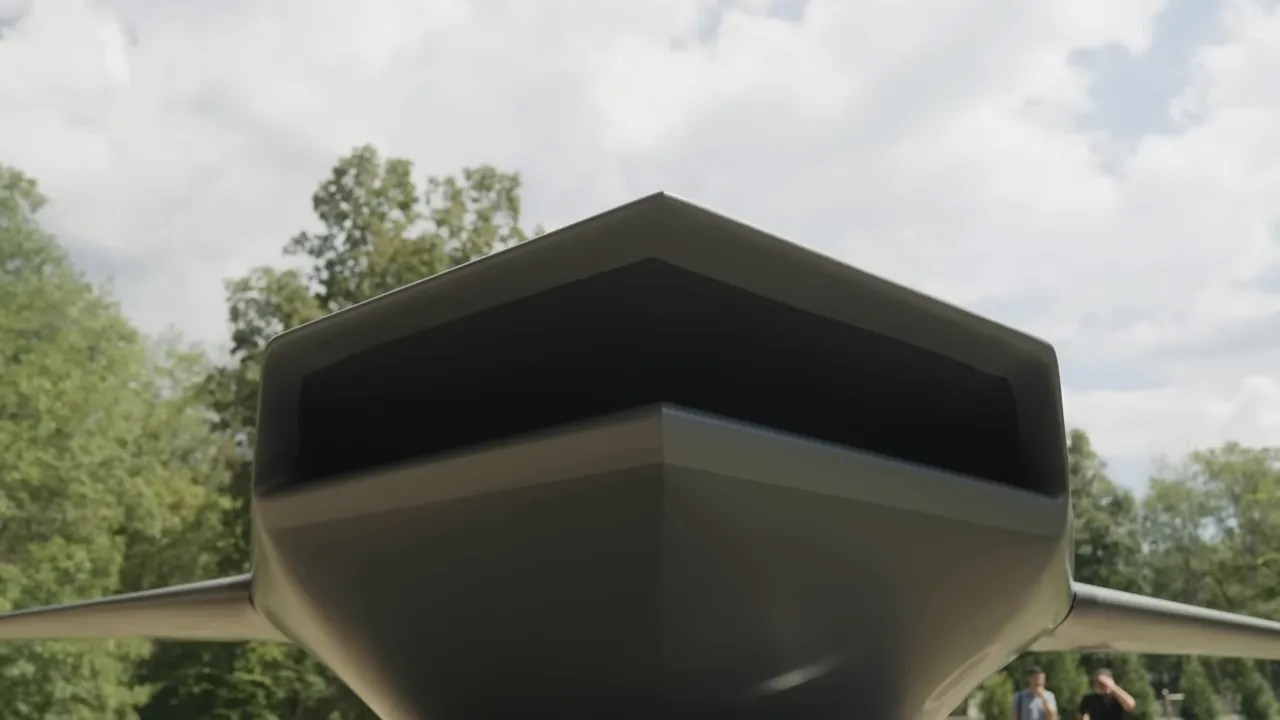
Vertical launch and recovery changes basing calculus. Any sufficiently sized flat area—cargo ship deck, island chain, forest clearing, or even a sports court—becomes a potential launch site. In practical terms, “every ship is now an aircraft carrier” and non-standard vessels become forward basing options. That dispersal increases survivability and complicates an adversary’s targeting and tracking problem.
Electronic Warfare and Mission Roles
The X-BAT is designed as a multi-role platform: air-to-air, air-to-surface, strike, and electronic warfare. Built-in EW capabilities allow the X-BAT to perform GPS jamming, communications jamming, and electronic attack missions similar to what a specialized platform like the EA-18G Growler provides. Brandon pointed out that even if missions are heavily armed, the X-BAT retains electronic attack and comms relay functions that support wider force operations.
That electrical power margin and payload flexibility make the X-BAT a unique entrant among loyal wingmen and combat collaborative aircraft. It combines kinetic strike capability with non-kinetic effects in a single, autonomous package.
Strategic Implications
Shield AI and its partners are pitching a vision where air power is distributed, autonomous, and resilient. Brandon framed the project as “absolutely strategic,” arguing that an AI-piloted, runway-independent fighter can transform deterrence by expanding options available to commanders and complicating an adversary’s calculus. The ability to launch from non-traditional locations, the autonomous mission execution, and the combination of EW and kinetic payloads create a platform that could operate as a force multiplier or a forward-deployed swarm element.
“Earth is our runway.”
“We like to say this thing hauls ass and sips gas.”
What Comes Next
Brandon invited observers to witness a first flight in person, signaling that development is transitioning into live testing. The X-BAT’s combination of proven aerospace hardware, thrust-vectoring maneuverability, high-altitude endurance, and a decade of autonomous software development suggests a rapid cadence toward operational demonstration.

Quick Specs Recap
- Range: 2,100 nautical miles with mission payload
- Cruise altitude: 55,000 feet
- Cruise speed: Mach 0.85; dash capability supersonic
- Internal payload: Four AMRAMs internally as an example
- Engine: F-100 family with multi-plane thrust vectoring
- Autonomy: HiveMind AI pilot with multi-agent behaviors and classified mission libraries
The X-BAT is more than a new aircraft. It is a concept that fuses lessons from rocketry, fighter design, and machine intelligence to create a flexible, powerful, and distributed air layer. If the program delivers on its promises in testing, it could change how militaries think about basing, force posture, and the division of labor between manned and unmanned systems.
Credits
Coverage adapted from a conversation on the Shawn Ryan Show. For more from the original source, search for “Shawn Ryan Show” on YouTube or visit the Shawn Ryan Show channel.
Adapted for readers by #teamHJB of ReelToRead.com — turning great videos into even better reads.

Be the first to comment