
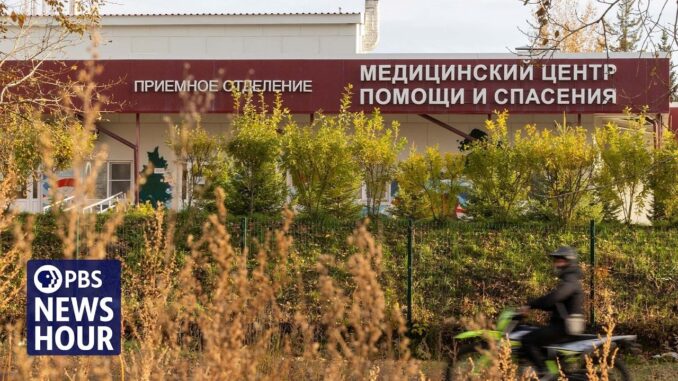

A laboratory worker’s death in Russia has raised questions about a possible case of pneumonic plague, the safety of research involving dangerous pathogens and the availability of information needed to assess a potential outbreak.
The United States said it was closely monitoring the situation. Russian authorities described the worker’s death as pneumonia of an unknown cause and insisted there was no reason for alarm. At the same time, officials imposed quarantines and other anti-epidemic measures at several medical facilities in Siberia, with at least 200 people under medical observation.
The central distinction is that the worker’s death was reported, but a plague infection was not confirmed. Her employment at a facility that studies the disease raised concerns about possible exposure. It did not, by itself, establish what caused her illness or whether others were at risk.
What Was Known, and What Remained Unclear
At the time of the reporting, the available information left several important questions unanswered:
- What caused the laboratory worker’s pneumonia and death?
- Had any of the people under medical observation become ill?
- Was there evidence of transmission to other people?
- What exposure, if any, had occurred inside the research facility?
Investigative journalist Annie Jacobsen, whose book Biological War: A Scenario examines a biological crisis involving pneumonic plague, emphasized the lack of information about the people affected by the response. She referred to reports of roughly 200 people in quarantine and restrictions involving five facilities, but said their health status remained unclear.
That information matters because it would help distinguish a single unexplained death from an event involving additional infections. Quarantine and medical observation are significant precautions, but they are not confirmation that the people subject to them have contracted plague.
Asked about the potential risk as he left the White House, President Donald Trump said the United States was examining the situation closely and offered help. He also made general comments about microbes becoming harder to treat. Those remarks did not establish a diagnosis or identify the organism responsible for the worker’s illness.
Why the Research Facility Raised Concerns
The worker’s connection to an anti-plague institute made the circumstances of her illness particularly important. Such institutions are expected to study ways to prevent and treat plague, including vaccines and antibiotics.
Jacobsen said the possibility of a laboratory accident deserved serious consideration because accidents involving dangerous pathogens are a real concern, not simply a fictional premise. But she also raised a separate issue: the facility’s history.
Citing accounts from Soviet scientists who defected, Jacobsen said the institute had been used for biological weapons engineering during the Soviet Union’s illegal program. She also pointed to the U.S. State Department’s assessment that Russia’s illegal biological weapons program had continued.
Those are consequential allegations. They provide context for scrutiny of the institute, but they do not establish that the worker’s death involved biological weapons research.
Jacobsen described a tightly controlled site with six-foot fences, concertina wire and restricted entry and exit. In her assessment, Russian authorities could be concerned not only about a health incident but also about increased attention from U.S. intelligence and military officials to activities inside the facility.
A Possible Exposure Is Not an Established Explanation
Jacobsen questioned an account suggesting that the worker had broken a test tube and then contracted pneumonic plague. She said that explanation did not fully satisfy her concerns about how an inhalation exposure might have occurred.
She raised the possibility of work that could make a pathogen dispersible through the air, which she associated with biological weapons engineering. That was a hypothesis, not a verified description of the institute’s activities or the worker’s exposure.
The same distinction applies to discussion of genetic modification. The interview raised questions about whether an altered pathogen could behave differently from naturally occurring plague. It presented no confirmation that the worker had encountered such a pathogen.
How Pneumonic Plague Transmission Differs From COVID-19
One of the most immediate questions is whether pneumonic plague could spread as readily as COVID-19.
Jacobsen distinguished naturally occurring pneumonic plague from COVID-19, which can spread through infectious particles in the air. She described pneumonic plague as spreading through respiratory droplets, with close contact with a sick person being an important part of the risk.
In practical terms, her explanation focused on exposure to droplets from an ill person’s coughing, rather than assuming the same transmission pattern as COVID-19. She also noted that a visibly ill person might be approached with protective equipment, potentially reducing unprotected close contact.
For general medical background, the CDC’s overview of plague provides information about the disease and its transmission.
Jacobsen cautioned that genetic changes, if they were occurring, could complicate assumptions about transmissibility. But that concern remained conditional. Without a confirmed diagnosis and evidence about the pathogen involved, there was no basis in the reporting to conclude that this incident involved a more transmissible form of plague.
What Could the World Health Organization Do?
The international response depended heavily on access to information from Russia.
Asked what authority the World Health Organization could exercise, Jacobsen stressed Russia’s willingness to cooperate. She said her understanding was that WHO had contacted Russian health officials seeking information but had not received it.
She also said Moscow had shut down a WHO office during the Ukraine war. That assertion was part of her account of strained cooperation, rather than an independently established finding presented in the interview.
The practical problem was clear: an international organization cannot provide a well-informed assessment of an incident when key details about the illness, possible exposures and other affected people remain unavailable.
Why Transparency Matters Before an Outbreak Is Confirmed
The discussion returned to a lesson underscored by COVID-19: delays in information sharing can make an emerging health threat harder to assess and contain.
Jacobsen argued that transparency gives other countries a better chance to prepare and reduce risk. Information about the worker’s diagnosis and the health of people under observation would help public health authorities understand whether there was a wider threat and what response might be warranted.
Instead, she described an early information clampdown involving Russia’s Federal Security Service, the FSB. She also said journalists who had initially reported on quarantines had apparently faced pressure and subsequently gone silent.
Those statements reflected her assessment of the reporting environment. They did not resolve the medical questions. They did, however, explain why uncertainty persisted despite the scale of the reported precautions.
The responsible conclusion was neither that a plague outbreak had been confirmed nor that the concerns could be dismissed. A worker had died, authorities had taken substantial precautionary measures, and critical information remained missing. Establishing the cause of death, determining whether anyone else was ill and sharing those findings were essential to assessing the risk.
This article is adapted from original reporting and Geoff Bennett’s interview with Annie Jacobsen for PBS NewsHour. Full credit belongs to PBS NewsHour. The original report is “What to know about pneumonic plague after Russian lab worker’s death.”

Be the first to comment